What Are Galaxies?
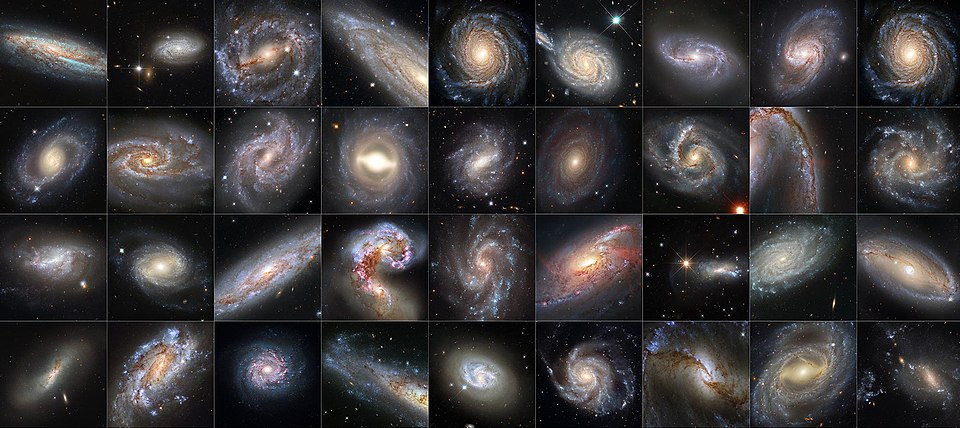
Galaxies are vast cosmic systems in which stars, planetary systems, gas, cosmic dust, and dark matter are held together by gravity. Each galaxy contains billions or even trillions of stars along with the structures surrounding them. In this sense, galaxies are among the largest-scale ways matter is organized in the universe.
A galaxy is not a simple collection made only of stars. Interstellar clouds of gas and dust, star-forming regions, remnants of dead stars, and a large amount of dark matter are essential components of a galaxy. Dark matter, although it cannot be observed directly, plays a critical role in determining a galaxy’s shape and dynamics. A major portion of a galaxy’s total mass is made up of this invisible component.
Galaxies do not exist alone in the universe. Most are found within gravitationally bound groups and clusters of galaxies. These clusters are considered among the largest structures in the universe. The spaces between galaxies are enormous; yet galaxies are connected within a large-scale structure known as the cosmic web.
A galaxy’s size and mass can vary greatly. Some galaxies contain only a few million stars, while others host hundreds of billions of stars. There are small galaxies only a few thousand light-years across, as well as giant galaxies that span hundreds of thousands of light-years. This diversity shows how different galaxies’ evolutionary histories can be.
The stars within a galaxy did not all form at the same time. Over billions of years, a galaxy experiences continuous cycles of star birth and star death. For this reason, a single galaxy contains stars of many different ages. Young, bright, hot stars and old, faint stars can exist together in the same galactic system. This reveals the complex, layered nature of galaxies.
Galaxies are fundamental to the evolution of the universe. Stars and planetary systems form within galaxies, chemical elements are produced and distributed within them, and many key cosmic processes unfold inside these structures. Understanding galaxies therefore means understanding how matter is organized, how it changes over time, and how today’s cosmic structure came to be.
The galaxies we observe today also carry important information about the universe’s past. Light from distant galaxies began its journey billions of years ago. This allows galaxies to be studied not only as they are now, but also as they were at different stages of cosmic history. In this way, galaxies are like cosmic archives that let us read the universe’s story.
In conclusion, galaxies are complex, long-lived cosmic structures where stars and matter exist collectively. As key building blocks of large-scale order in the universe, they lie at the center of many processes—from the birth and death of stars to the production of elements and the shaping of cosmic structures. Understanding galaxies is one of the most important steps toward understanding the universe’s overall structure and origin.