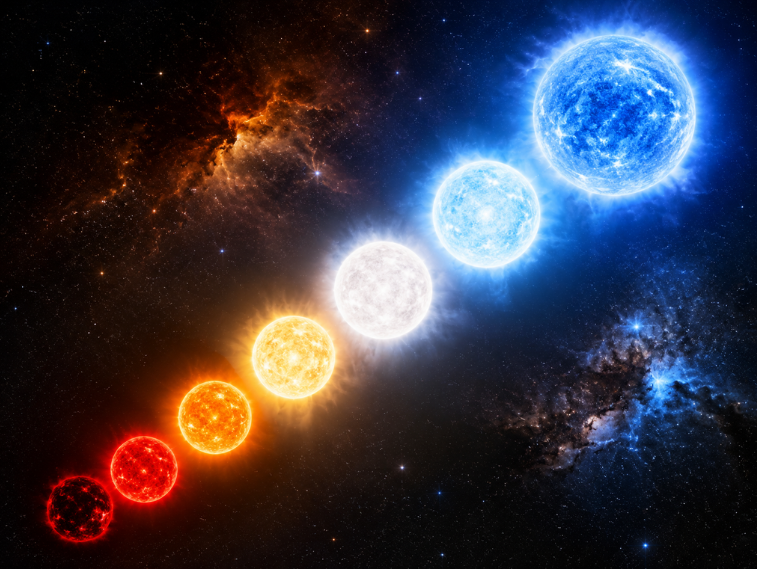
What Star Colors Tell Us About Surface Temperatures
Author: SpacePedia
Theme: Stars
Subject: Star Colors
Article Summary: The color of a star is one of the fundamental features that directly provides information about its surface temperature. The wavelengths of light emitted by stars vary depending on their temperatures. Hotter stars appear in blue and blue-white tones, while cooler stars tend toward orange and red hues. Yellow-white stars are found in the middle of this temperature range. The Sun's yellow-white appearance is related to its surface temperature of about 5,500 °C. The colors of stars are not just a visual difference; when the spectrum of their light is analyzed, measurable information about the star's surface temperature can be obtained.
Date: 16-09-2026

Causes of Rocket Explosions in the Early Years of the Space Race
Author: SpacePedia
Theme: Accidents
Subject: Early rocket failures
Article Summary: In the early years of the Space Race, rocket launches were not as reliable as they are today. The United States and the Soviet Union were both trying to develop military rocket technologies and use these vehicles for satellite and space missions. However, high-thrust engines, complex fuel systems, guidance mechanisms, and the many interconnected stages had not yet matured sufficiently. As a result, rockets sometimes broke apart just seconds after liftoff, sometimes their engines failed, and sometimes the mission ended before reaching orbit because an upper stage could not ignite. The initial failures were not seen merely as losses; important lessons emerged from telemetry, photography, and debris analysis, which helped make subsequent rockets more reliable.
Date: 19-09-2026
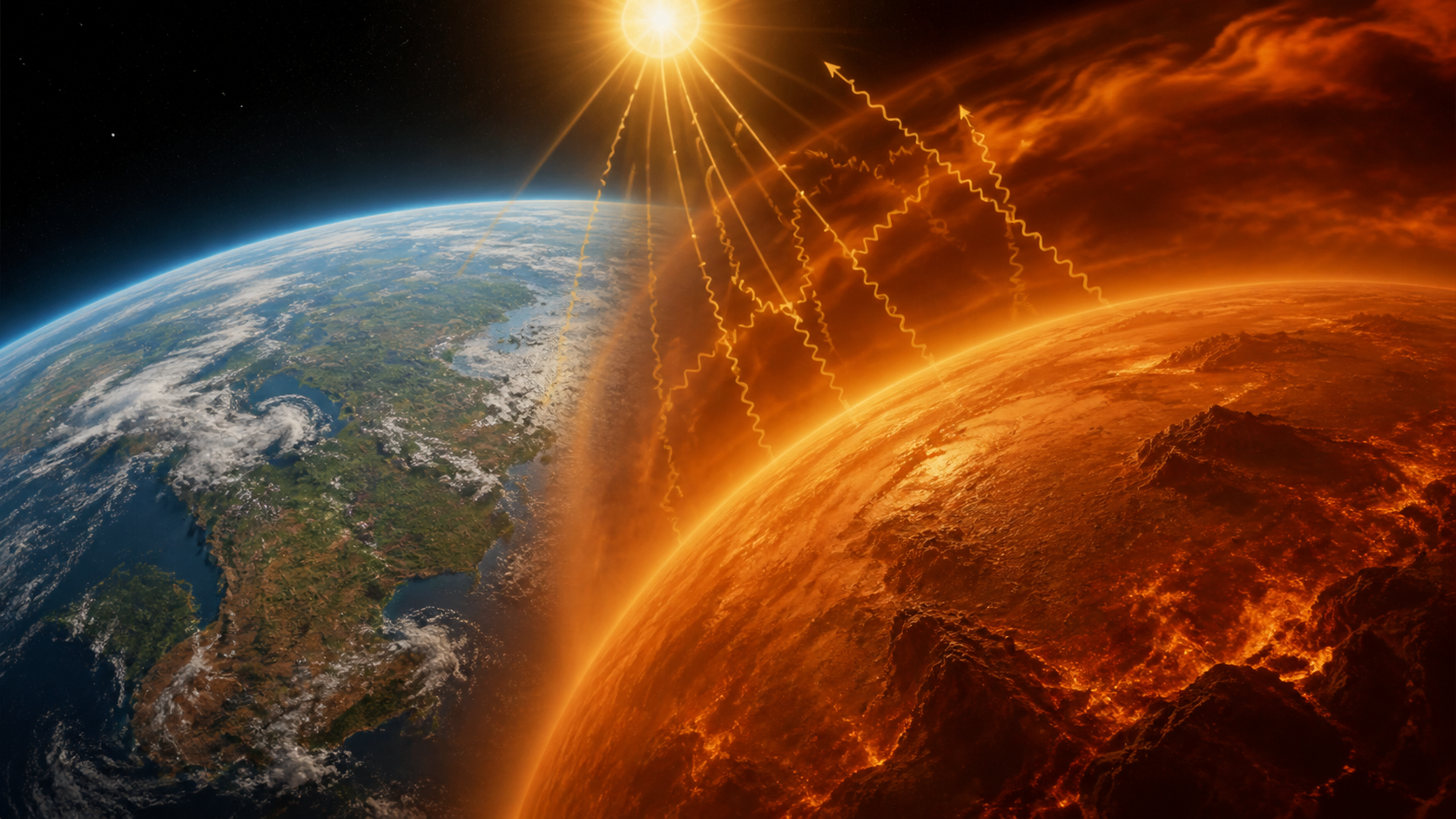
Venus, Earth's Twin, Turns into a Hellscape Due to the Greenhouse Effect
Author: SpacePedia
Theme: Planets
Subject: Greenhouse Effect
Article Summary: Venus is a planet similar to Earth in terms of size, mass, and rocky composition; however, surface conditions set the two worlds completely apart. Most of Venus's atmosphere is composed of carbon dioxide, and the atmosphere is extremely dense. While energy from the Sun heats the surface, the infrared radiation emitted from the surface is strongly trapped by carbon dioxide and other gases in the atmosphere. As a result, heat cannot easily escape into space, and the surface temperature reaches about 465°C. The dense atmosphere also raises the surface pressure to about 90 times that of Earth. The extreme greenhouse effect on Venus, along with the loss of its initial water over time and the dominance of carbon dioxide in the atmosphere, has led to the extremely hot and dense environment we see today.
Date: 18-09-2026
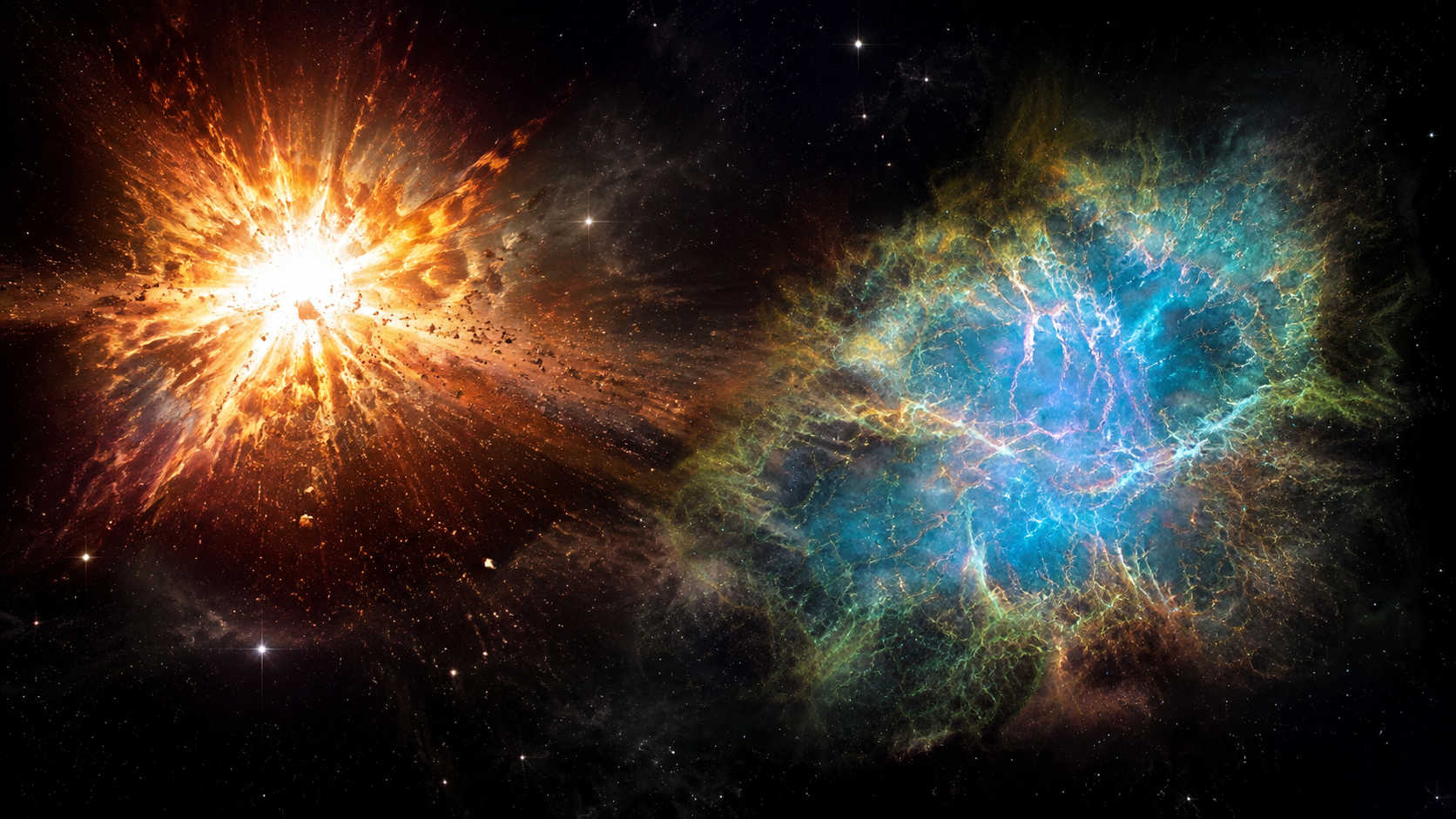
The Story of the Historic Supernova Explosion That Created the Crab Nebula
Author: SpacePedia
Theme: Nebulae
Subject: Crab Nebula
Article Summary: The Crab Nebula is the expanding remnant of gas and dust left behind by a powerful supernova explosion that occurred about a thousand years ago. When the light from the explosion reached Earth in 1054, it was recorded by Chinese astronomers and described as an extraordinarily bright star visible even during the day. The core of the exploding star was not completely destroyed, leaving behind a rapidly spinning, dense neutron star—known as a pulsar. Today, the Crab Nebula is observed as a complex supernova remnant, still expanding and illuminated by the energy emitted from its central pulsar. The nebula's structure, its central neutron star, rapidly expanding gas, and radiation emitted at different wavelengths make it an important cosmic example of how stars change in the final stages of their lives.
Date: 18-09-2026
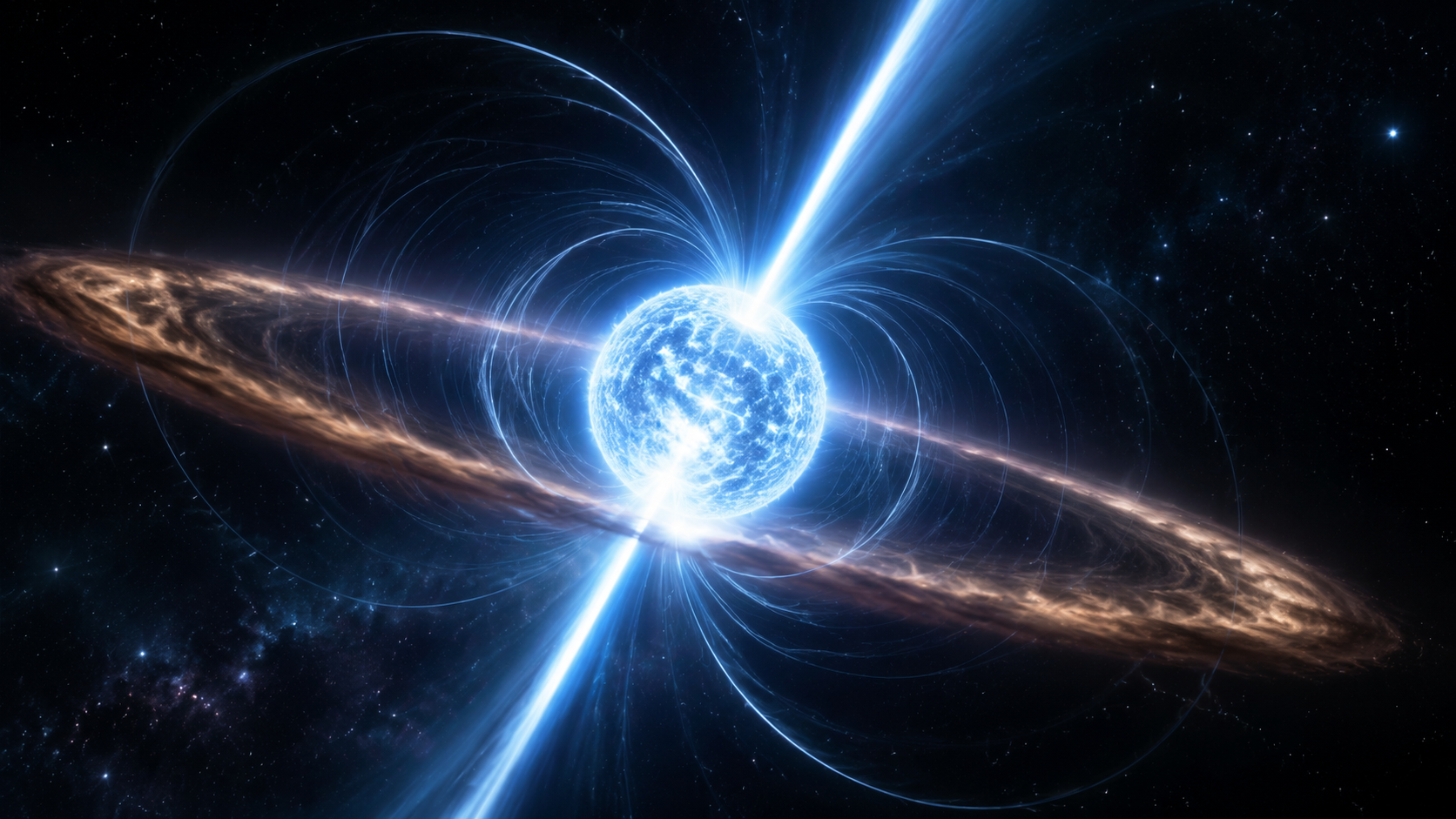
The Rotational Mechanism That Enables Pulsars to Produce Regular Signals
Author: SpacePedia
Theme: Neutron Stars
Subject: Pulsars
Article Summary: Pulsars are rapidly rotating types of extremely dense neutron stars left behind after the supernova explosion of massive stars. The strong magnetic fields and rapid rotation of these objects can cause electromagnetic radiation to be emitted into space in narrow beams from their polar regions. During rotation, these beams sweep through space like the light of a lighthouse. Each time one of the beams passes over Earth during a rotation, a regular signal can be detected. Therefore, the signals from pulsars are repeated at extremely regular intervals, directly linked to the star's rotation period.
Date: 17-09-2026
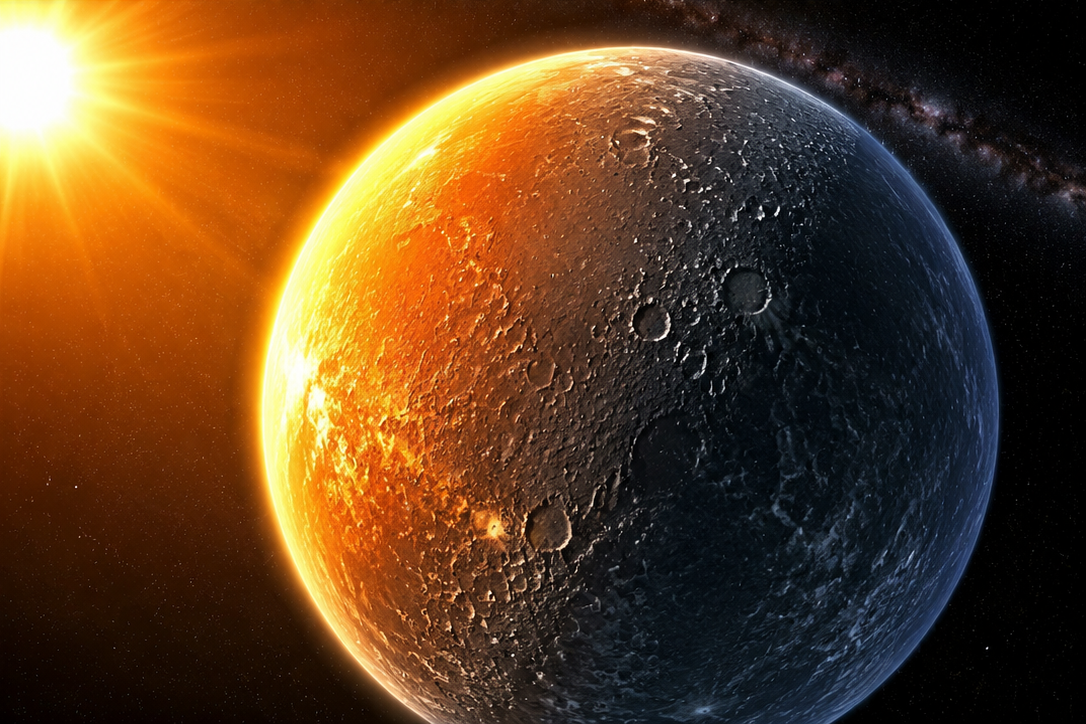
The Extreme Temperature Extremes of Mercury, the Closest Planet to the Sun
Author: SpacePedia
Theme: Planets
Subject: Mercury
Article Summary: Although Mercury is the closest planet to the Sun, it is not the hottest planet in the Solar System. The main reason for this is the planet's extremely thin atmosphere. While daytime temperatures on Mercury's surface can reach about 430 °C, nighttime temperatures can drop to around -180 °C. This difference of approximately 600 °C between day and night is due to the lack of a dense atmosphere that could retain heat on Mercury's surface for long periods. Mercury's proximity to the Sun causes it to receive intense radiation, but its very slowly rotating surface and thin atmosphere prevent heat from being effectively distributed across the planet.
Date: 16-09-2026
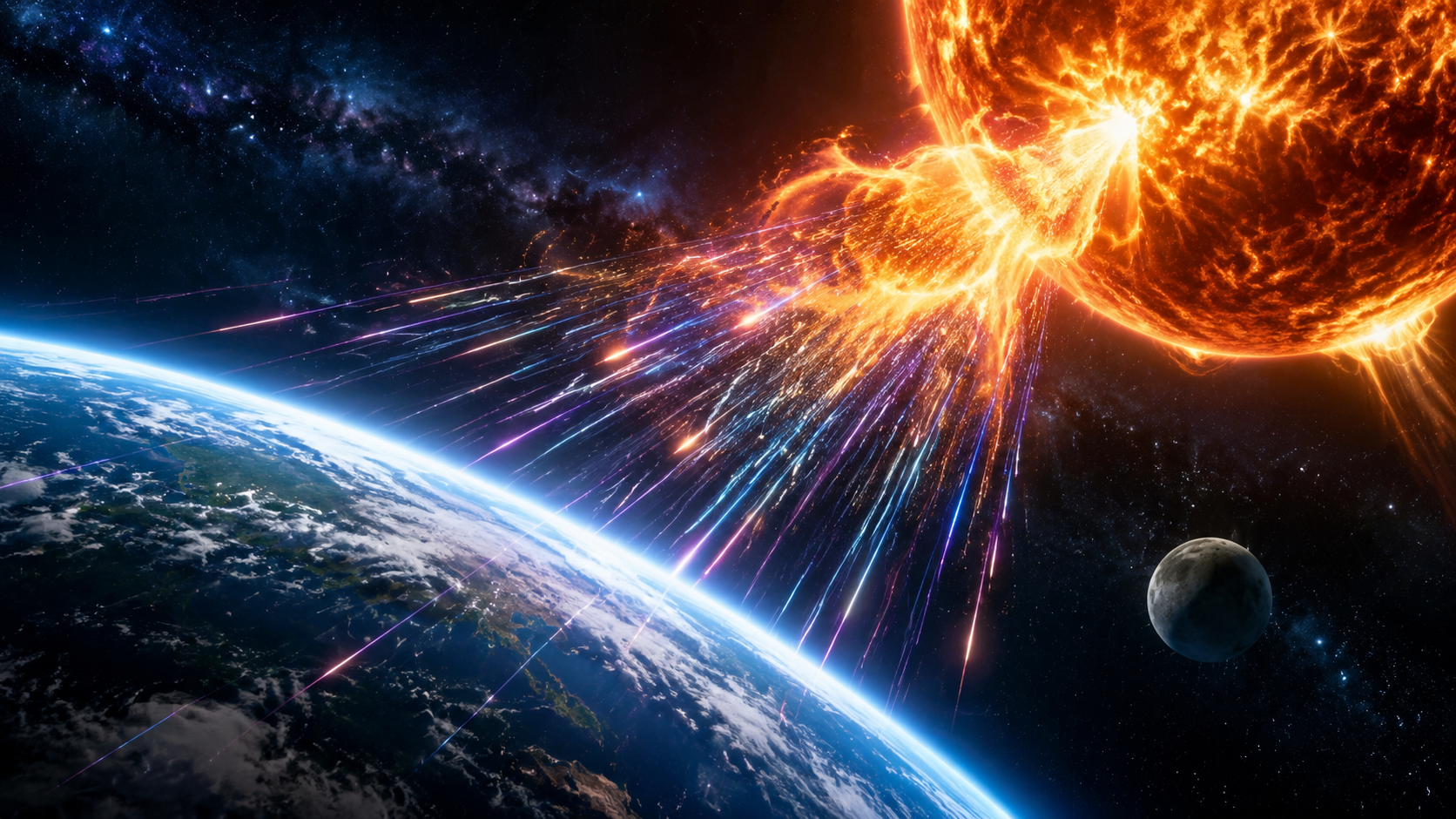
Sources of Cosmic Rays and Space Radiation
Author: SpacePedia
Theme: General Space
Subject: Cosmic rays
Article Summary: Cosmic rays are high-energy electrically charged particles that reach Earth from space. Unlike electromagnetic radiation, these particles arrive as a direct flow of matter. Supernova explosions, high-energy stellar remnants, and other extreme cosmic environments are the main candidates involved in the formation of these particles. Nevertheless, the exact celestial sources of the highest-energy cosmic rays have not yet been fully determined.
Date: 20-09-2026
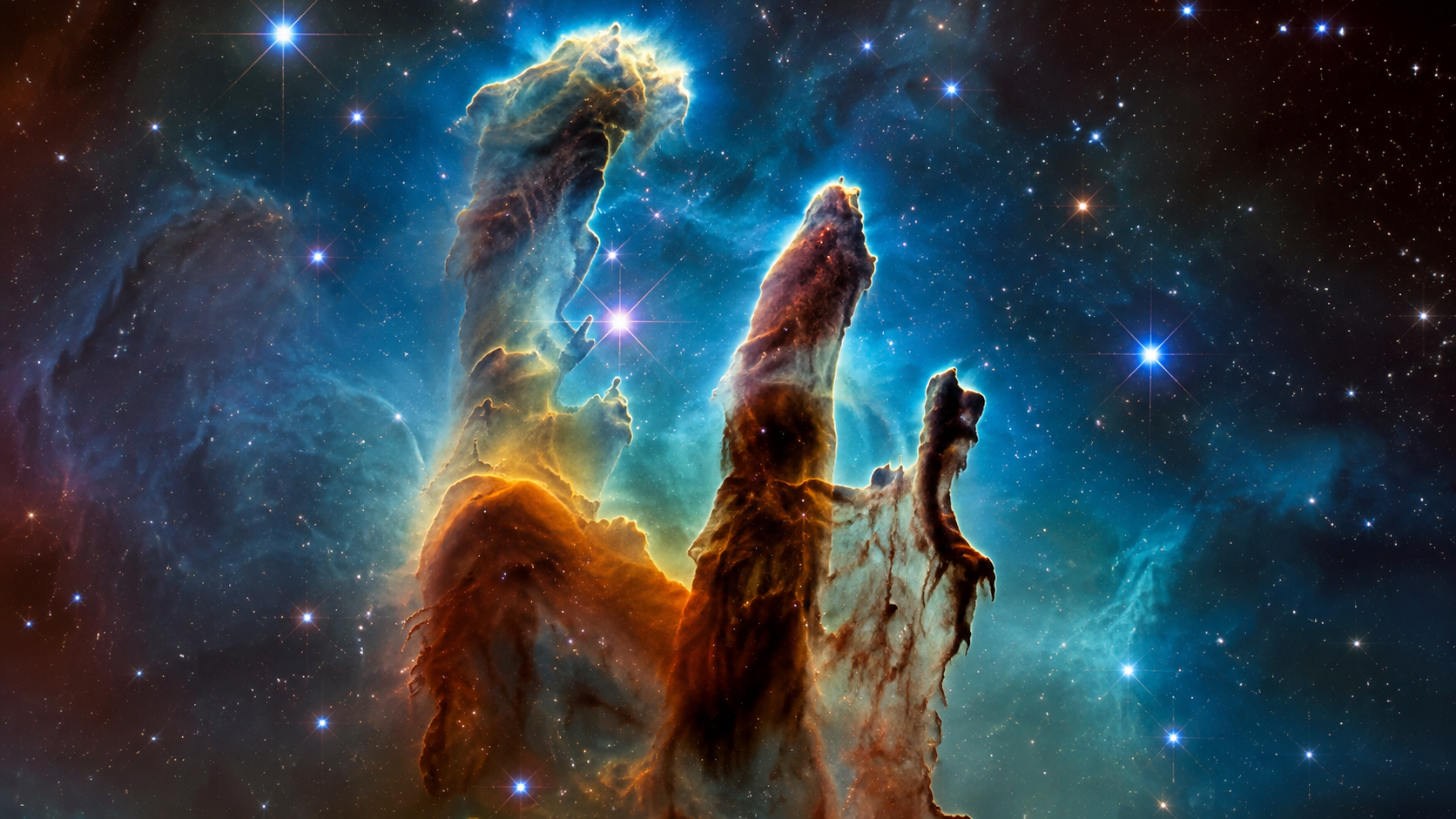
The Mesmerizing View of the Pillars of Creation Inside the Eagle Nebula
Author: SpacePedia
Theme: Nebulae
Subject: Pillars of Creation
Article Summary: The Pillars of Creation, located within the Eagle Nebula, are massive pillar-shaped structures composed of dense gas and dust that stretch across light-years. These structures become prominent as the intense radiation emitted by the young, hot stars in their vicinity illuminates the nebular gas and erodes the dense regions. The denser parts of the pillars endure longer than the surrounding sparse material, while less dense gas and dust gradually erode and disperse into space. Since there are regions of dense gas and dust within and around the Pillars of Creation, processes associated with star formation can be observed here. For this reason, the structure is one of the most striking examples of an active cosmic region where stars are born and shape the surrounding material.
Date: 18-09-2026
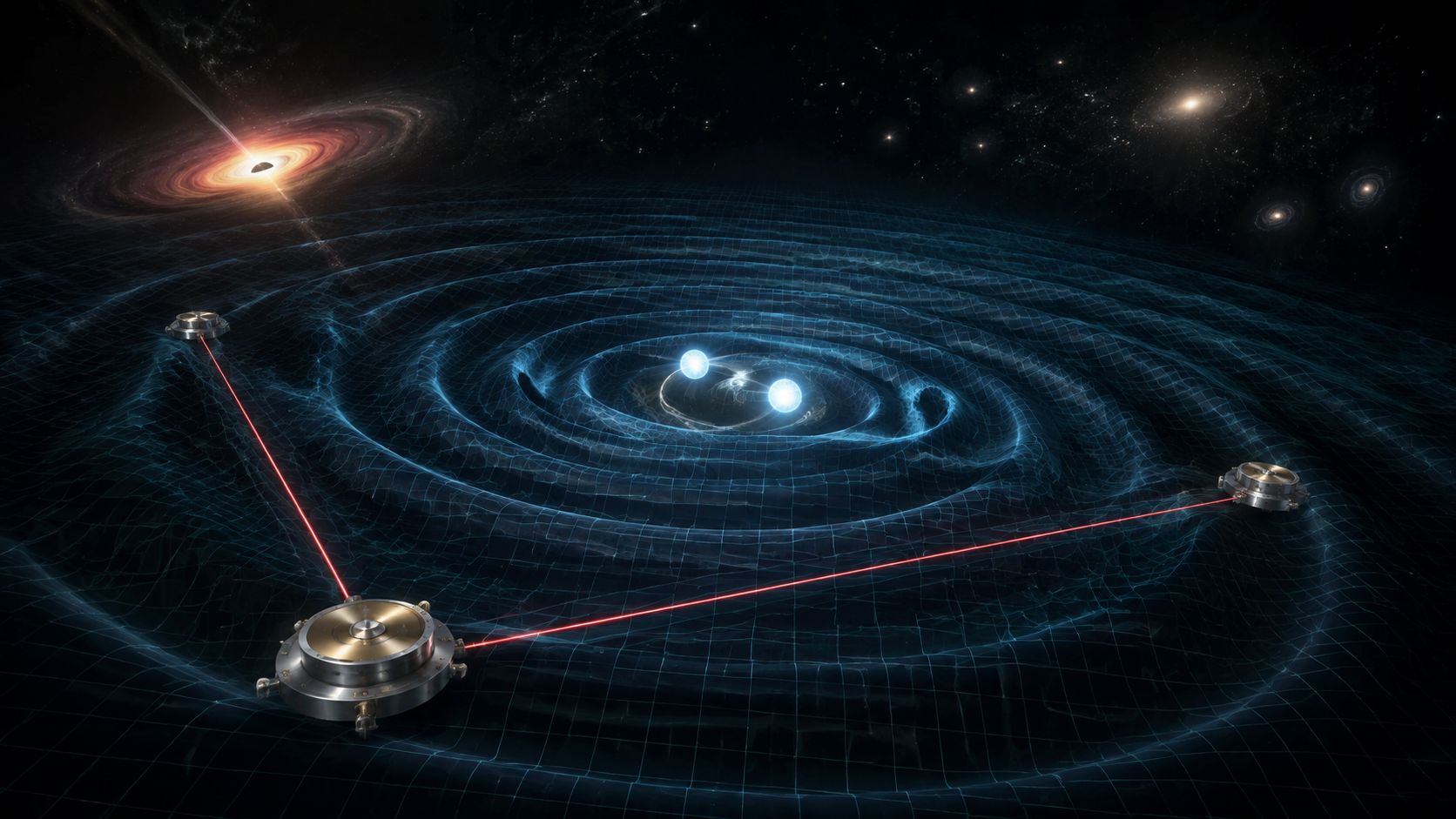
Methods for Detecting Gravitational Waves in the Fabric of Space-Time
Author: SpacePedia
Theme: Different Methods
Subject: How gravitational waves are measured and which observation methods are used
Article Summary: Gravitational waves are ripples in the fabric of space-time that occur as a result of the accelerated motions of extremely massive celestial objects and propagate at the speed of light. In particular, the mergers of black holes and neutron stars can generate strong gravitational waves. When these waves reach Earth, they stretch and compress space-time by extremely small amounts. Instead of directly 'seeing' these changes, astronomers detect them using sensitive measurement systems. Today, one of the most important methods for this is kilometer-long laser interferometers. Observatories such as LIGO, Virgo, and KAGRA determine the trace left by the wave by measuring the difference in the path of laser light along two perpendicular arms. In addition, pulsar timing arrays investigate much lower frequency waves, while the future space-based LISA observatory aims to study frequency ranges that ground-based detectors cannot reach.
Date: 19-09-2026
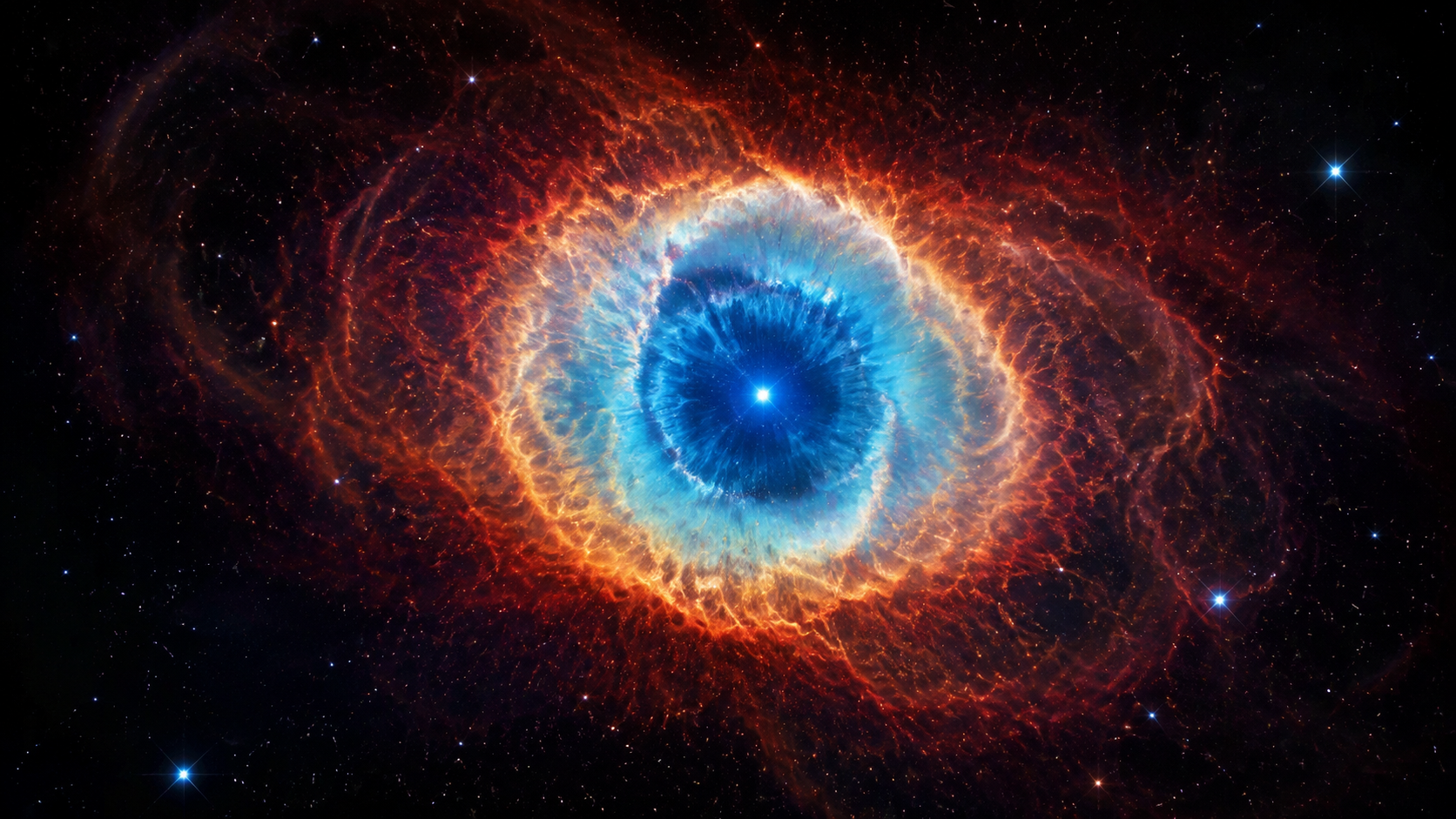
The Helix Nebula Showing the Final Journey of a Dying Star
Author: SpacePedia
Theme: Nebulae
Subject: Helix Nebula
Article Summary: The Helix Nebula is a planetary nebula formed when a Sun-like star sheds its outer layers into space during the final stages of its life. Located about 650 light-years from Earth, this structure lies in the direction of the constellation Aquarius. At its center is a hot and dense white dwarf, the remnant left behind by the star. The gas emitted from the star's outer layers becomes ionized by the ultraviolet radiation from the hot remnant at the center, turning into a bright nebula. The ring-like appearance of the Helix Nebula is actually a three-dimensional image created by our viewing angle from Earth and the nebula's complex gas structure. The knots of gas within the structure and the regions seen in different colors reflect the varying physical conditions during the process of the star shedding its outer layers into space.
Date: 19-09-2026
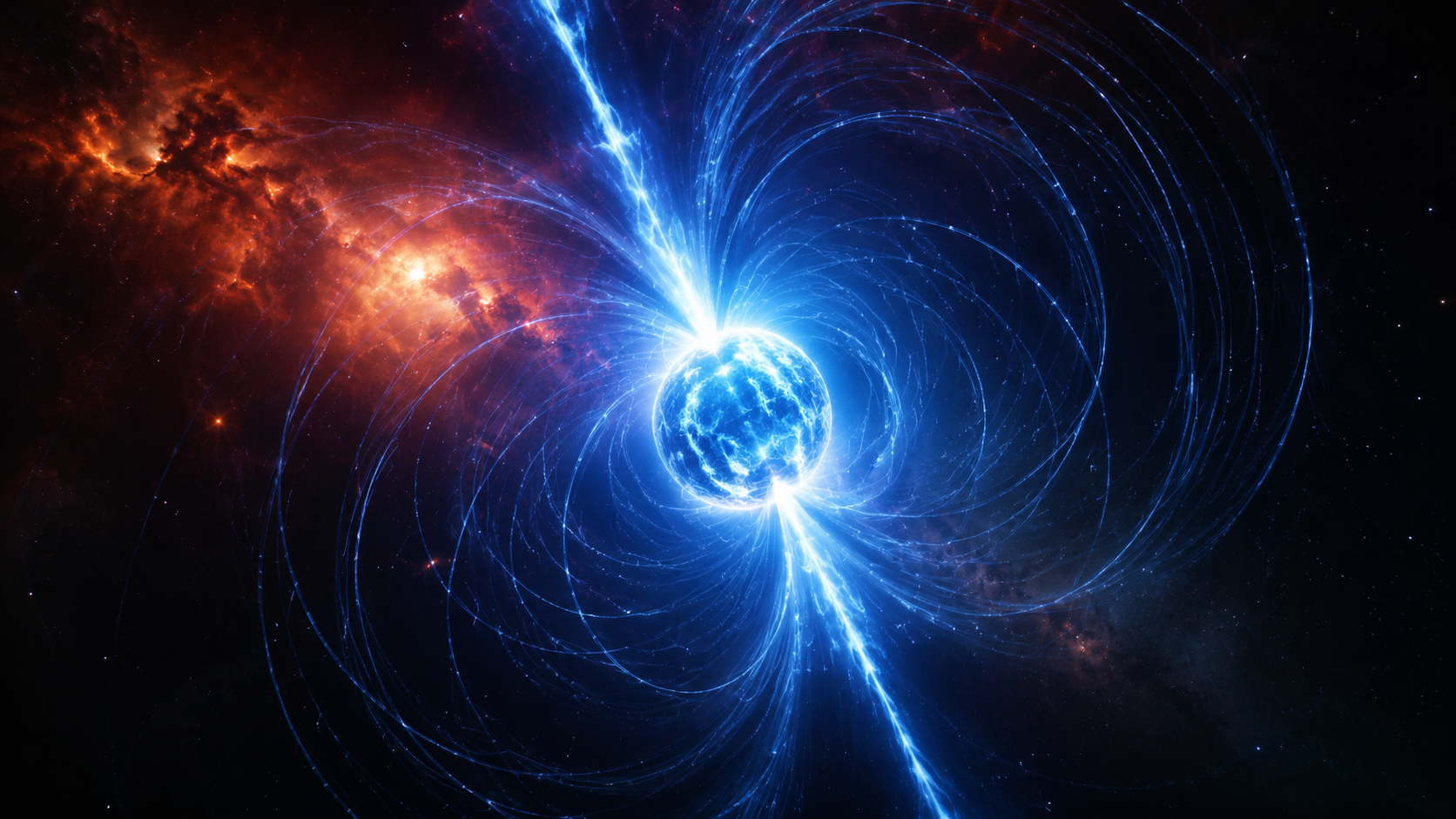
Magnetars with the Universe's Most Powerful and Dangerous Magnetic Fields
Author: SpacePedia
Theme: Neutron Stars
Subject: Magnetars
Article Summary: Magnetars are extremely dense neutron stars that can form after supernova explosions at the end of the lives of massive stars. Their defining feature, which sets them apart from other neutron stars, is their extraordinarily strong magnetic fields. These magnetic fields can be trillions of times stronger than Earth's. Crustal movements on the magnetar's surface and sudden changes in the magnetic field can send extremely energetic bursts of X-rays and gamma rays into space. For this reason, magnetars are among the most extreme cosmic objects capable of releasing enormous amounts of energy in a short time. The changes in their strong magnetic fields over time can also lead to variations in the magnetar's rotation speed and the radiation they emit.
Date: 18-09-2026
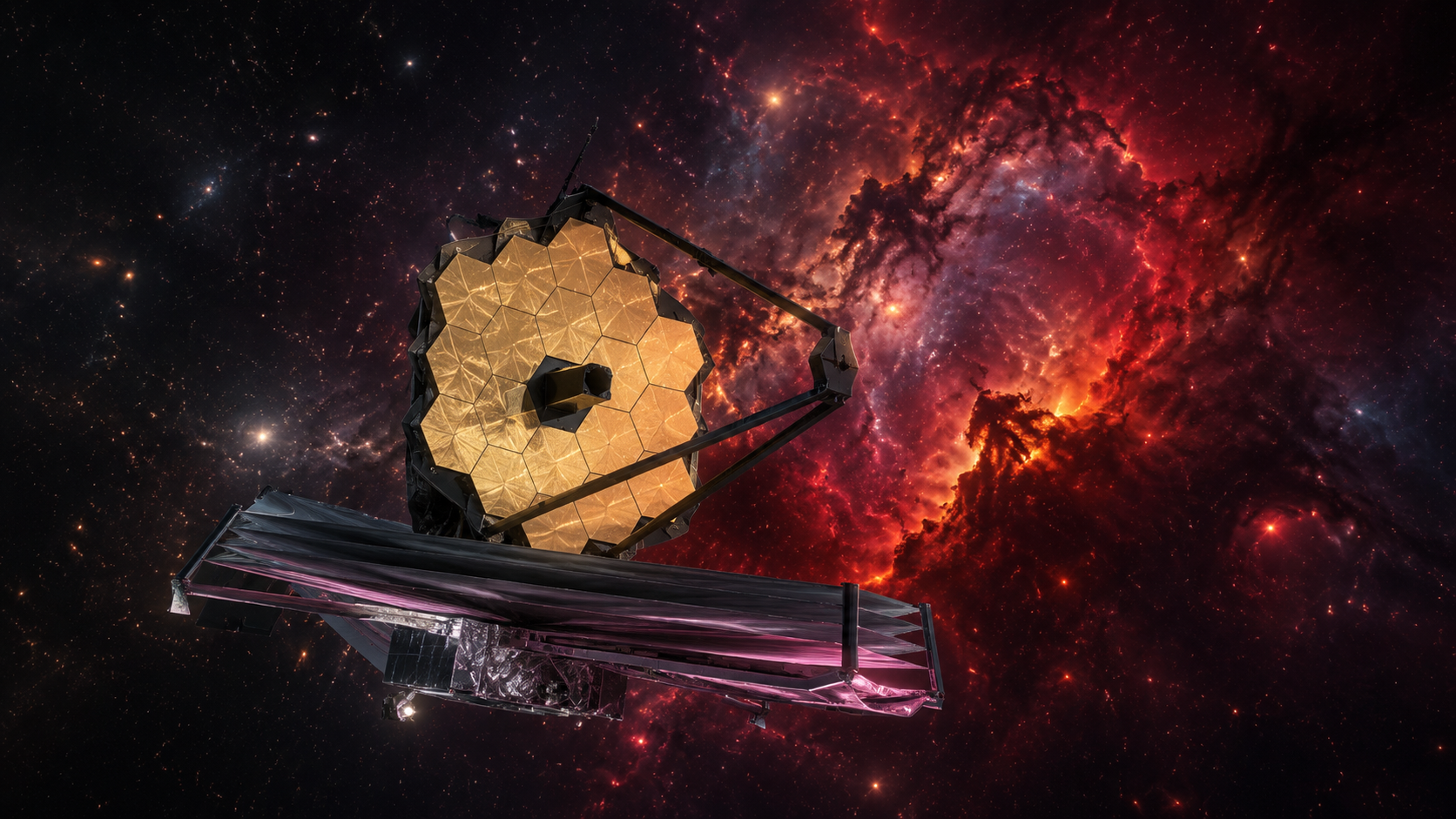
Infrared Observation Capabilities of the James Webb Space Telescope
Author: SpacePedia
Theme: Spacecraft
Subject: Infrared Observation
Article Summary: The James Webb Space Telescope is a large space telescope designed primarily to observe the universe in infrared wavelengths. Infrared observations allow for the study of cold and distant celestial objects that are difficult to see in visible light, and for the investigation of structures hidden behind dense clouds of gas and dust. Webb's 6.5-meter primary mirror collects infrared light, helping it to examine radiation from extremely distant and faint sources. The telescope's various infrared observation instruments can study a range of phenomena, from the formation of stars and planetary systems to the properties of distant galaxies and the chemical composition of exoplanet atmospheres. One of the key features of Webb's infrared capability is its ability to observe very distant galaxies whose light has shifted to longer wavelengths due to the expansion of the universe.
Date: 18-09-2026