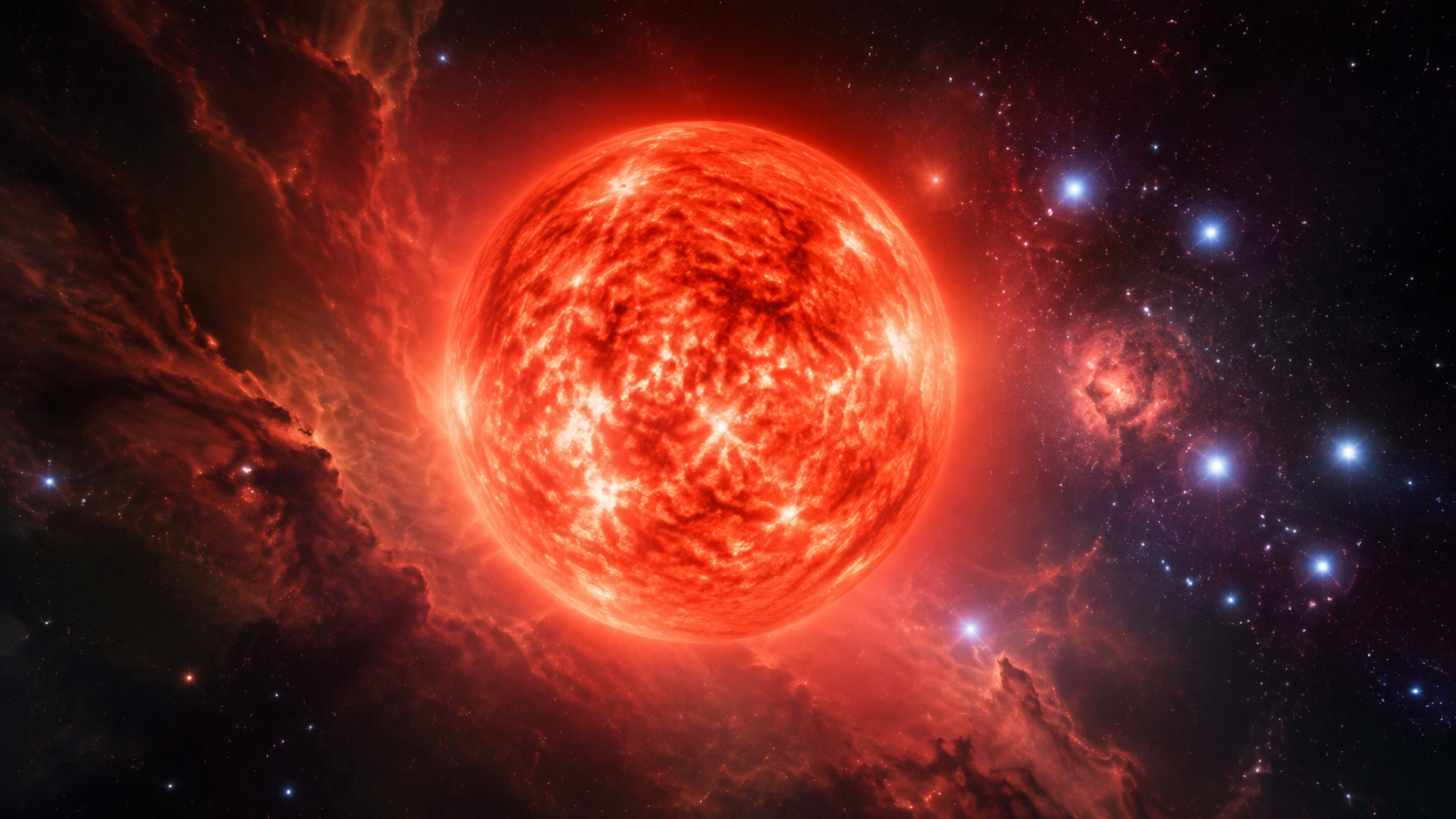
The Red Supergiant Antares Shining at the Heart of the Scorpius Constellation
Author: SpacePedia
Theme: Constellations
Subject: Antares
Article Summary: Antares is one of the most prominent stars of the Scorpius constellation and one of the bright red supergiant stars in the sky. Its light appears red-orange because its surface temperature is lower than that of the Sun. In contrast, Antares' diameter is hundreds of times larger than the Sun's, and the star is in an advanced stage of its life. Located among the stars forming the body of Scorpius, Antares can be easily distinguished in the night sky thanks to its distinct red color. The gas and dust structures surrounding the star are also associated with strong stellar winds. The mass of Antares and its advanced evolutionary stage make it a remarkable example for studying stellar phases that may eventually result in a supernova.
Date: 18-09-2026
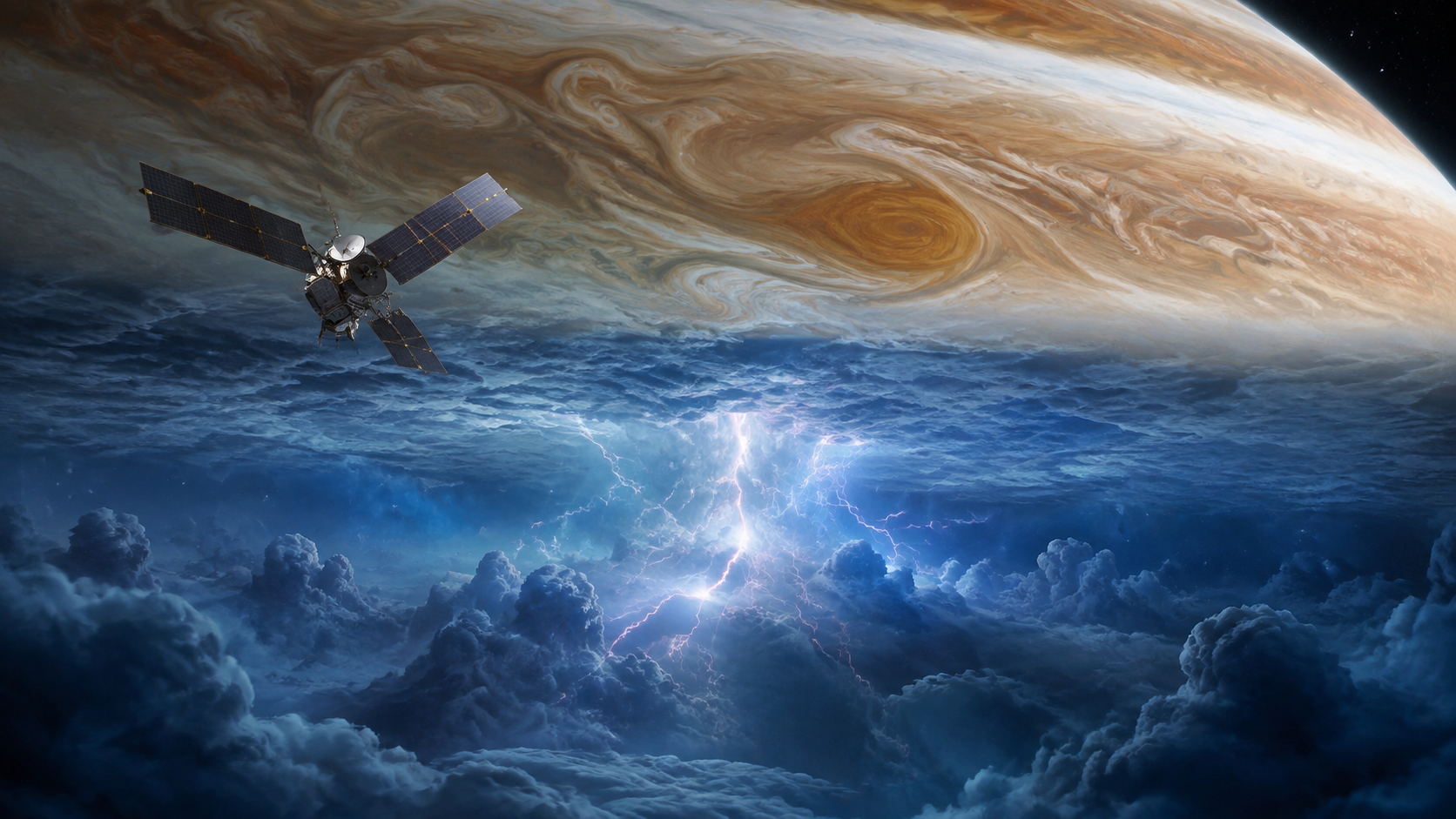
Discoveries Made by the Juno Spacecraft Beneath Jupiter's Thick Clouds
Author: SpacePedia
Theme: Spacecraft
Subject: Juno's discoveries about Jupiter's atmosphere and internal structure
Article Summary: NASA's Juno spacecraft conducted measurements during close flybys above Jupiter's dense cloud cover, examining not only the planet's visible atmosphere but also its deeper layers. Juno's microwave radiometer investigated the distribution of ammonia beneath Jupiter's clouds and atmospheric structures, while gravity measurements revealed that the cloud bands and jet streams extend to depths of about 3,000 kilometers. The spacecraft also detected giant cyclone systems at Jupiter's poles the size of Earth, unexpectedly shallow lightning, and atmospheric processes associated with ammonia-water mixtures. Magnetometer measurements showed that Jupiter's magnetic field is stronger and more irregular than previously expected. Juno's data indicated that Jupiter's core may be larger and partially dissolved—a 'fuzzy' structure—rather than a small, sharply defined one.
Date: 19-09-2026
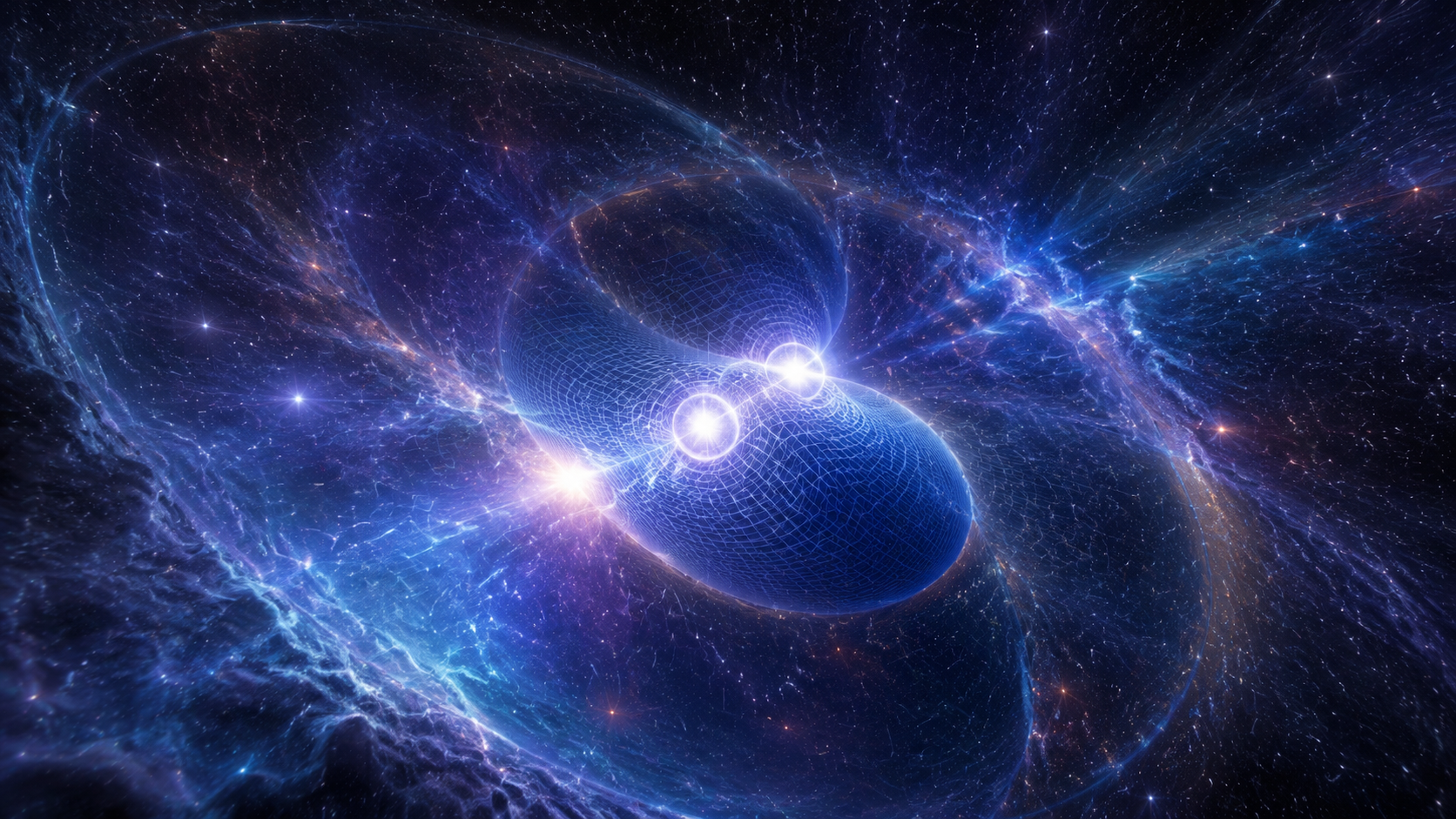
Observable Effects of Quantum Fluctuations in Outer Space
Author: SpacePedia
Theme: General Space
Subject: Quantum fluctuations
Article Summary: At first glance, outer space appears completely empty and motionless. However, according to quantum physics, a vacuum is not absolute 'nothingness.' Quantum fields exist everywhere in space, and even in their lowest energy state, small fluctuations can occur within these fields. These phenomena, known as quantum fluctuations, do not manifest as directly visible particle movements; rather, their effects can be revealed in the measurable outcomes of certain physical events. This topic is one of the intriguing links between microscopic quantum physics and the universe on a cosmic scale. In particular, the effects of quantum fluctuations become significant when examining the physical properties of the vacuum, the behavior of particles, and the conditions of the early universe.
Date: 19-09-2026
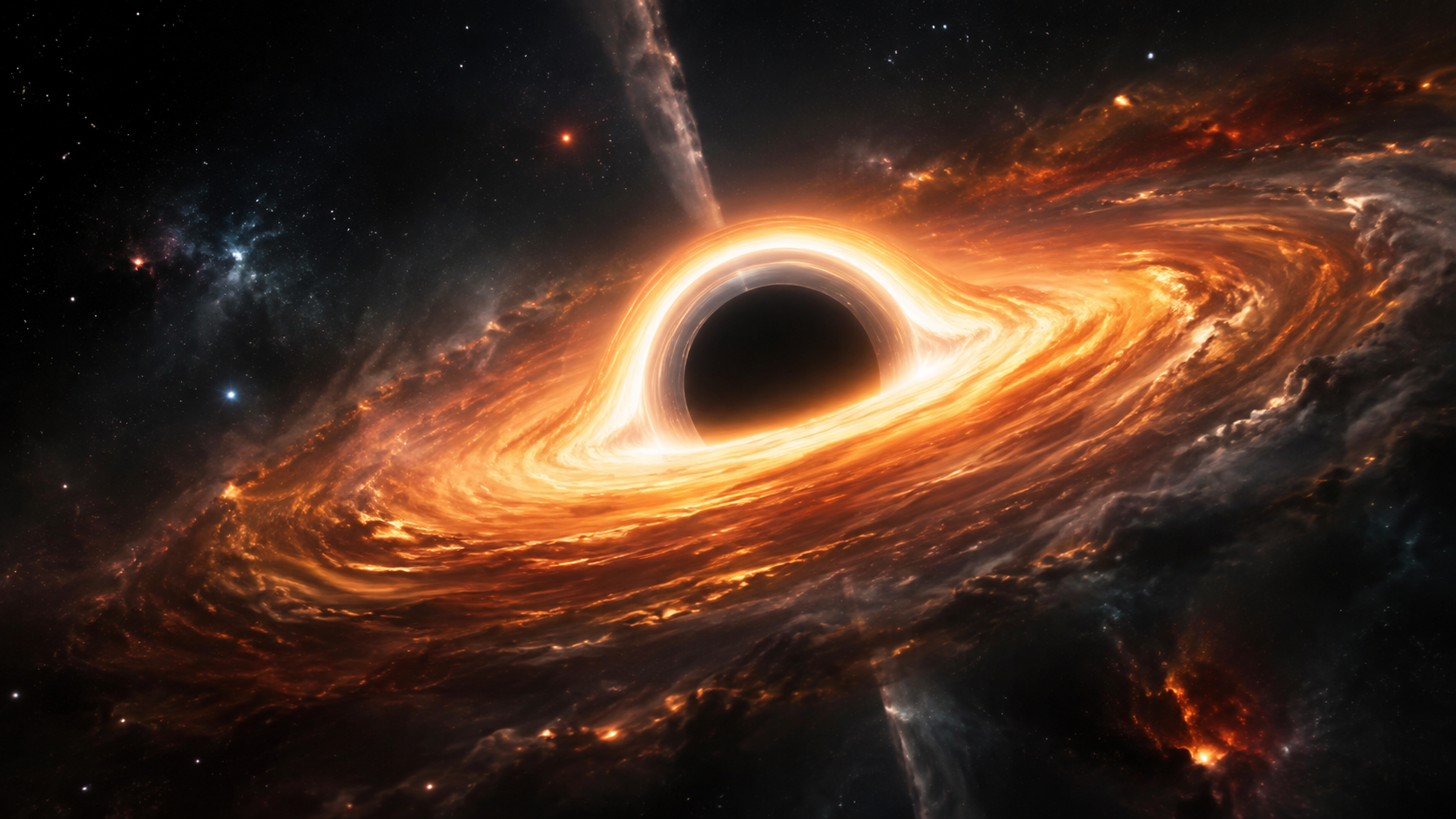
Bright Accretion Disks Formed by Matter Orbiting Black Holes
Author: SpacePedia
Theme: Black Holes
Subject: Accretion disks
Article Summary: Black holes do not emit light directly; however, the matter surrounding them can become extremely bright. As gas and dust move inward under the black hole's intense gravity, they spin rapidly and flatten into a disk. This accretion disk produces radiation at temperatures reaching millions of degrees due to friction and compression. In particular, X-rays play an important role in studying this highly energetic region around black holes.
Date: 20-09-2026
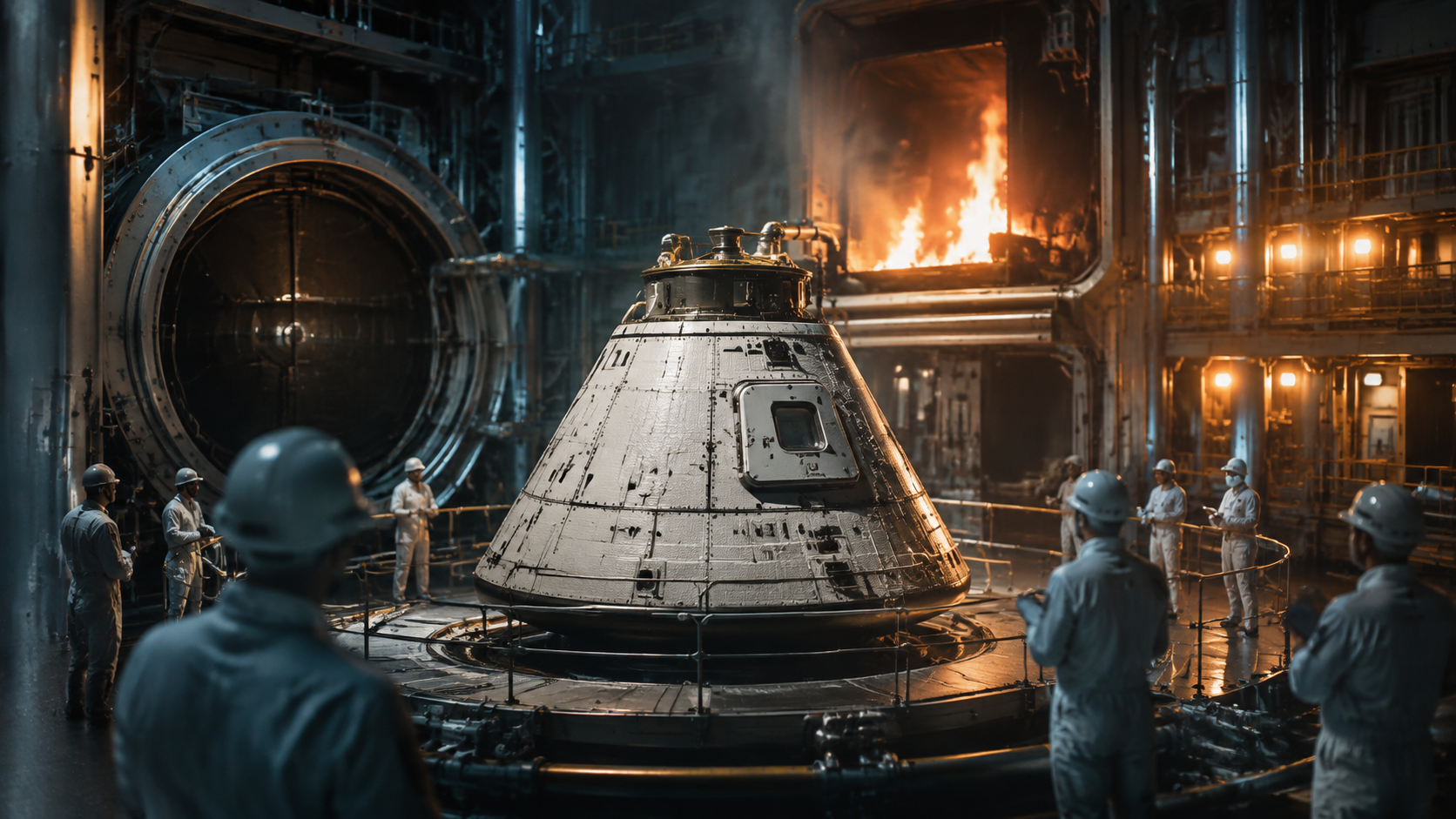
Safety Protocols Changed After the Apollo 1 Fire
Author: SpacePedia
Theme: Accidents
Subject: Space Safety
Article Summary: The ground test conducted for the Apollo 1 mission ended in tragedy on January 27, 1967, when a fire broke out inside the capsule, resulting in the deaths of three astronauts. During the test, the capsule's pressurized atmosphere of pure oxygen, the presence of flammable materials inside the cabin, and conditions related to the electrical system created an environment in which the fire spread extremely rapidly. The inability to quickly open the capsule hatch from the inside further worsened the fatal consequences of the emergency. Following the accident, NASA implemented extensive safety changes ranging from the design of crewed spacecraft to ground tests and astronauts' emergency procedures. Flammable materials inside the Apollo capsule were reduced, electrical systems were redesigned, the hatch opening mechanism was changed, and the atmospheric design was reviewed. These changes became fundamental regulations aimed at increasing crew safety in subsequent Apollo missions.
Date: 18-09-2026
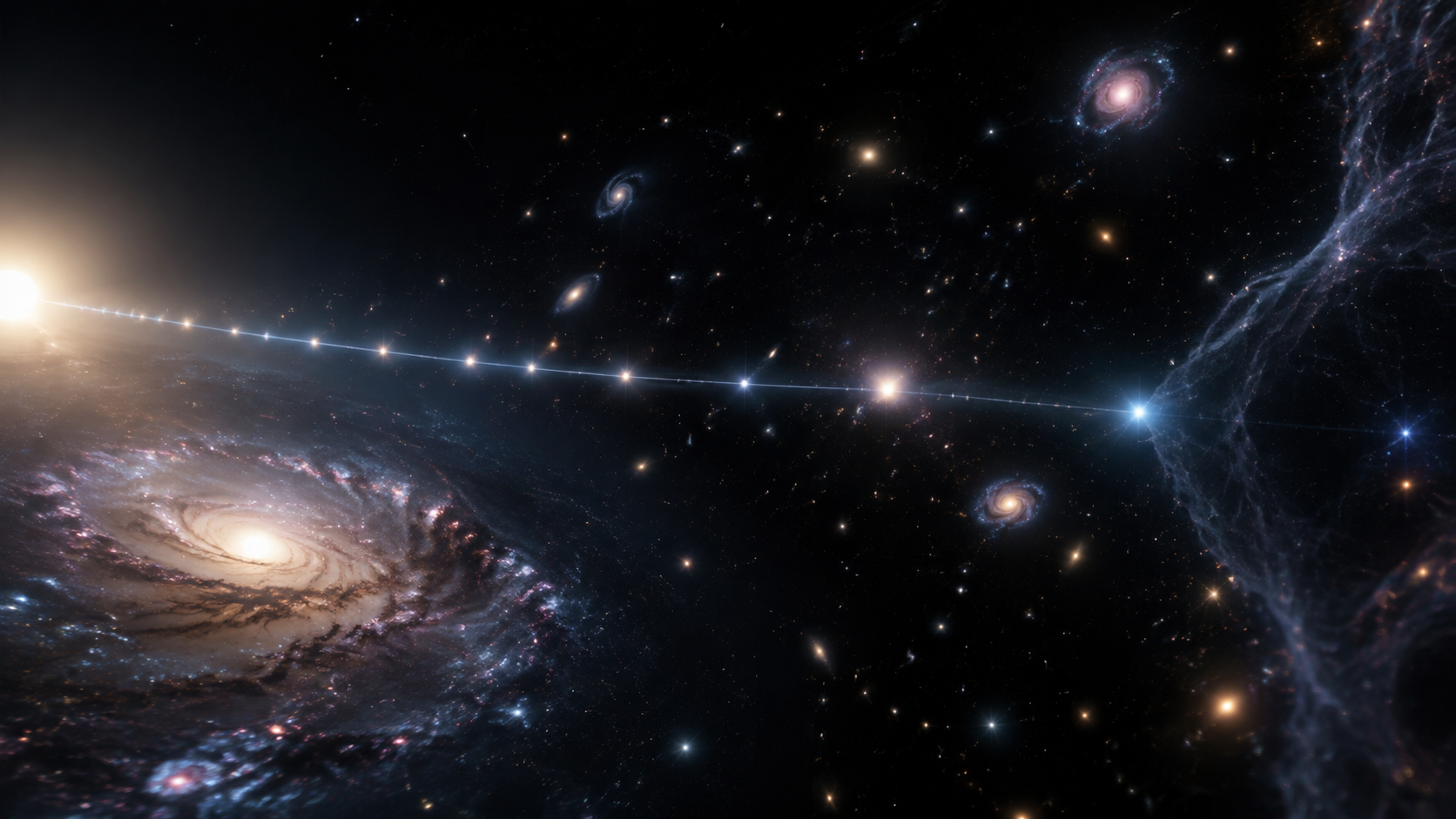
Light Year and Cosmic Scales in Determining the Distances of Distant Galaxies
Author: SpacePedia
Theme: General Space
Subject: Cosmic Distances
Article Summary: Cosmic distance units such as light year and megaparsec are used instead of kilometers to express the distances of distant galaxies from Earth. A light year represents the distance light travels in a year in a vacuum, which is approximately 9.46 trillion kilometers. Since light from a galaxy can travel for millions or billions of years to reach Earth, the distance to the galaxy also allows us to see it as it was in the past. However, the distance to very distant galaxies is not determined solely by calculating the path traveled by light. Astronomers calculate cosmic distances using measurements such as the brightness of galaxies, their spectral properties, and the redshift in the wavelength of their light. Thanks to these methods, a wide cosmic distance scale can be established, ranging from nearby galaxies a few million light years away to extremely distant galaxies billions of light years away.
Date: 18-09-2026
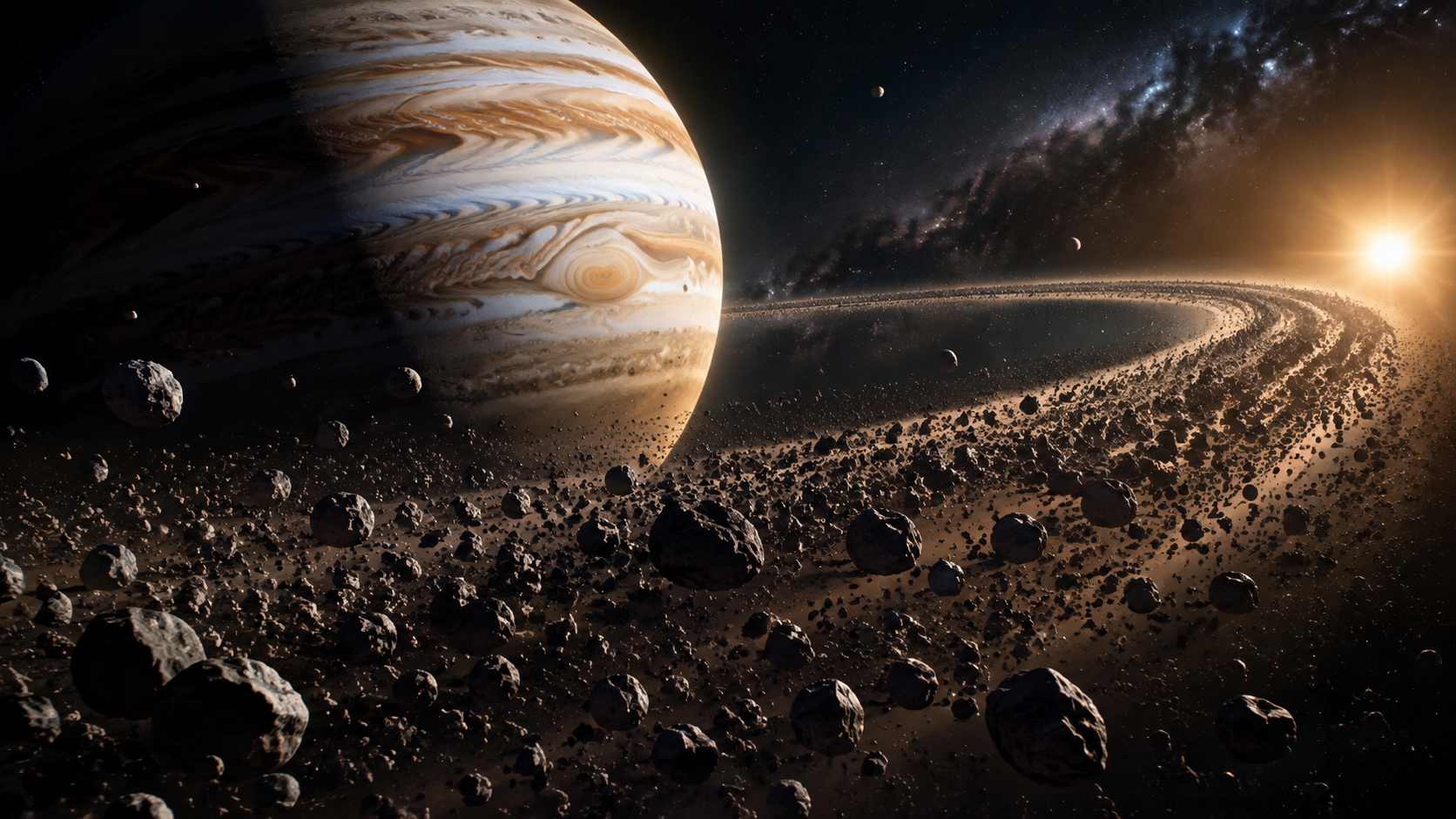
The Role of Jupiter's Gravitational Influence in the Formation of the Asteroid Belt
Author: SpacePedia
Theme: Planets
Subject: Jupiter and the asteroid belt
Article Summary: The asteroid belt contains a large number of small celestial bodies orbiting the Sun in the region between Mars and Jupiter. Jupiter's immense mass strongly affects the motions of objects in this area. Gravitational interactions alter the orbits of asteroids and prevent the formation of regular orbits in certain regions. In this way, Jupiter plays a significant role in shaping the current scattered structure of the asteroid belt.
Date: 20-09-2026
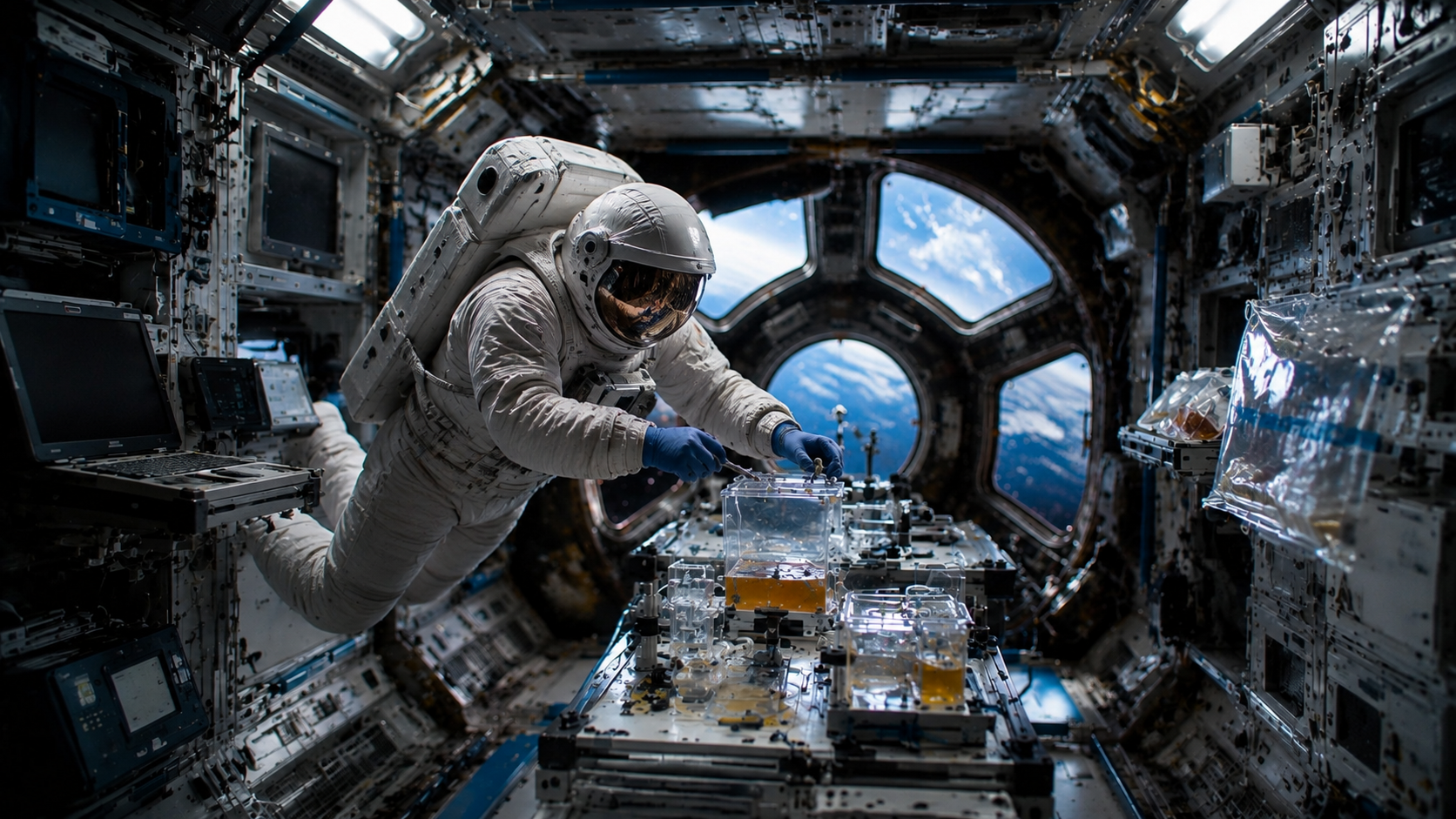
Scientific Experiments Conducted in Microgravity on the International Space Station
Author: SpacePedia
Theme: New Developments
Subject: Microgravity
Article Summary: Microgravity is not an environment where Earth's gravity is completely eliminated. Because objects in orbit are in a constant state of free fall, a near-weightless environment is created. These conditions allow for the study of physical, biological, and chemical processes that are difficult to observe under the influence of gravity on Earth. A wide range of research benefits from this environment, from the behavior of cells to the movement of fluids, from the formation of crystals to the human body's response to prolonged space conditions.
Date: 20-09-2026
How Stellar Mass Determines Endings Like Supernovae and White Dwarfs
Author: SpacePedia
Theme: Stars
Subject: Stellar Mass
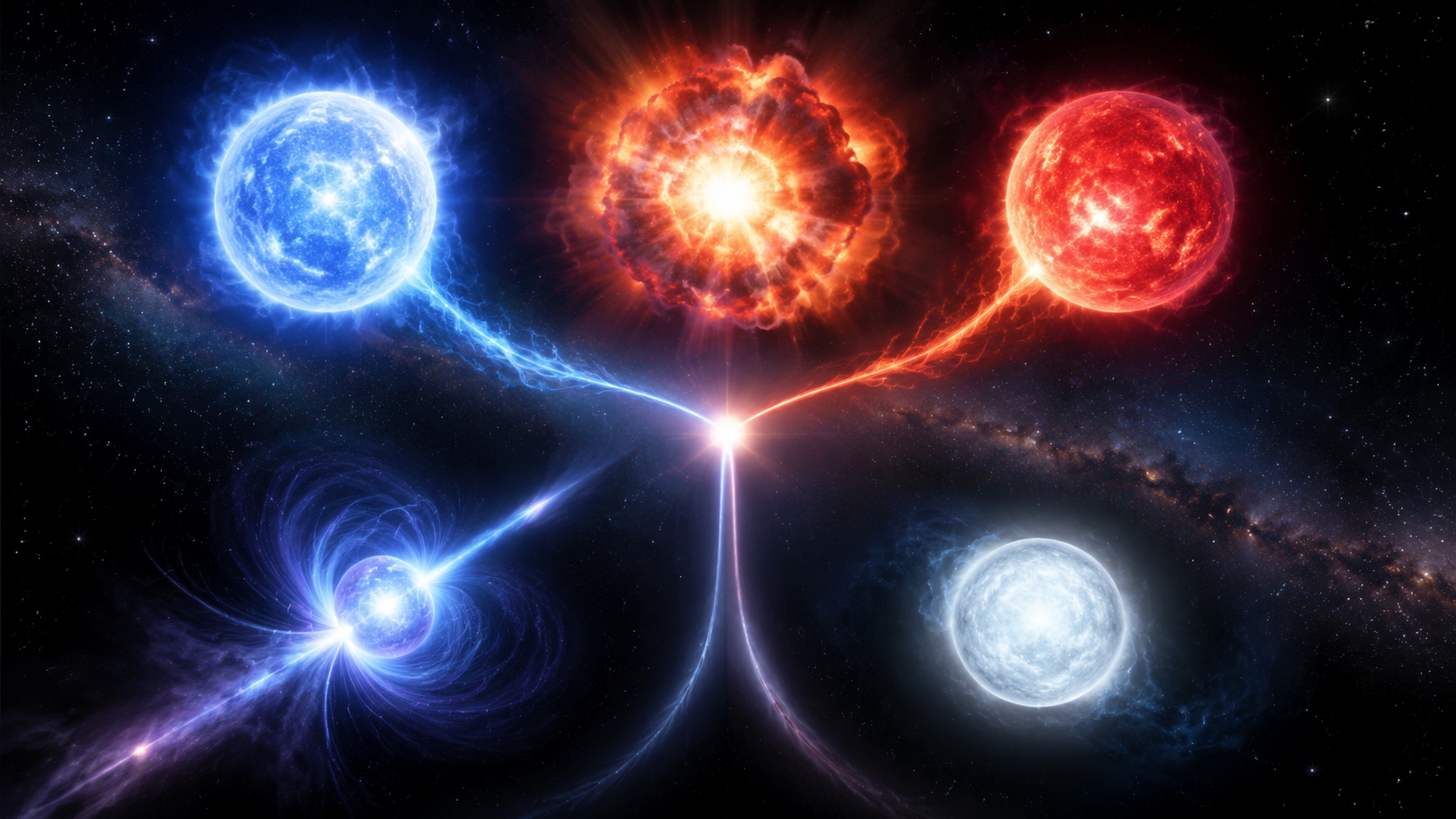
Article Summary: One of the most important factors determining what kind of celestial object a star will become at the end of its life is its initial mass. Lower-mass stars consume their fuel more slowly and, at the end of their lives, shed their outer layers into space, leaving behind a dense white dwarf. The future path of Sun-like stars falls into this group. In much more massive stars, as the fuel in the core is depleted, equilibrium is lost and the core collapses under its own gravity. This process can lead to a massive supernova explosion, leaving behind a neutron star or a black hole. Thus, a star's mass becomes one of the fundamental factors determining its fate, from its lifespan to its final physical structure.
Date: 18-09-2026
The Sublimation Process Experienced by Comets as They Approach the Sun
Author: SpacePedia
Theme: Comets
Subject: Sublimation
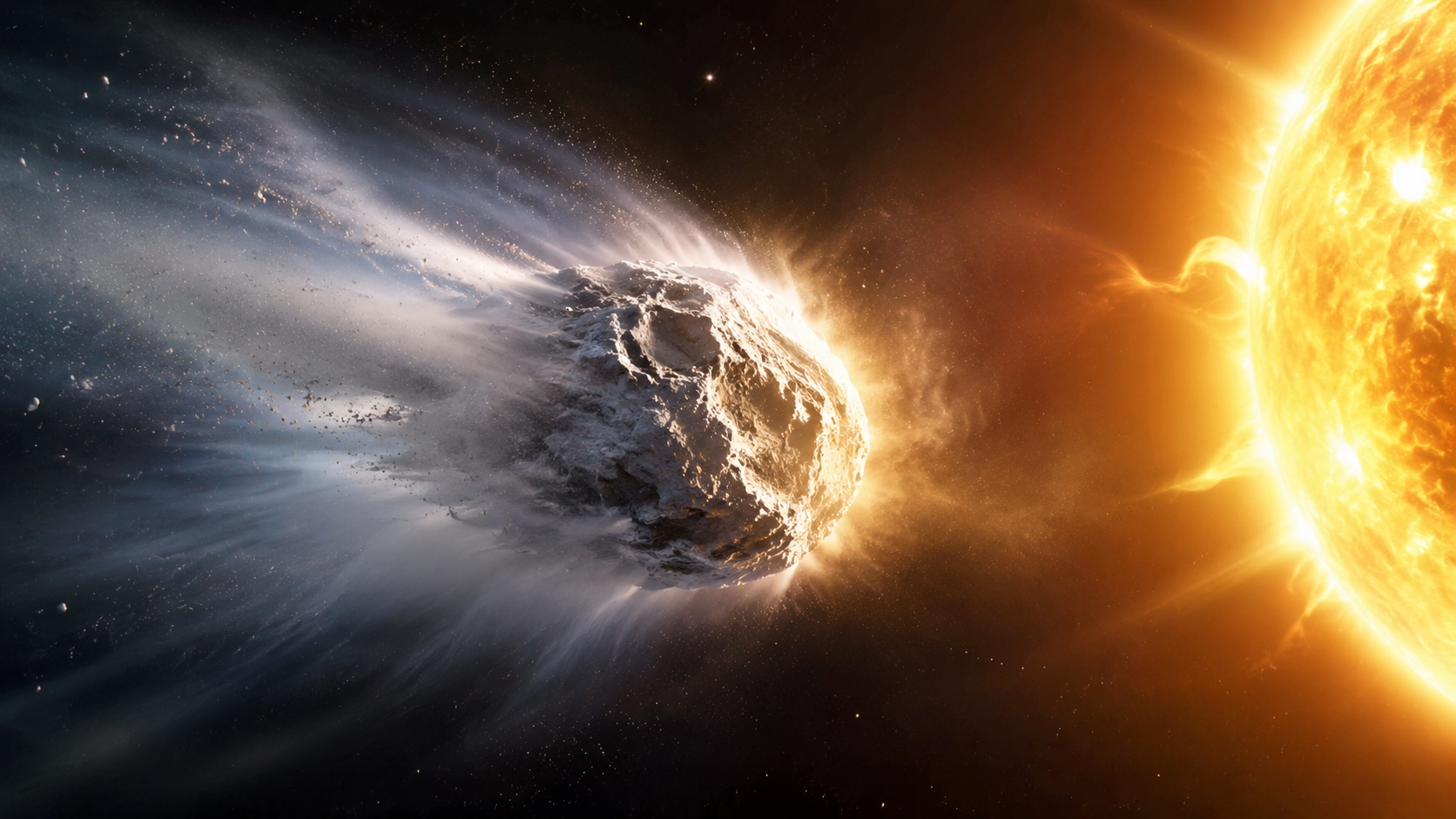
Article Summary: Comets are small celestial bodies composed largely of ice, rock, and dust. When far from the Sun, the volatile substances on their surfaces are mostly in solid form, and comets appear as dim, low-activity objects. As they approach the Sun, the radiation and heat they receive increase. Some ices on or near the surface transform directly from solid to gas without becoming liquid; this physical change is called sublimation. The released gas drags dust particles with it, forming a coma around the nucleus. Due to the effects of the solar wind and sunlight, some of these materials are stretched out behind the comet, forming tail structures. Sublimation not only changes the appearance of the comet, but also erodes material from its surface, causing the nucleus to change over time.
Date: 19-09-2026
Imaging Methods for Invisible Black Holes: The Case of M87
Author: SpacePedia
Theme: Black Holes
Subject: Black Hole Imaging
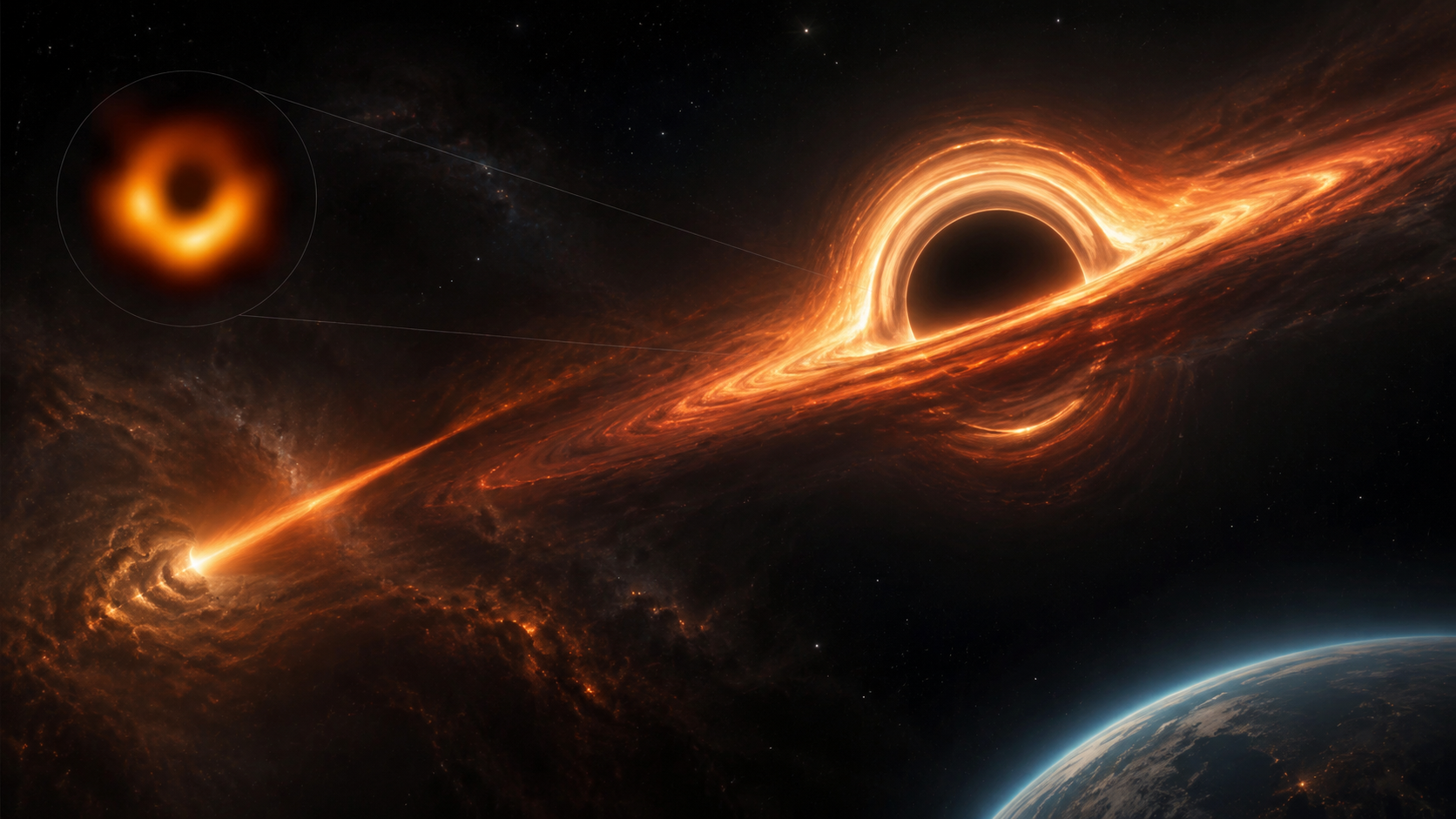
Article Summary: Black holes cannot be seen directly with a normal telescope because they do not emit their own light. Nevertheless, the light emitted by the hot gas surrounding them and the strong gravity of the black hole bending this light make it possible to image the region where the black hole is located. One of the best-known examples of this is the supermassive black hole at the center of the M87 galaxy, about 55 million light-years from Earth. The Event Horizon Telescope (EHT) observed millimeter-wavelength radiation coming from around M87* by operating radio telescopes in different parts of the world as a single, Earth-sized virtual telescope. In the image published in 2019, a bright ring and a darker region in the center appeared. The imaged dark center is not the black hole itself, but the shadow region from which light cannot escape due to the black hole's strong gravity. This observation demonstrates how black holes can be imaged by taking advantage of their effects on the light around them.
Date: 18-09-2026

The Secrets of How Scientists Discover Distant Exoplanets
Author: SpacePedia
Theme: Different Methods
Subject: Exoplanet Discovery
Article Summary: Exoplanets are planets that orbit other stars outside our Solar System. Since they are much dimmer than their stars, most cannot be seen directly. To detect these planets, scientists measure small changes in the brightness, motion, and position of stars in the sky. In the transit method, the dip in brightness as a planet passes in front of its star is examined, while the radial velocity method investigates changes in the star's movement caused by the planet's gravity. Astrometry relies on detecting tiny shifts in a star's position in the sky, and direct imaging focuses on faint light from planets under suitable conditions. By combining data from different methods, scientists can learn about the existence, orbits, sizes, and masses of exoplanets.
Date: 11-09-2026