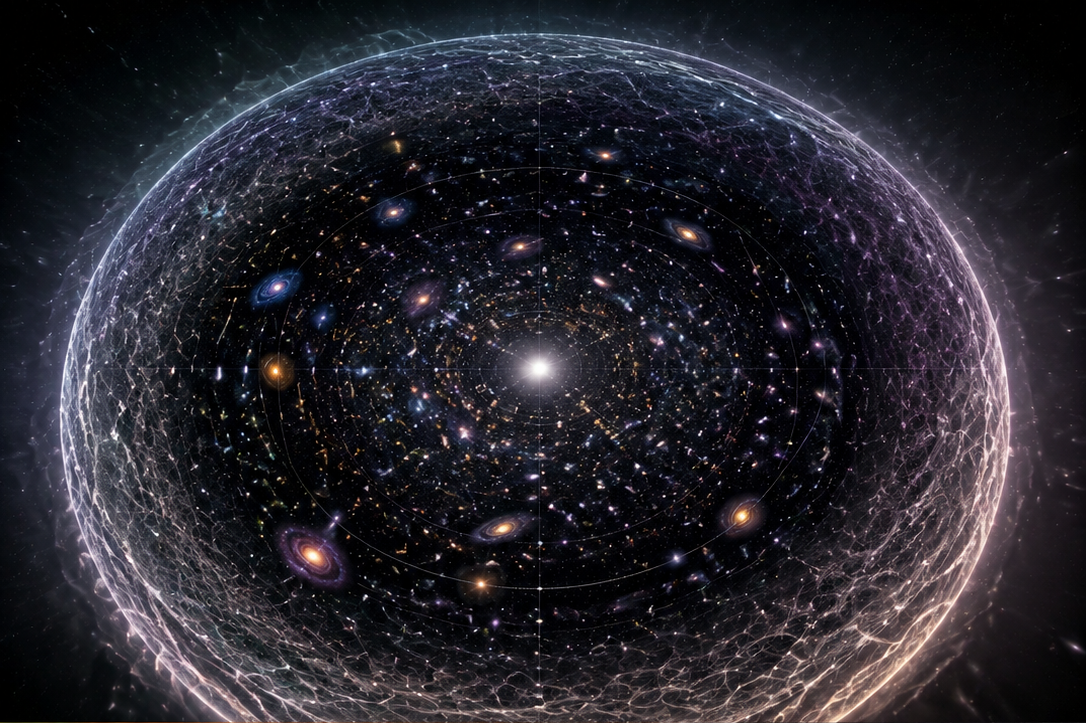
Determining the Limits of the Observable Universe
Theme: General Space
Subject: Observable Universe
Article Summary: The observable universe is the region of space from which light and other information-carrying signals can reach Earth. Although the universe is about 13.8 billion years old, the current radius of the observable universe is calculated to be approximately 46.5 billion light-years. This is because space continues to expand as light travels. The boundary of the observable universe is not a physical wall or the actual edge of the universe; it is an observational limit formed by the fact that light from beyond a certain point has not yet reached us. Measurements such as the travel time of light, the expansion of the universe, the cosmic microwave background, and the redshifts of distant galaxies are used to determine this boundary.
Date: 14-09-2026
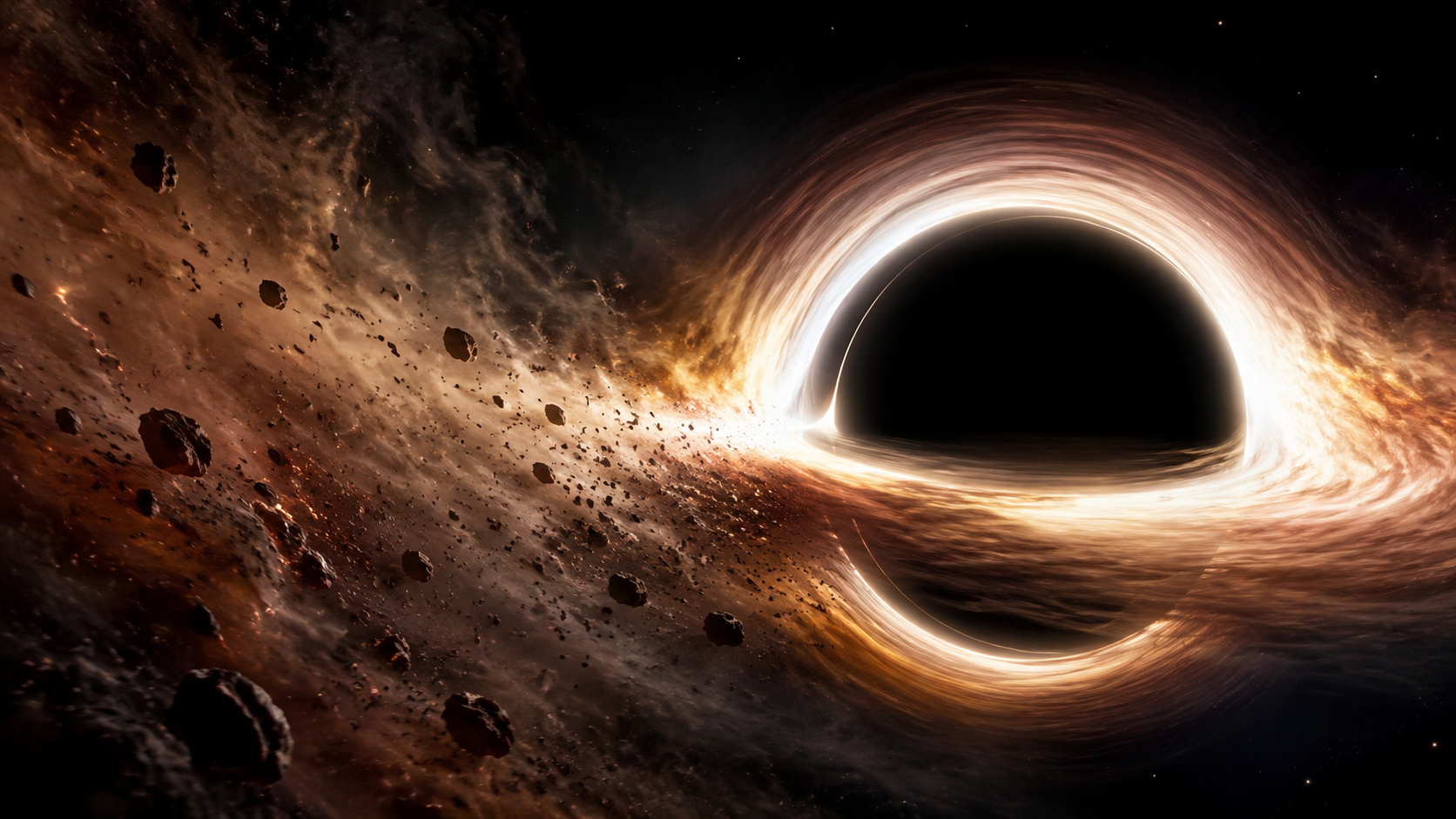
The Irreversible Boundary of a Black Hole: What Happens at the Event Horizon
Theme: Black Holes
Subject: Event Horizon
Article Summary: The event horizon is the boundary surrounding a black hole from which not even light can escape. The location of this boundary depends on the black hole's mass. As an object approaches the event horizon, the black hole's intense gravitational pull becomes more pronounced, and once inside the event horizon, returning to the outside is impossible. The event horizon is not a physical surface; it defines the boundary of the region around the black hole where escape is no longer possible. Sagittarius A* at the center of the Milky Way is also a supermassive black hole, and its event horizon has a diameter of approximately 12 billion kilometers.
Date: 14-09-2026
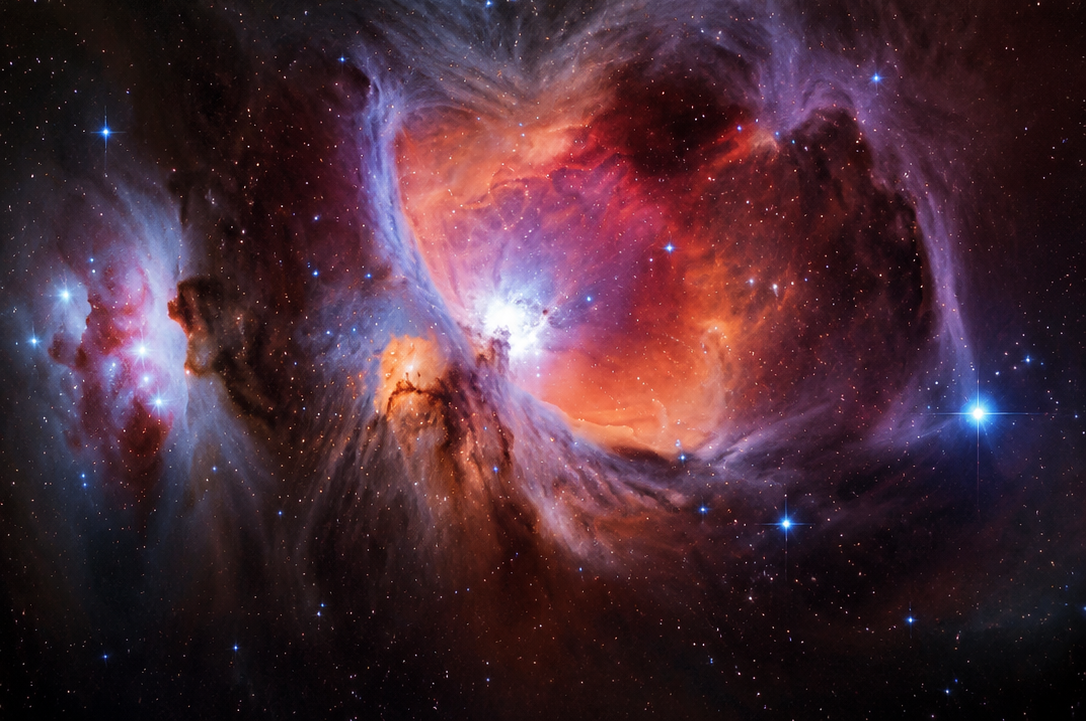
The Giant Cosmic Nursery Where Stars Are Born: The Orion Nebula
Theme: Nebulae
Subject: Orion Nebula
Article Summary: The Orion Nebula is a large star-forming region located about 1,300 light-years from Earth, in the direction of the constellation Orion. Composed of gas and dust, this nebula contains dense regions where new stars are being formed. While the young stars within the nebula illuminate the surrounding gas with their intense radiation, some areas of the dense gas and dust clouds contain the cores where new stars are born. The structure of the Orion Nebula includes not only bright ionized gas regions but also dark dust lanes and layers of gas at different temperatures. With these features, the Orion Nebula is one of the most prominent observable examples of a nebula where star formation takes place.
Date: 14-09-2026
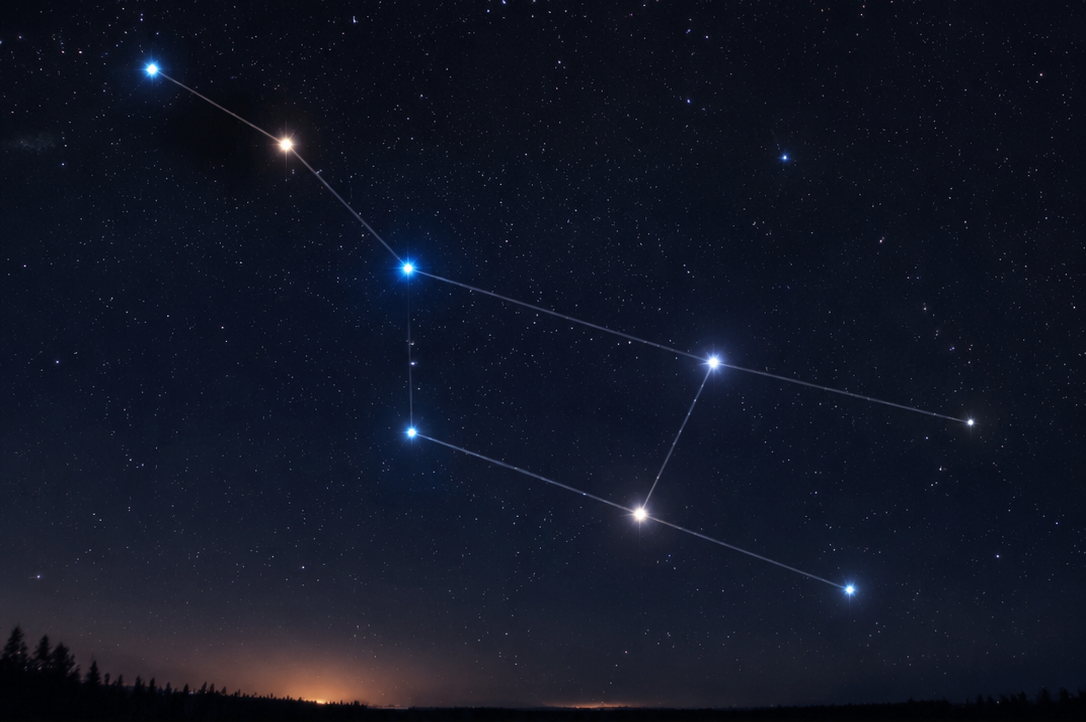
The Position of the Ursa Major Constellation in the Sky and Its Stars
Theme: Constellations
Subject: Ursa Major Constellation
Article Summary: Ursa Major, known as the Great Bear, is a large constellation located in the northern sky and is easily recognized by its seven bright stars. The distinctive ladle-shaped star pattern formed by these seven stars is technically not the entire constellation, but rather the Big Dipper, an asterism within Ursa Major. The main stars forming this pattern are Dubhe, Merak, Phecda, Megrez, Alioth, Mizar, and Alkaid. Dubhe and Merak, the two stars in the bowl of the Big Dipper, can be used to find the direction of Polaris, the North Star.
Date: 14-09-2026

The Secrets of How Scientists Discover Distant Exoplanets
Theme: Different Methods
Subject: Exoplanet Discovery
Article Summary: Exoplanets are planets that orbit other stars outside our Solar System. Since they are much dimmer than their stars, most cannot be seen directly. To detect these planets, scientists measure small changes in the brightness, motion, and position of stars in the sky. In the transit method, the dip in brightness as a planet passes in front of its star is examined, while the radial velocity method investigates changes in the star's movement caused by the planet's gravity. Astrometry relies on detecting tiny shifts in a star's position in the sky, and direct imaging focuses on faint light from planets under suitable conditions. By combining data from different methods, scientists can learn about the existence, orbits, sizes, and masses of exoplanets.
Date: 11-09-2026

The Mysterious Structure of the Milky Way Galaxy and the Dark Matter Web
Theme: Galaxies
Subject: Milky Way
Article Summary: The Milky Way is a barred spiral galaxy that contains the Solar System. Its structure includes a disk made up of stars, a central region, clouds of gas and dust, and a much larger dark matter halo. The supermassive black hole at the center, called Sagittarius A*, is studied along with the movements of the surrounding stars and gas. Dark matter cannot be directly imaged because it does not emit light; its existence is investigated by using its gravitational effects on the motions of stars and other matter. When the visible disk of the Milky Way and the surrounding dark matter halo are considered together, the structure and mass distribution of the galaxy are revealed.
Date: 11-09-2026

New Lunar Missions for Humanity within the Artemis Program
Theme: New Developments
Subject: Artemis Program
Article Summary: The Artemis Program is advancing to restart human lunar exploration and lay the foundation for long-term exploration activities around the Moon. Artemis II paved the way for crewed Artemis missions by passing around the Moon with four astronauts in April 2026. According to the current plan, Artemis III is set to conduct critical docking and landing system tests in Earth orbit in 2027, while Artemis IV aims to land humans on the lunar surface in 2028.
Date: 11-09-2026

Technical Failures That Destroyed the Space Shuttle in the Challenger Disaster
Theme: Accidents
Subject: Challenger Disaster
Article Summary: On January 28, 1986, the Challenger space shuttle disintegrated shortly after the launch of the STS-51L mission. At the heart of the accident was the failure of the O-ring seals used in the joint of one of the solid rocket boosters to maintain sufficient flexibility at low temperatures. The loss of seal integrity in the joint allowed hot gases to escape, initiating a chain reaction that damaged structures connected to the fuel tank. In addition to the technical issue, the failure to adequately consider this risk before launch was also a significant factor in the disaster.
Date: 11-09-2026

The Interstellar Long Journey of the Voyager Spacecraft
Theme: Spacecraft
Subject: Voyager's Interstellar Journey
Article Summary: The Voyager spacecraft were launched in 1977 to explore the outer regions of the Solar System. After passing by Jupiter and Saturn, Voyager 2 also flew close to Uranus and Neptune, making important observations about these distant worlds. Their journey was not limited to the planets; the spacecraft became human-made exploration vehicles advancing toward the outer boundaries of the Solar System and into interstellar space. The source notes that even at Voyager 2's speed of over 55,000 kilometers per hour, it would still take tens of thousands of years to approach another star.
Date: 11-09-2026

The Enormous Power Produced by the Sun Through Nuclear Fusion
Theme: Stars
Subject: Nuclear Fusion
Article Summary: The Sun's light and heat originate from nuclear fusion reactions occurring in its core. Under extremely high temperature and pressure at the Sun's center, hydrogen nuclei combine to form helium. The small mass difference generated during this process is converted into energy, enabling the Sun to continuously emit radiation into space. The primary mechanism of energy production in the Sun is the proton-proton chain.
Date: 11-09-2026
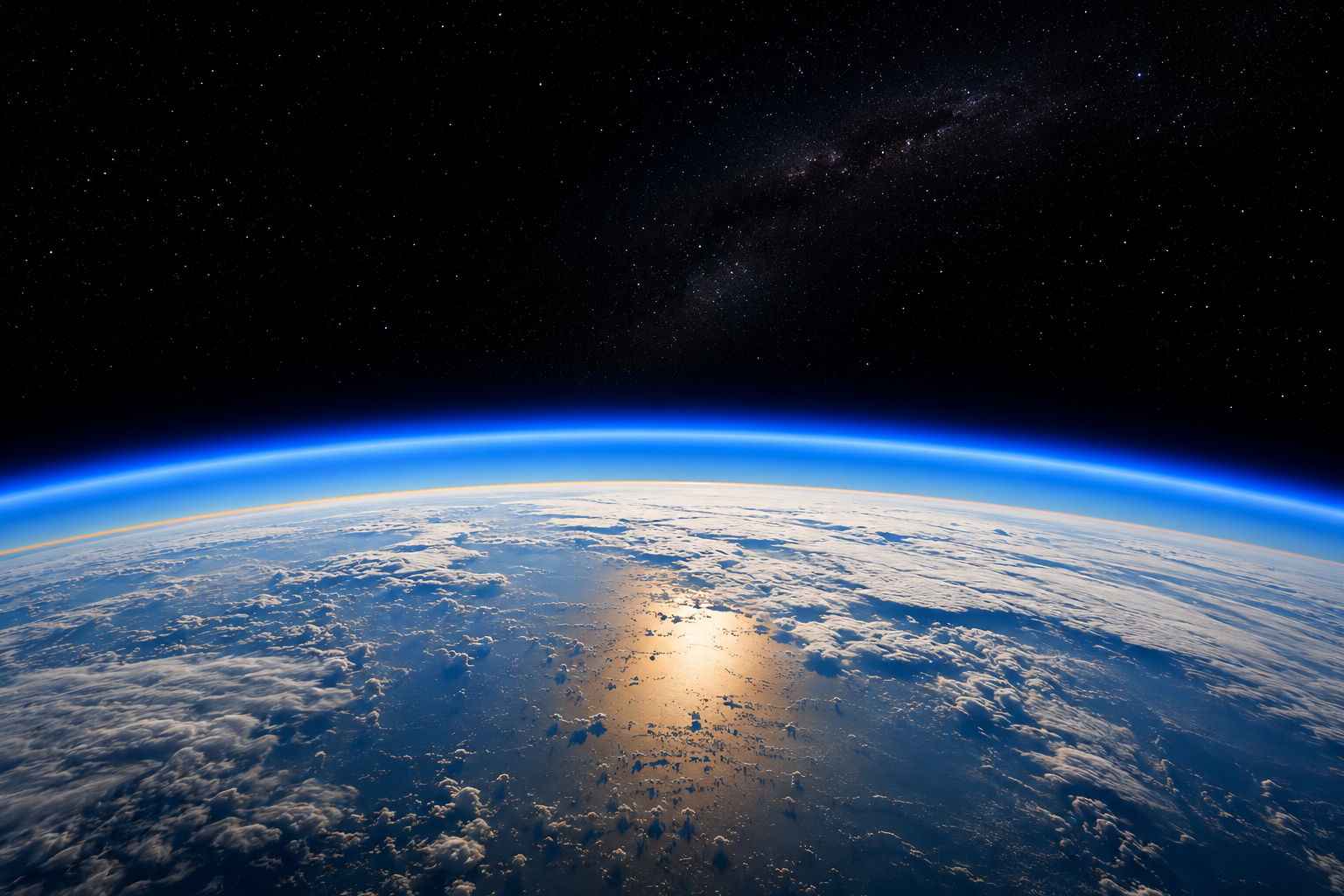
Determining the Beginning of Space
Theme: General Space
Subject: Kármán Line - The Beginning of Space
Article Summary: The Kármán line is an imaginary boundary accepted at approximately 100 kilometers above Earth's surface and used to define the transition between atmospheric flight and movement in space. The atmosphere does not suddenly end at this altitude; its density gradually decreases as altitude increases. The altitude of approximately 100 kilometers is used to define the region where the atmosphere becomes extremely sparse and the characteristics of aerodynamic flight change significantly.
Date: 14-08-2026
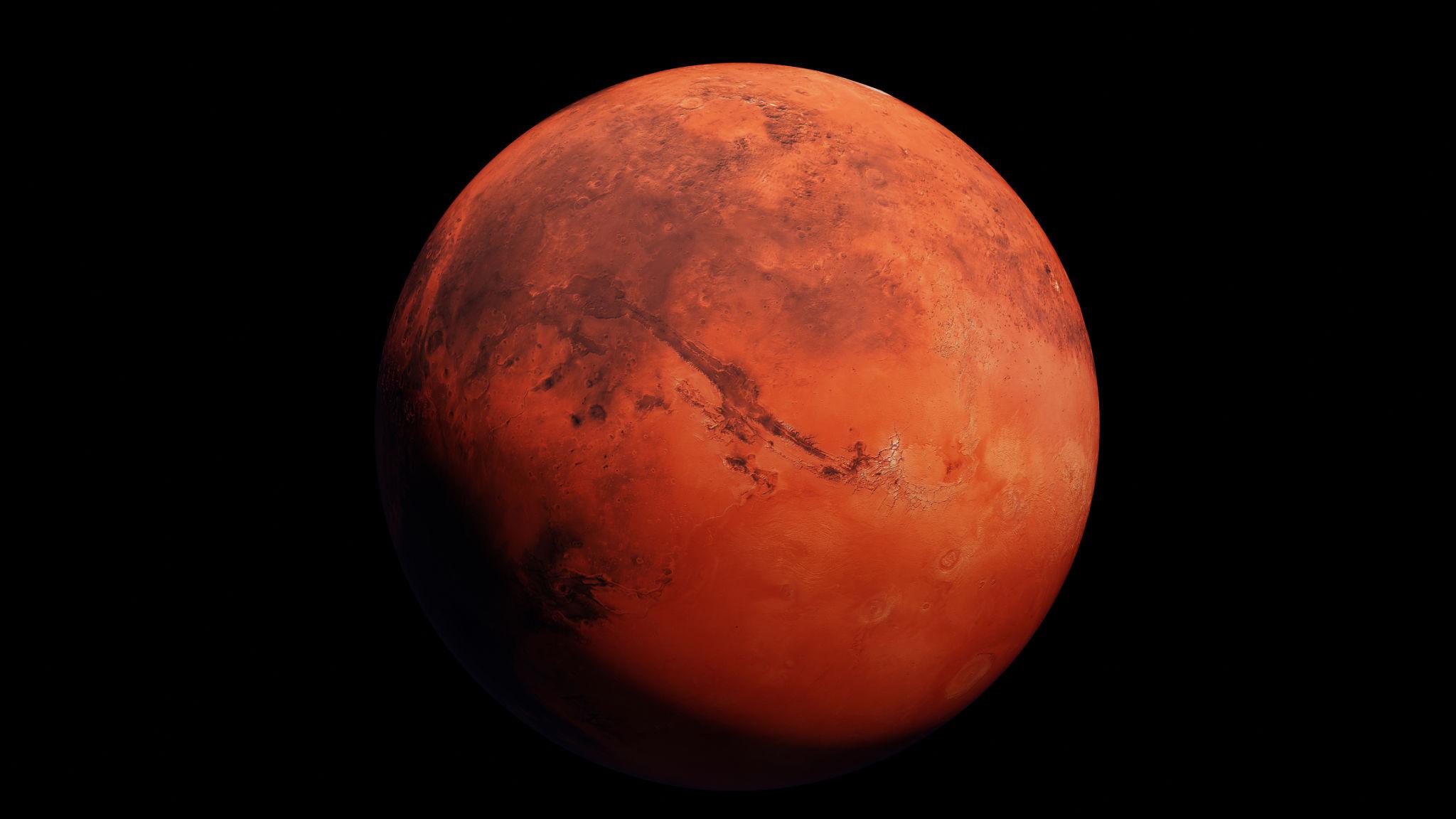
The Mysterious World of the Red Planet
Theme: Planets
Subject: Mars Planet - Our Red Neighbor
Article Summary: Mars is one of the planets in the Solar System that most closely resembles Earth and is known as the "Red Planet." It gets this color from iron oxide (rust) on its surface. With its thin atmosphere, massive volcanoes, and deep canyons, Mars is one of the most studied planets by scientists because it may have once contained water. Today, Mars is considered a potential candidate for future human life.
Date: 18-03-2026