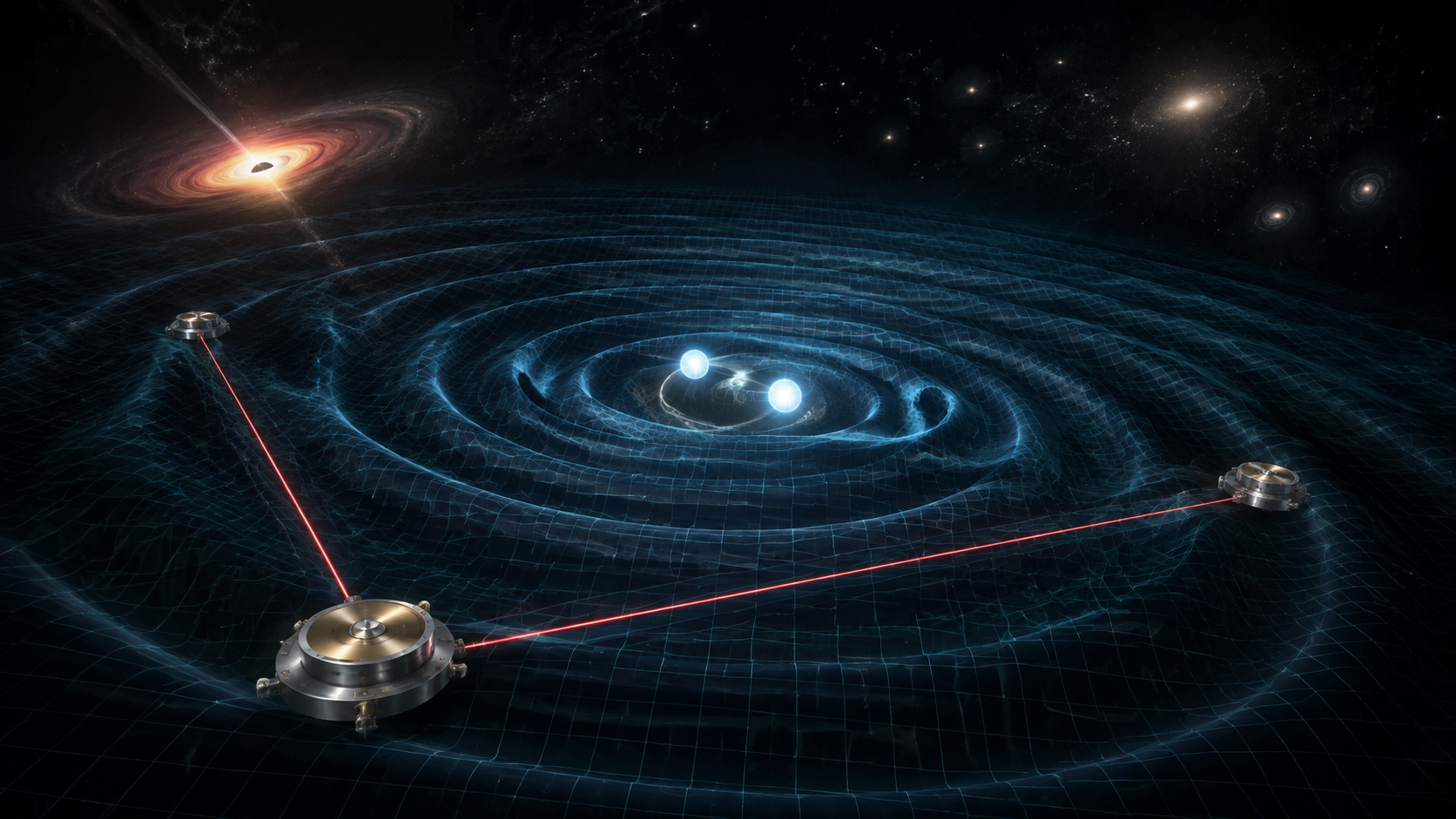
Methods for Detecting Gravitational Waves in the Fabric of Space-Time
Theme: Different Methods
Subject: How gravitational waves are measured and which observation methods are used
Article Summary: Gravitational waves are ripples in the fabric of space-time that occur as a result of the accelerated motions of extremely massive celestial objects and propagate at the speed of light. In particular, the mergers of black holes and neutron stars can generate strong gravitational waves. When these waves reach Earth, they stretch and compress space-time by extremely small amounts. Instead of directly 'seeing' these changes, astronomers detect them using sensitive measurement systems. Today, one of the most important methods for this is kilometer-long laser interferometers. Observatories such as LIGO, Virgo, and KAGRA determine the trace left by the wave by measuring the difference in the path of laser light along two perpendicular arms. In addition, pulsar timing arrays investigate much lower frequency waves, while the future space-based LISA observatory aims to study frequency ranges that ground-based detectors cannot reach.
Date: 19-09-2026
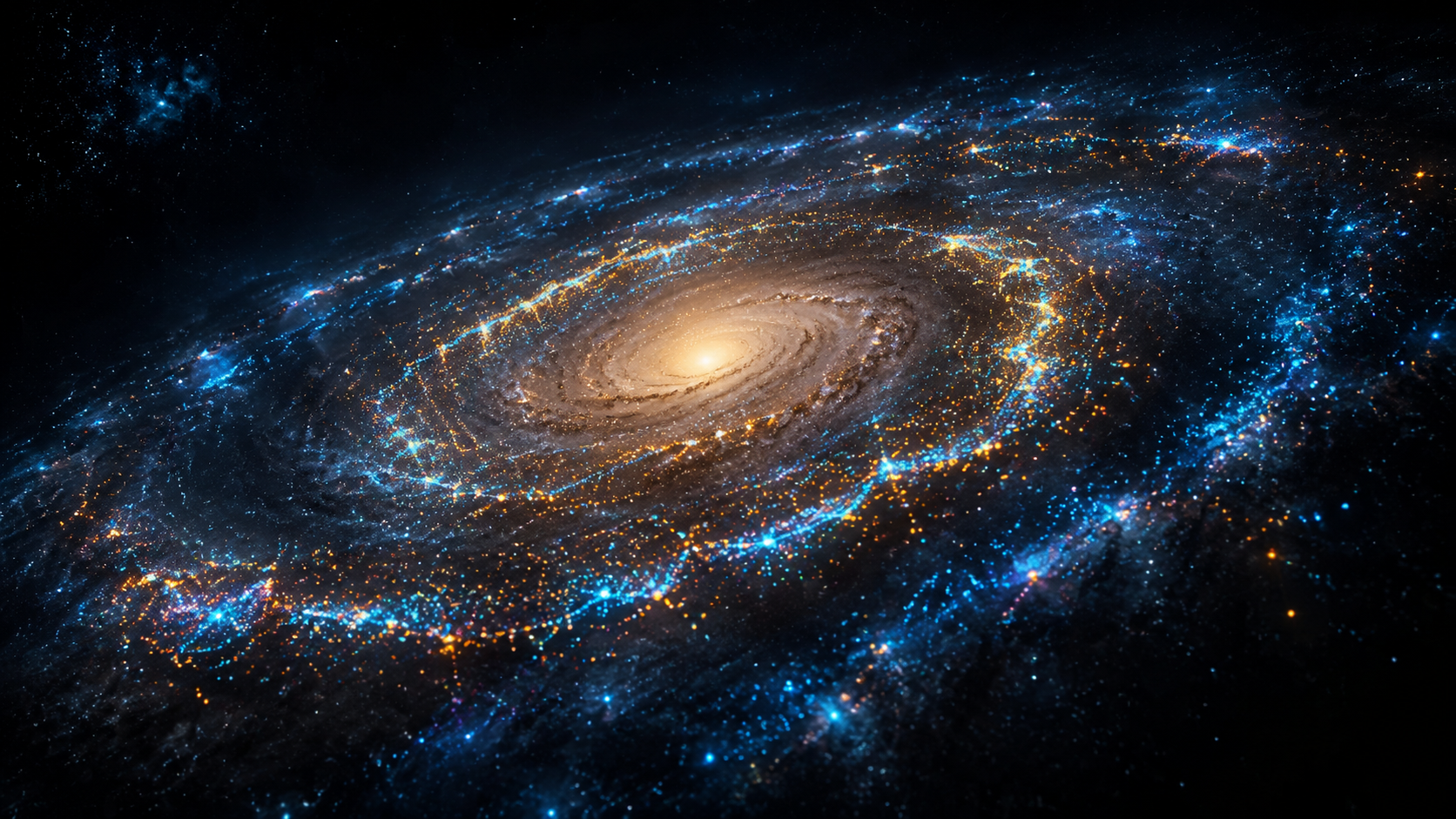
Mapping the Stellar Distribution in the Spiral Arms of the Milky Way Galaxy
Theme: Galaxies
Subject: Revealing the spiral structure of the Milky Way and the distribution of stars within the galaxy
Article Summary: The Milky Way is a spiral galaxy with a bar-like structure at its center. However, since we are inside it, it is not possible to see the entire galaxy in a single image taken from the outside. Therefore, the spiral arms and stellar distribution of the Milky Way are mapped by combining the positions, distances, and motions of stars, clouds of gas and dust, and observations at different wavelengths. In particular, measuring the distances to stars plays a fundamental role in revealing the three-dimensional structure of the galaxy. As emphasized in the Milky Way mapping section of the book, in order to understand the structure of our galaxy, it is necessary to determine not only the apparent positions of stars in the sky, but also their distances and distributions within the galactic structure.
Date: 19-09-2026
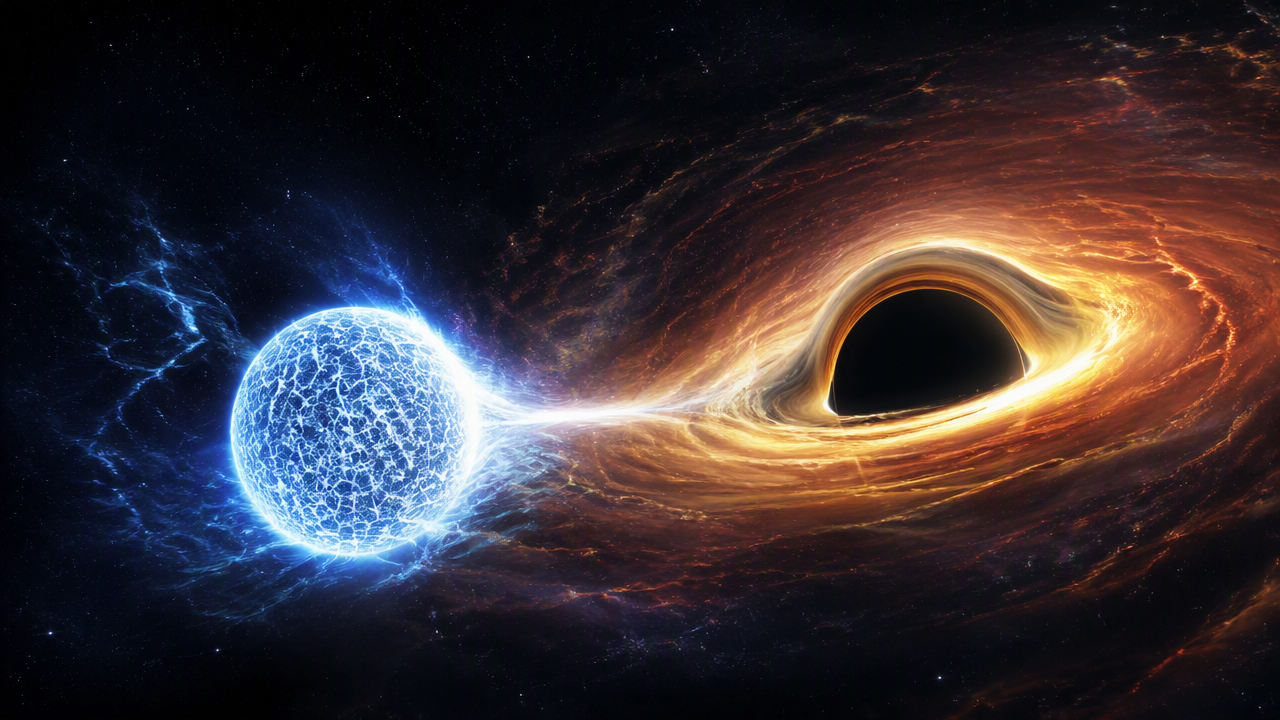
The Critical Mass Limit Determining the Collapse of Neutron Stars into Black Holes
Theme: Neutron Stars
Subject: Stability limit of neutron stars and collapse into black holes
Article Summary: Neutron stars are extremely dense celestial objects left behind after the supernova explosions of massive stars. While their masses can be similar to or several times that of the Sun, their diameters are only about 20–25 kilometers. The main factor supporting matter at this extraordinary density is the quantum mechanical pressure and the strong forces generated by the dense nuclear matter inside the neutron star. However, there is an upper limit to the mass a neutron star can sustain. This limit is known as the Tolman–Oppenheimer–Volkoff (TOV) limit. Its exact value is still being researched today, as it depends on the equation of state of neutron star matter at extremely high densities; observations show that neutron stars with several solar masses can exist. If a neutron star exceeds the maximum mass it can support, it cannot withstand its own gravity and, according to general relativity, will begin to collapse, forming a black hole. Therefore, the critical mass is of great importance for understanding the physical boundary between a neutron star and a black hole.
Date: 19-09-2026
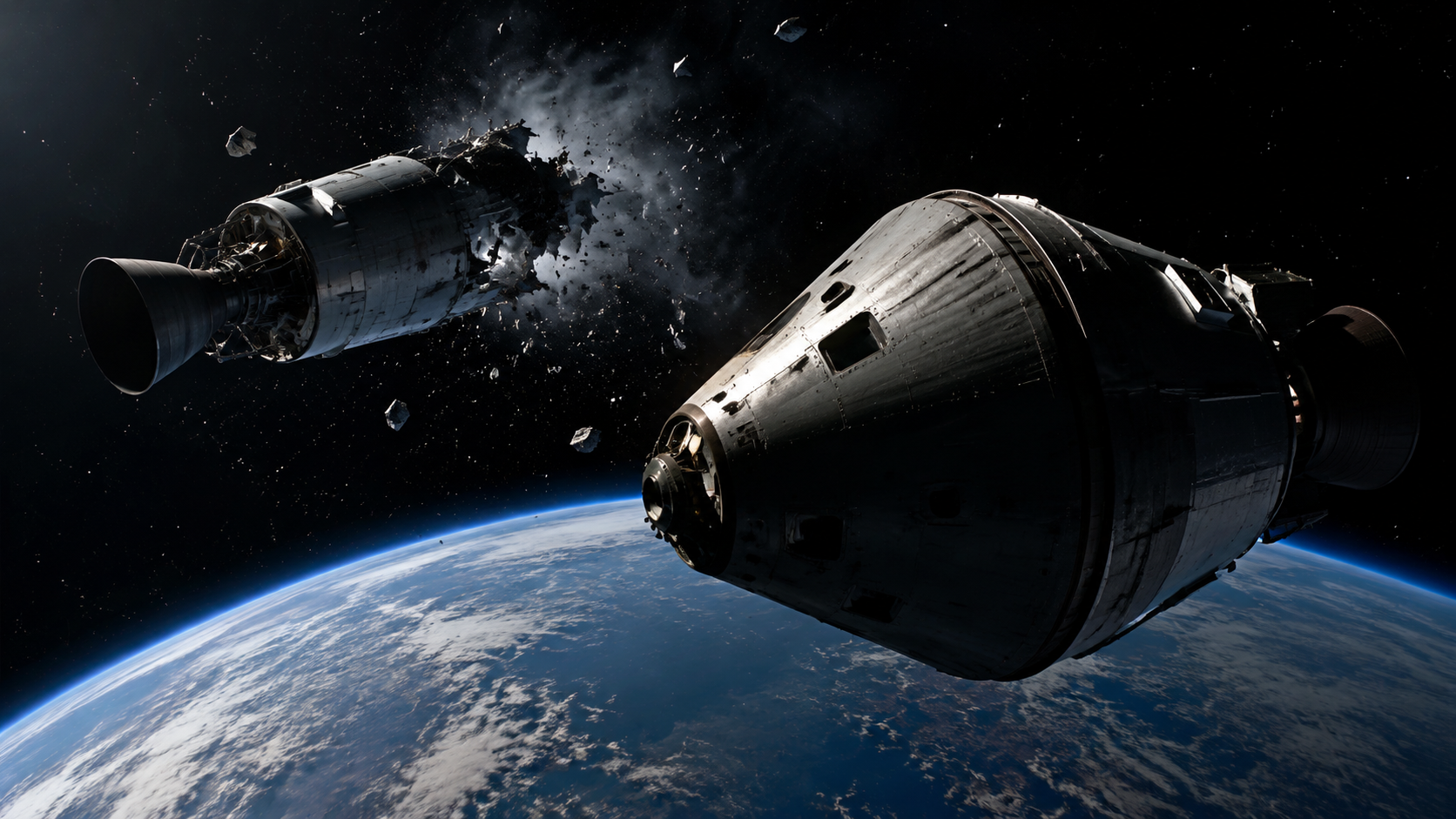
The Story of the Apollo 13 Crew's Survival After the Major Explosion in Space
Theme: Accidents
Subject: Apollo 13 accident and the crew's return to Earth
Article Summary: The Apollo 13 mission was launched toward the Moon on April 11, 1970, with a crew consisting of James Lovell, Jack Swigert, and Fred Haise. On the third day of the mission, the explosion of one of the oxygen tanks in the Service Module caused severe damage to the spacecraft's power generation system and life support arrangement. As the normal systems of the Command Module became unusable, the crew had to use the Lunar Module as a temporary living space and as the necessary vehicle for return. The mission control team on Earth developed solutions to conserve the limited supplies of electricity, oxygen, and water; meanwhile, the crew abandoned the lunar landing and set a course to loop around the Moon and return to Earth. An improvised device was created to connect incompatible filters from the Command Module to prevent carbon dioxide buildup. After the Lunar Module took on most of the life support and navigation duties during the return to Earth, it was jettisoned. The crew returned safely to Earth on April 17, 1970.
Date: 19-09-2026
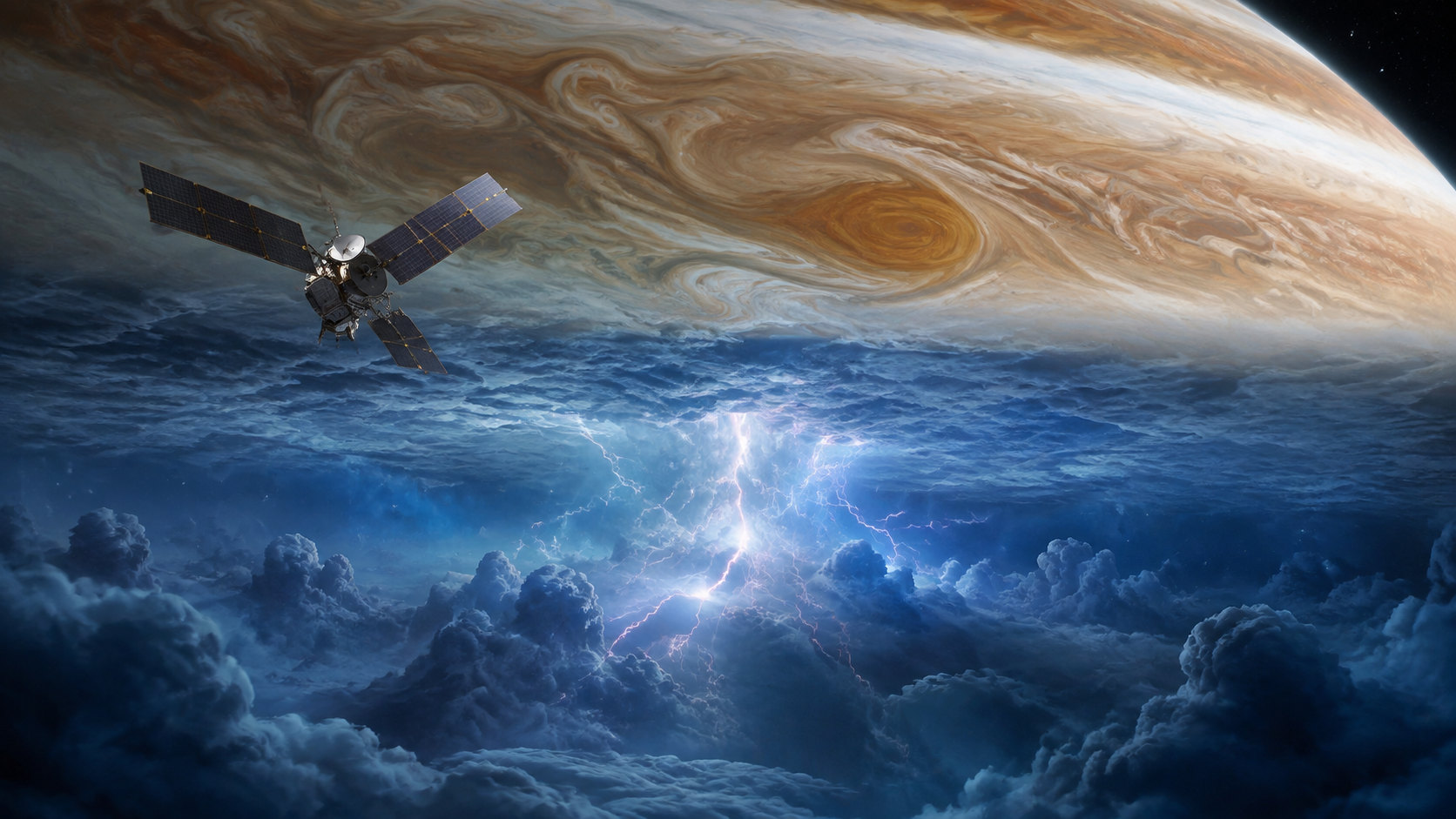
Discoveries Made by the Juno Spacecraft Beneath Jupiter's Thick Clouds
Theme: Spacecraft
Subject: Juno's discoveries about Jupiter's atmosphere and internal structure
Article Summary: NASA's Juno spacecraft conducted measurements during close flybys above Jupiter's dense cloud cover, examining not only the planet's visible atmosphere but also its deeper layers. Juno's microwave radiometer investigated the distribution of ammonia beneath Jupiter's clouds and atmospheric structures, while gravity measurements revealed that the cloud bands and jet streams extend to depths of about 3,000 kilometers. The spacecraft also detected giant cyclone systems at Jupiter's poles the size of Earth, unexpectedly shallow lightning, and atmospheric processes associated with ammonia-water mixtures. Magnetometer measurements showed that Jupiter's magnetic field is stronger and more irregular than previously expected. Juno's data indicated that Jupiter's core may be larger and partially dissolved—a 'fuzzy' structure—rather than a small, sharply defined one.
Date: 19-09-2026
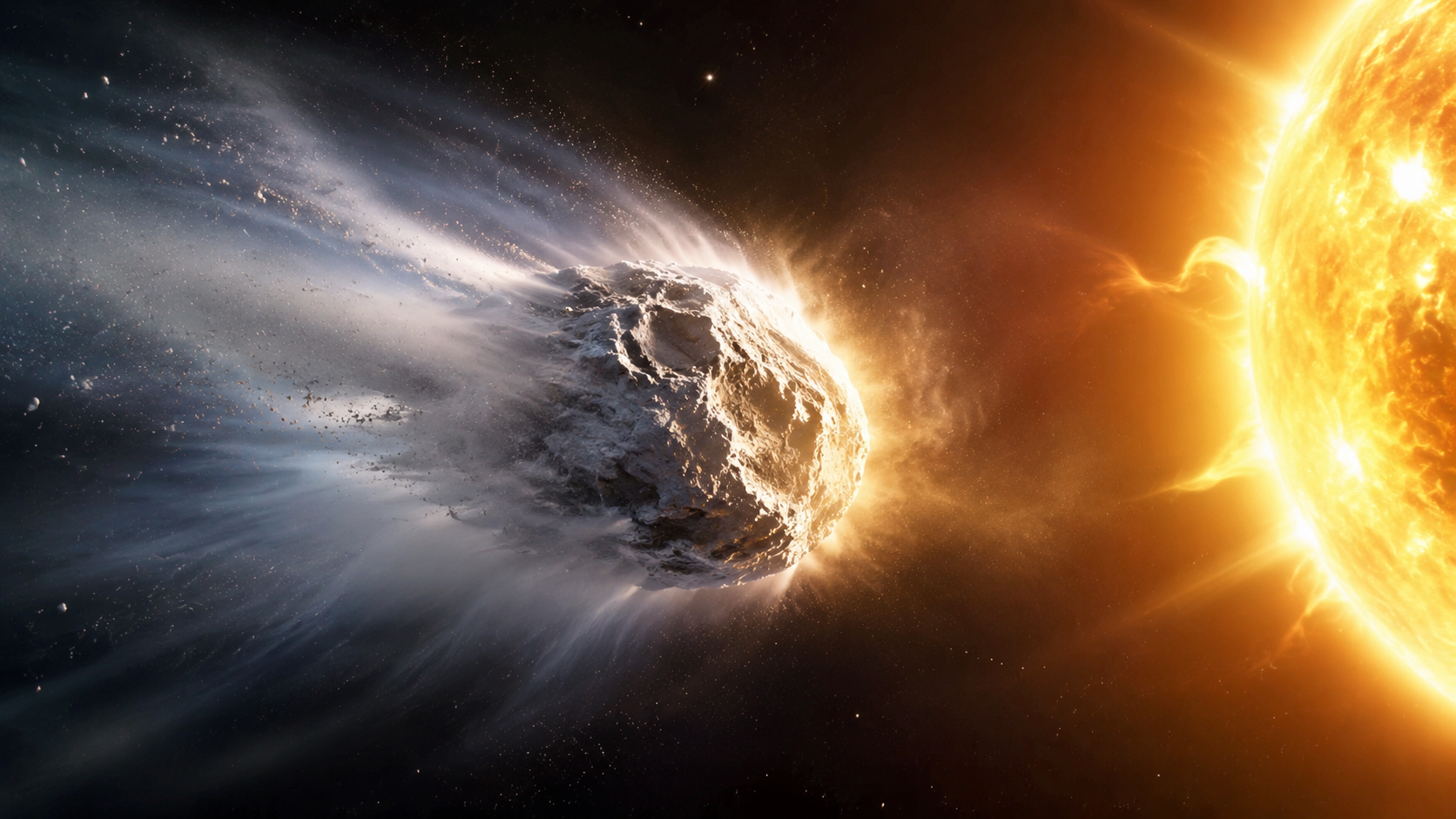
The Sublimation Process Experienced by Comets as They Approach the Sun
Theme: Comets
Subject: Sublimation
Article Summary: Comets are small celestial bodies composed largely of ice, rock, and dust. When far from the Sun, the volatile substances on their surfaces are mostly in solid form, and comets appear as dim, low-activity objects. As they approach the Sun, the radiation and heat they receive increase. Some ices on or near the surface transform directly from solid to gas without becoming liquid; this physical change is called sublimation. The released gas drags dust particles with it, forming a coma around the nucleus. Due to the effects of the solar wind and sunlight, some of these materials are stretched out behind the comet, forming tail structures. Sublimation not only changes the appearance of the comet, but also erodes material from its surface, causing the nucleus to change over time.
Date: 19-09-2026
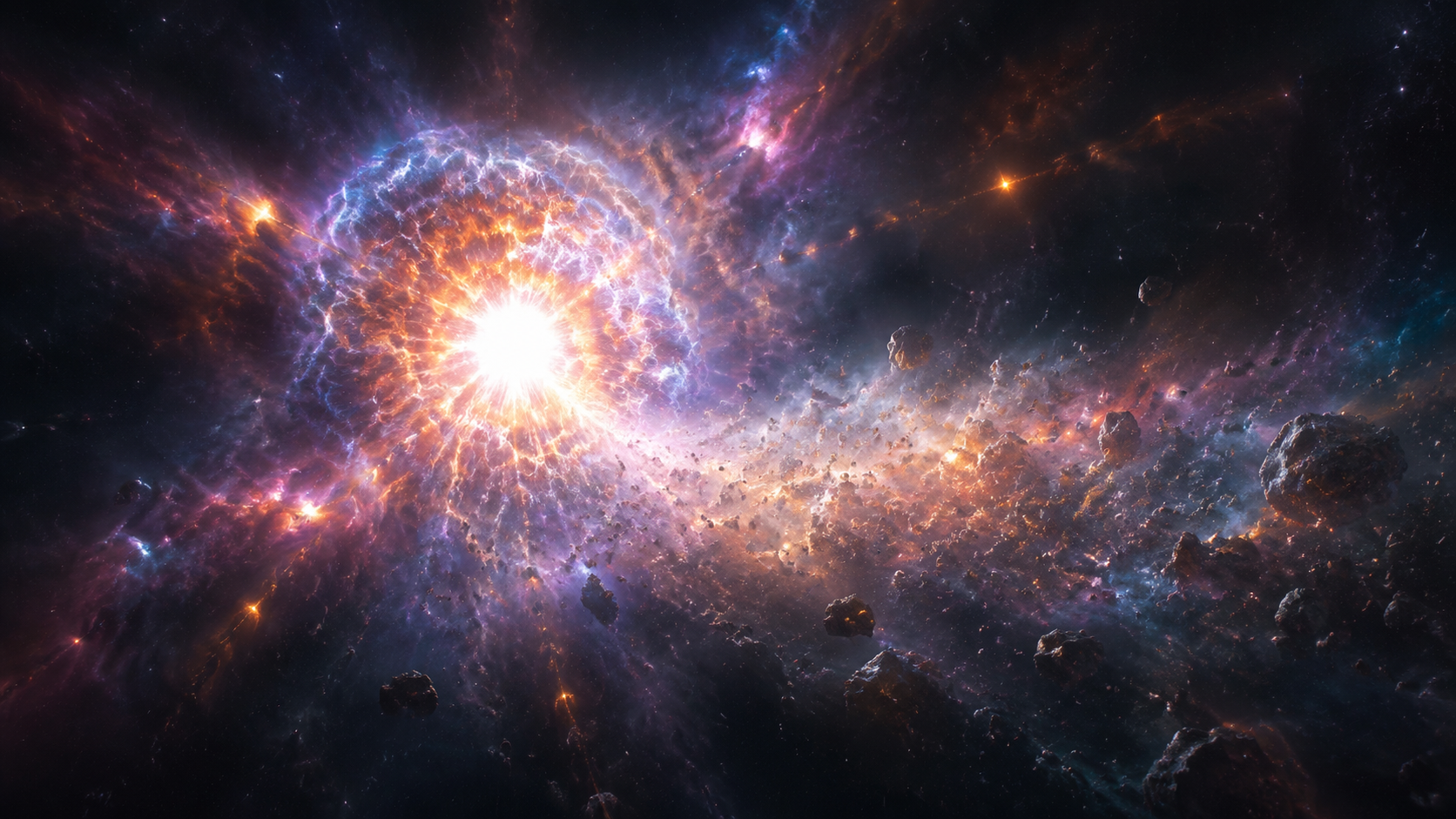
The Process by Which Supernovae Disperse Heavy Elements into the Universe
Theme: Stars
Subject: Supernovae and the formation of heavy elements
Article Summary: Supernovae are extremely powerful explosions that occur at the end of the lives of certain stars. During these explosions, large amounts of material from the star's interior are ejected into space. Some of the elements produced by stars throughout their lifetimes, such as carbon, oxygen, silicon, and iron, are transported to the interstellar medium through these processes. The extremely high temperatures, densities, and neutron-rich environments created by supernova explosions can also provide suitable conditions for the formation of some elements heavier than iron. The materials dispersed into space by the explosion can later mix with clouds of gas and dust, contributing to the formation of new stars, planets, and other celestial bodies. In this way, the death of stars plays an important role in creating the chemical diversity of matter in the universe and in enriching subsequent generations of stars.
Date: 19-09-2026
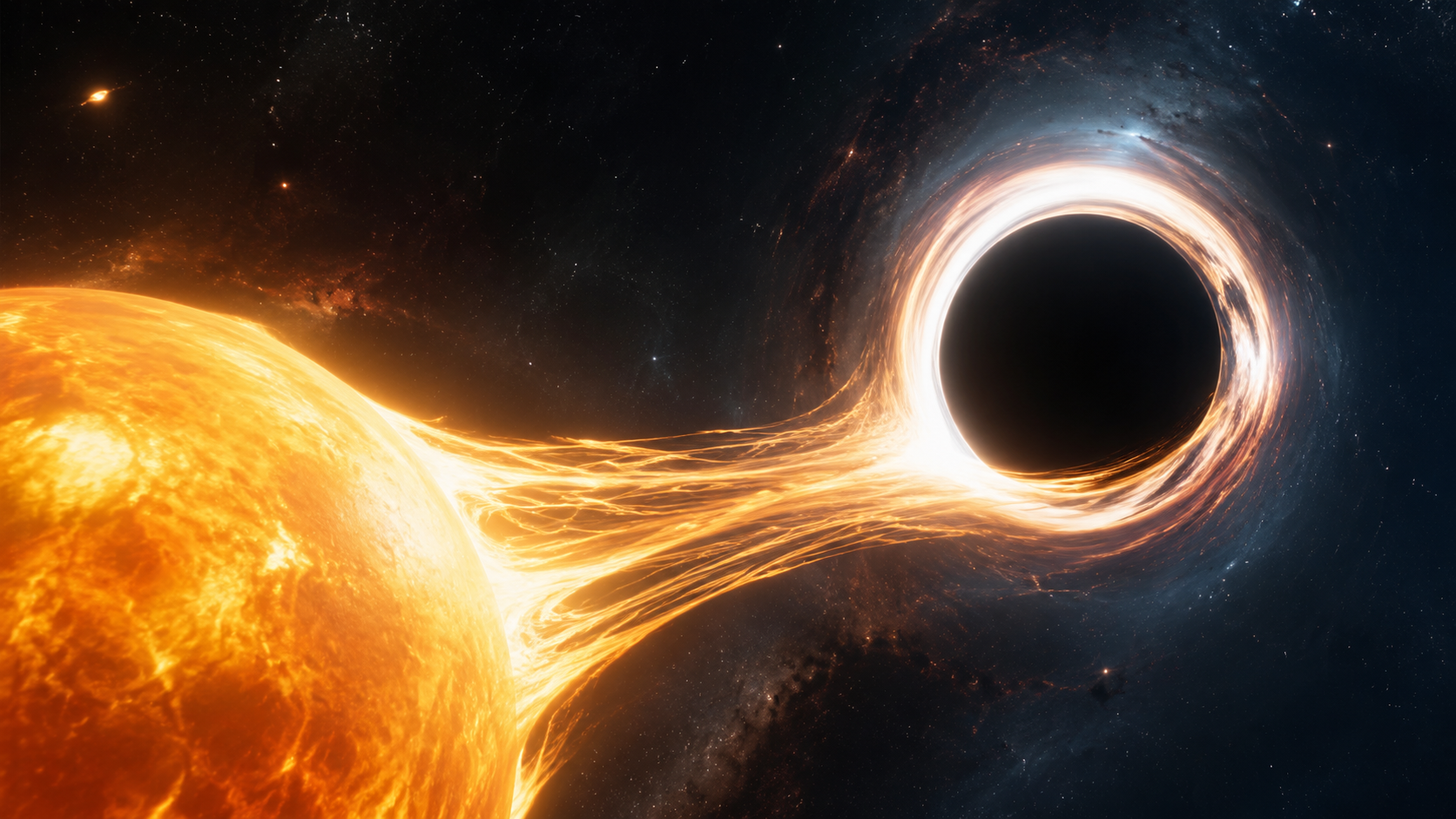
The Spaghettification Phenomenon That Causes Black Holes to Swallow Everything
Theme: Black Holes
Subject: Spaghettification
Article Summary: An object approaching a black hole may be subjected to extraordinary forces due to the gravitational field of the black hole varying in intensity at different points. The part of the object closer to the black hole is pulled more strongly than the part farther away. When this difference in gravitational pull becomes large enough, the object begins to stretch in one direction and compress in the other. This effect, known as tidal forces, can cause the object to take on a long and thin shape, a process known as spaghettification. The intensity of the effect depends on the mass of the black hole and the distance of the object. Especially near small and dense black holes, tidal forces can be extremely strong. In supermassive black holes, however, the tidal forces near the event horizon may be weaker, and spaghettification may become apparent only after the object passes the event horizon.
Date: 19-09-2026
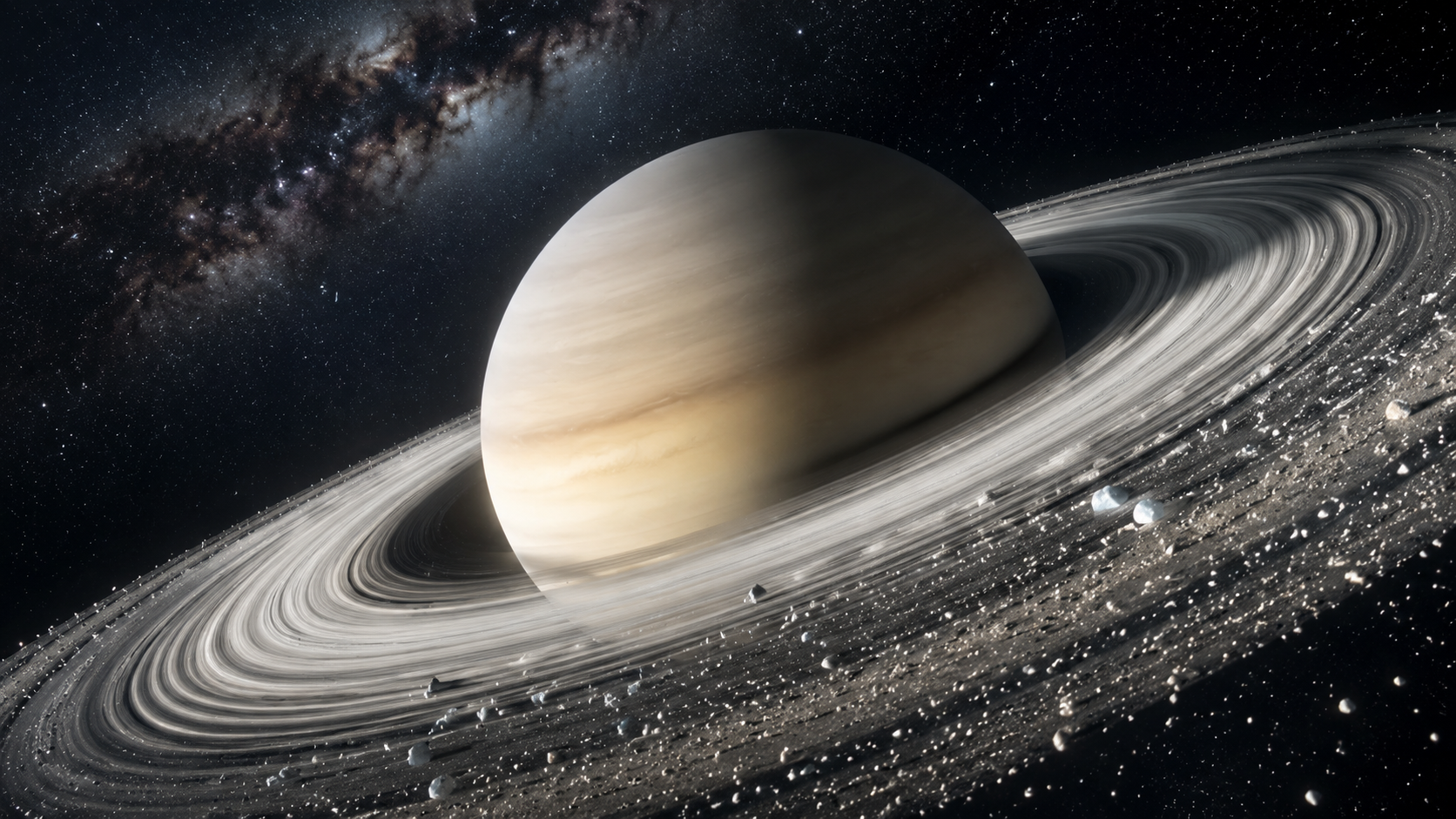
The Mystery of the Planet Saturn and Its Magnificent Icy Rings
Theme: Planets
Subject: Saturn and Its Rings
Article Summary: Saturn is the second largest planet in the Solar System and one of the most easily recognized celestial bodies due to its prominent ring system. As a gas giant, Saturn is composed mostly of hydrogen and helium and does not have a solid surface. The planet's most striking feature is its extensive ring system that stretches around its equator. These rings are not a single solid disk; rather, they are a complex system made up of countless particles, largely consisting of water ice, rock fragments, and smaller dust grains. The gaps, thin bands, and variations in density within the rings are influenced by gravitational interactions with Saturn's moons. The origin of the rings and how long they have existed remain important questions that continue to be investigated in studies of the Saturn system.
Date: 19-09-2026
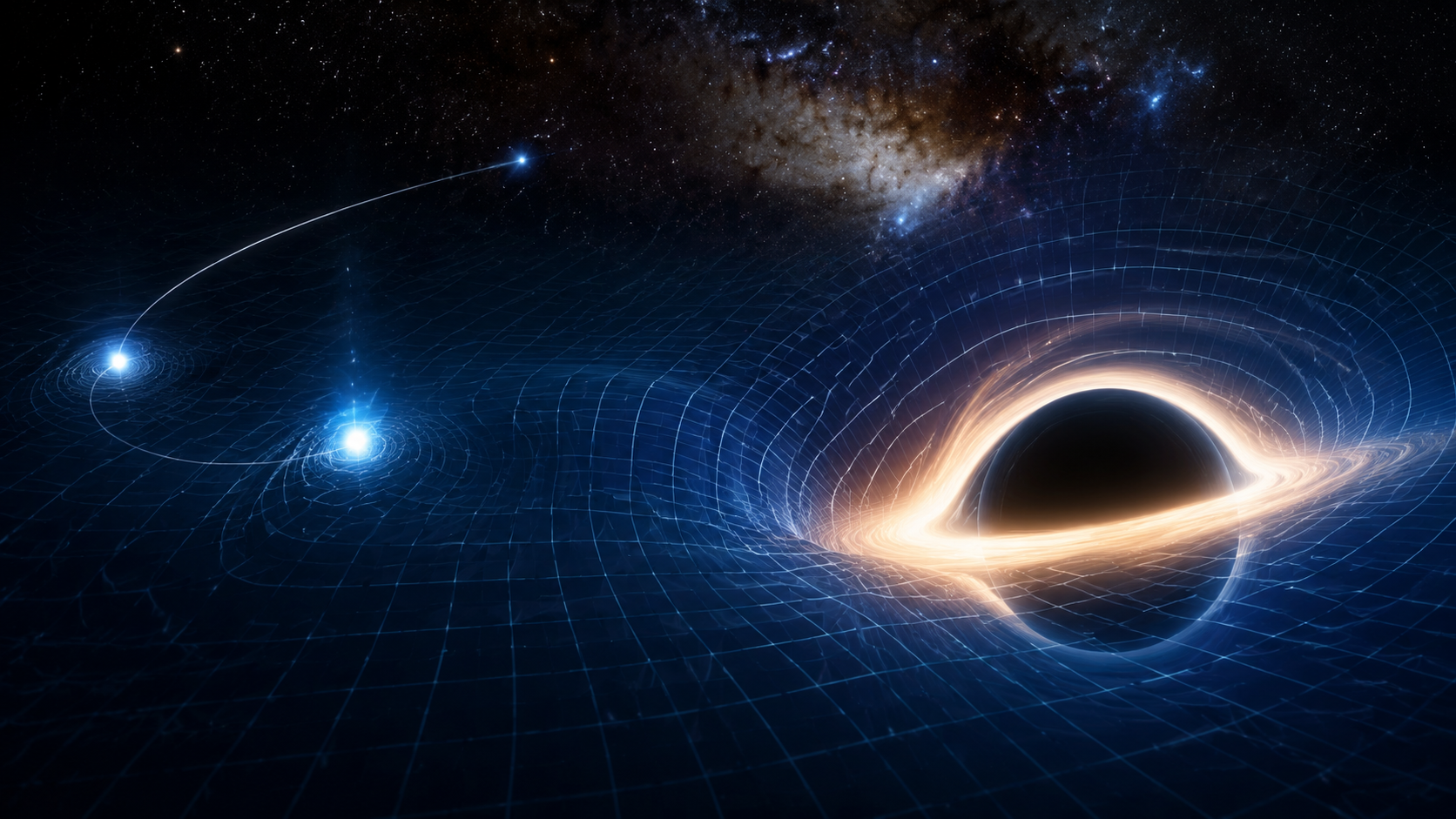
Measuring Time Dilation in Strong Gravitational Fields
Theme: General Space
Subject: Gravity and Time Dilation
Article Summary: According to Einstein's general theory of relativity, mass and energy alter the geometry of space-time. One consequence of this is that clocks located in strong gravitational fields run more slowly compared to clocks in weaker gravitational fields. This phenomenon is called gravitational time dilation. The effect is measurable even at the Earth's surface and can be demonstrated through precise time comparisons between atomic clocks. The difference increases in stronger gravitational fields; effects on the flow of time become much more pronounced near extremely dense objects such as neutron stars and black holes. For this reason, precise clocks are not only instruments for measuring time, but also important scientific tools used to test the physical properties of space-time.
Date: 19-09-2026
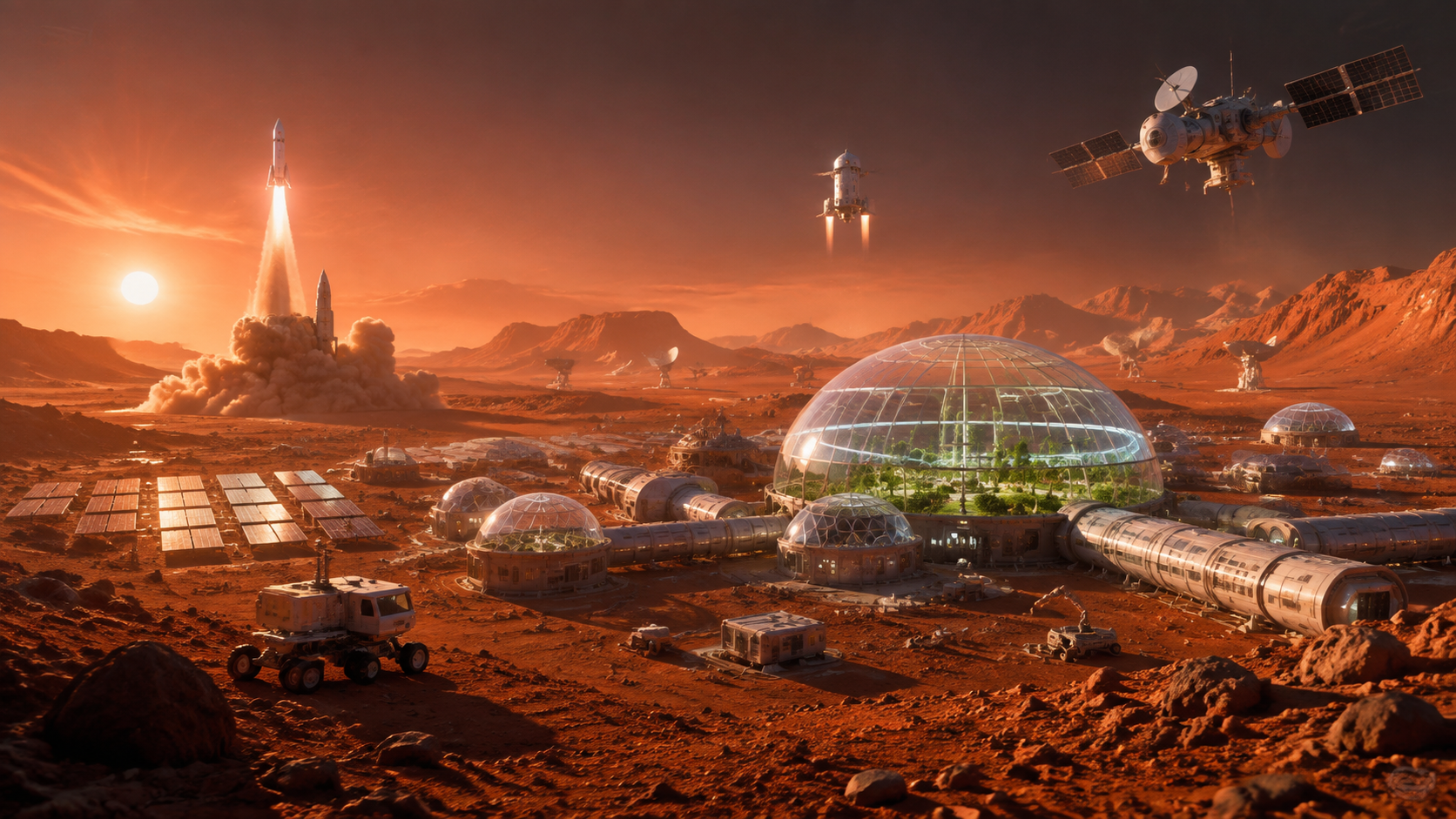
Plans for Mars Colonization and Next-Generation Research
Theme: New Developments
Subject: Mars Colonization
Article Summary: The idea of establishing permanent human settlements on Mars is one of the main goals of studies investigating whether long-term life is possible beyond Earth. The fact that liquid water cannot remain stable on the surface of Mars for long today, its very thin atmosphere, low temperatures, and high levels of radiation create serious challenges for human life. Therefore, simply sending humans to the surface will not be enough to establish a settlement on Mars; many systems such as shelter, water and oxygen production, energy supply, food production, and radiation protection will need to operate for extended periods. Today, Mars research primarily focuses on studying the planet's geology, traces of past water, atmosphere, and resources that may be necessary for life, while technologies required for future crewed missions are being developed in parallel.
Date: 19-09-2026
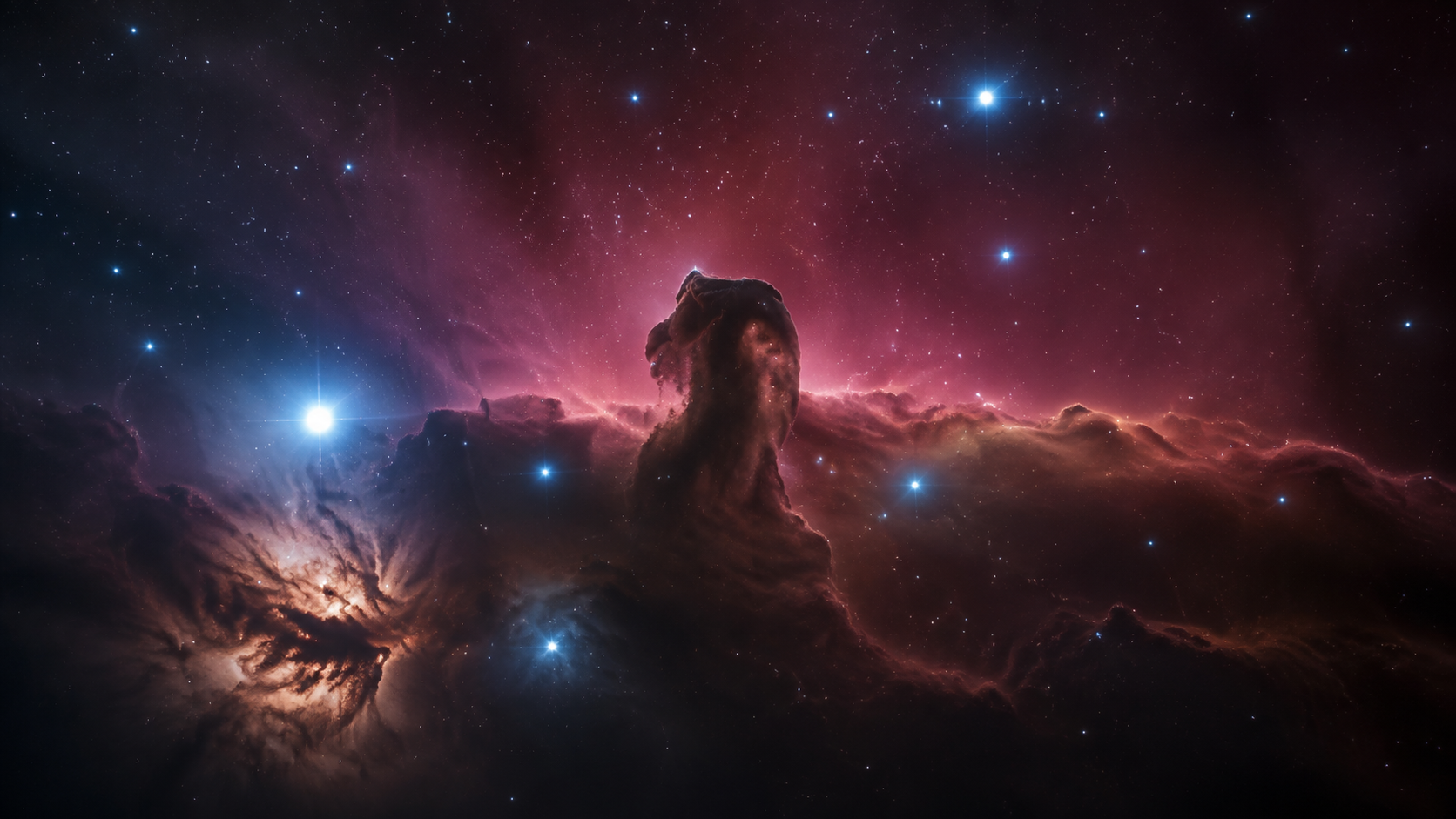
What Lies Hidden Behind the Light-Blocking Dark Silhouette of the Horsehead Nebula
Theme: Nebulae
Subject: Horsehead Nebula
Article Summary: The Horsehead Nebula is a dark nebula located in the direction of the constellation Orion, known for its distinctive horse head shape formed against a bright hydrogen region in front of a dark cloud. Also referred to as Barnard 33, this structure is situated in front of Orion's bright emission nebula IC 434. The dense gas and dust that form the silhouette block much of the light coming from behind, making it appear as a dark shape against the surrounding bright region. Despite its dark appearance, the Horsehead Nebula is not completely empty; it contains dense gas and dust, which are part of the cosmic environment where star formation occurs. Examining the light behind and around the nebula at different wavelengths reveals gas and dust structures hidden in visible light.
Date: 19-09-2026