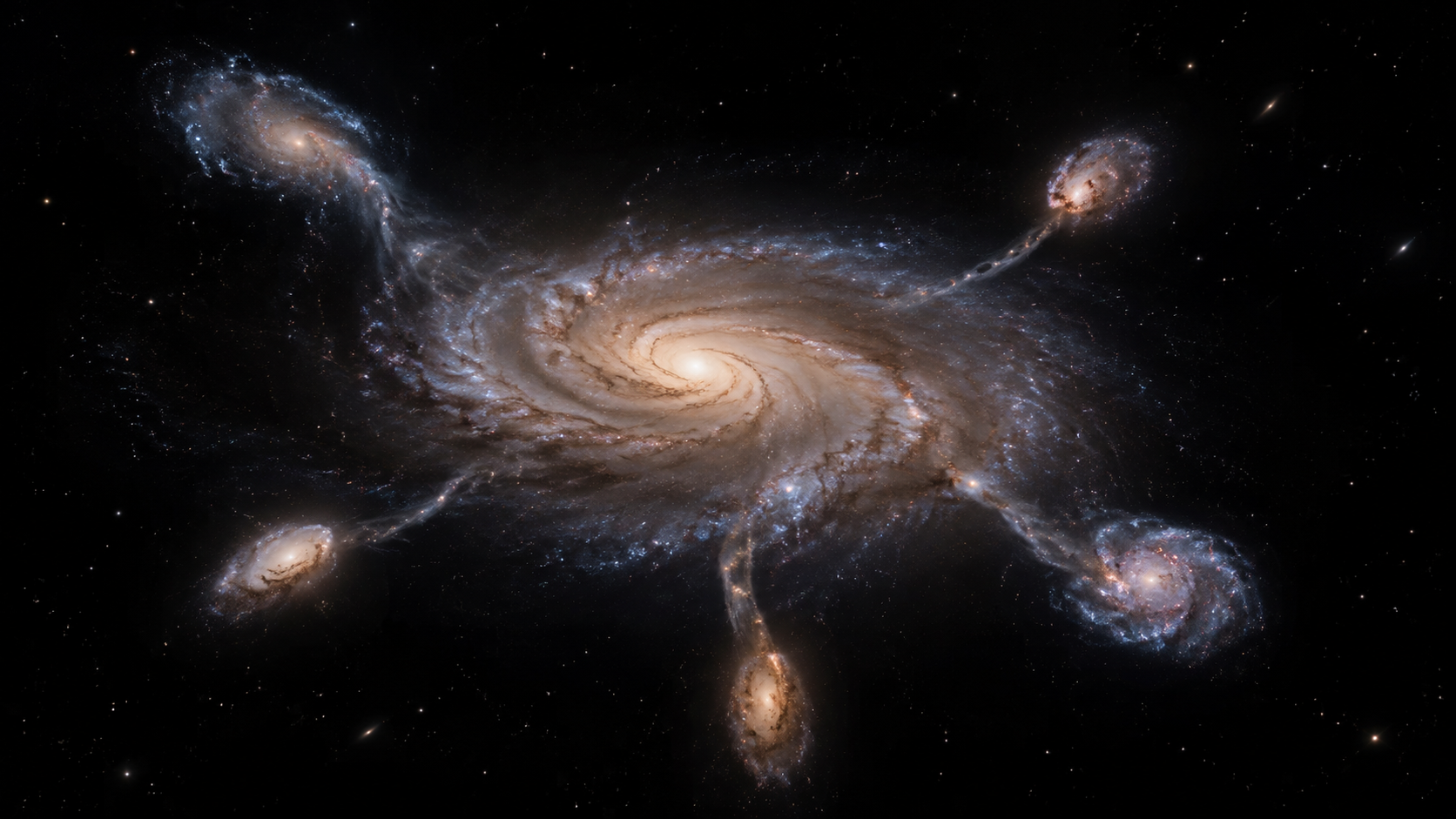
The Growth of Large Galaxies by Merging with Dwarf Galaxies
Theme: Galaxies
Subject: Growth of galaxies through merging
Article Summary: Galaxies are not structures that remain constant over time. Large galaxies can grow as smaller galaxies in their vicinity are drawn in by gravitational attraction and eventually merge with them. In this process, stars generally do not collide directly with each other, because the distances between stars in galaxies are extremely large. However, clouds of gas and dust can compress, star formation can accelerate, and the shapes of the merging galaxies can change significantly. The growth and collisions of galaxies are among the fundamental processes in the evolution of galaxies.
Date: 19-09-2026
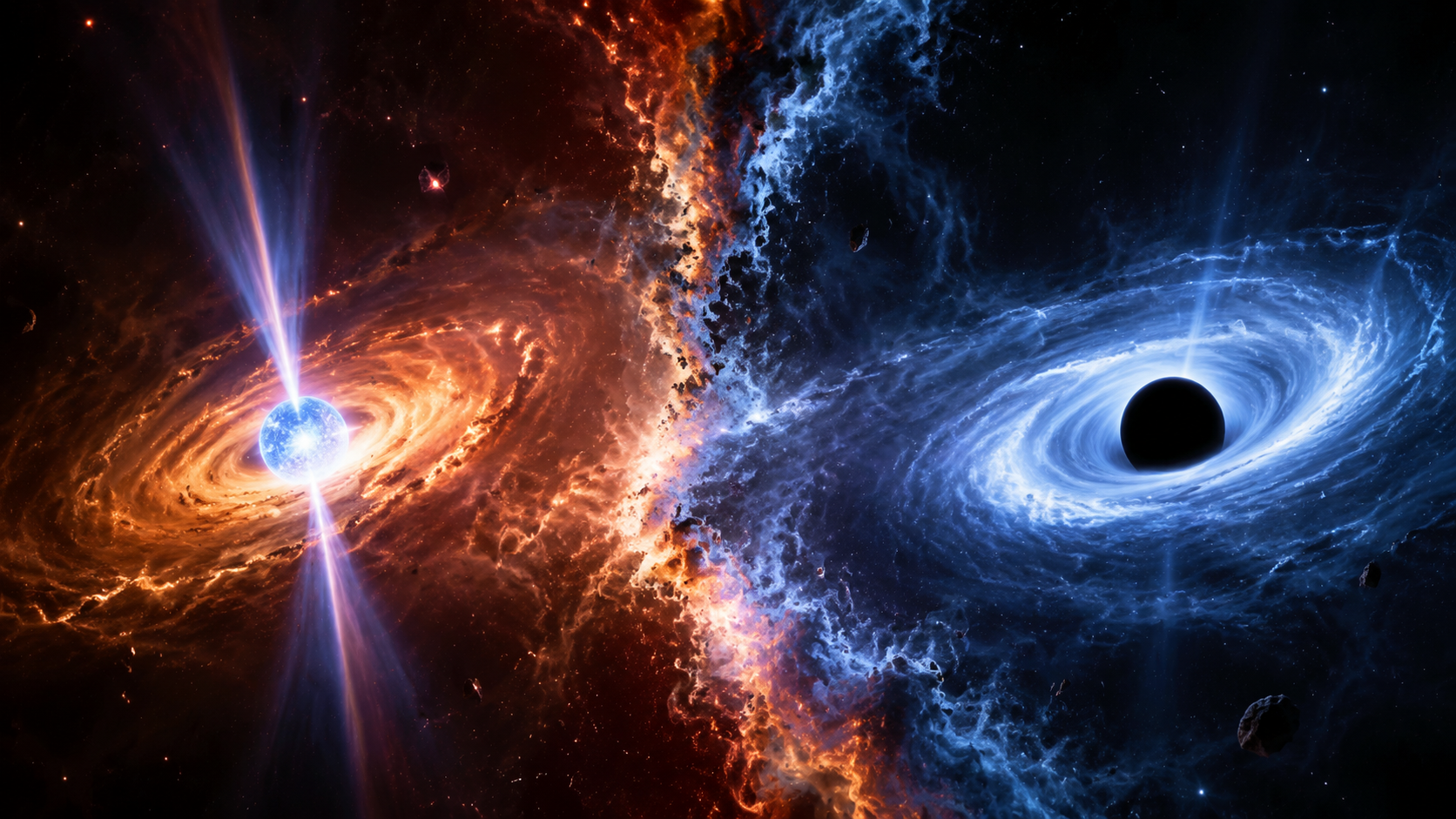
The Critical Physical Process Between Neutron Star and Black Hole Formation
Theme: Neutron Stars
Subject: Transition from neutron star to black hole
Article Summary: When a massive star leaves behind its core at the end of its life, matter can be compressed into an extraordinarily dense state, forming a neutron star. However, if the mass of this object exceeds the maximum value that can withstand its own gravity, the pressure created by the neutrons can no longer halt the collapse. Once this critical threshold is crossed, the remnant of the star can compress further and transform into a black hole. Not only the total mass is decisive in this process; the rotation rate, the internal structure of the matter, and the pressure properties of dense matter are also important.
Date: 19-09-2026
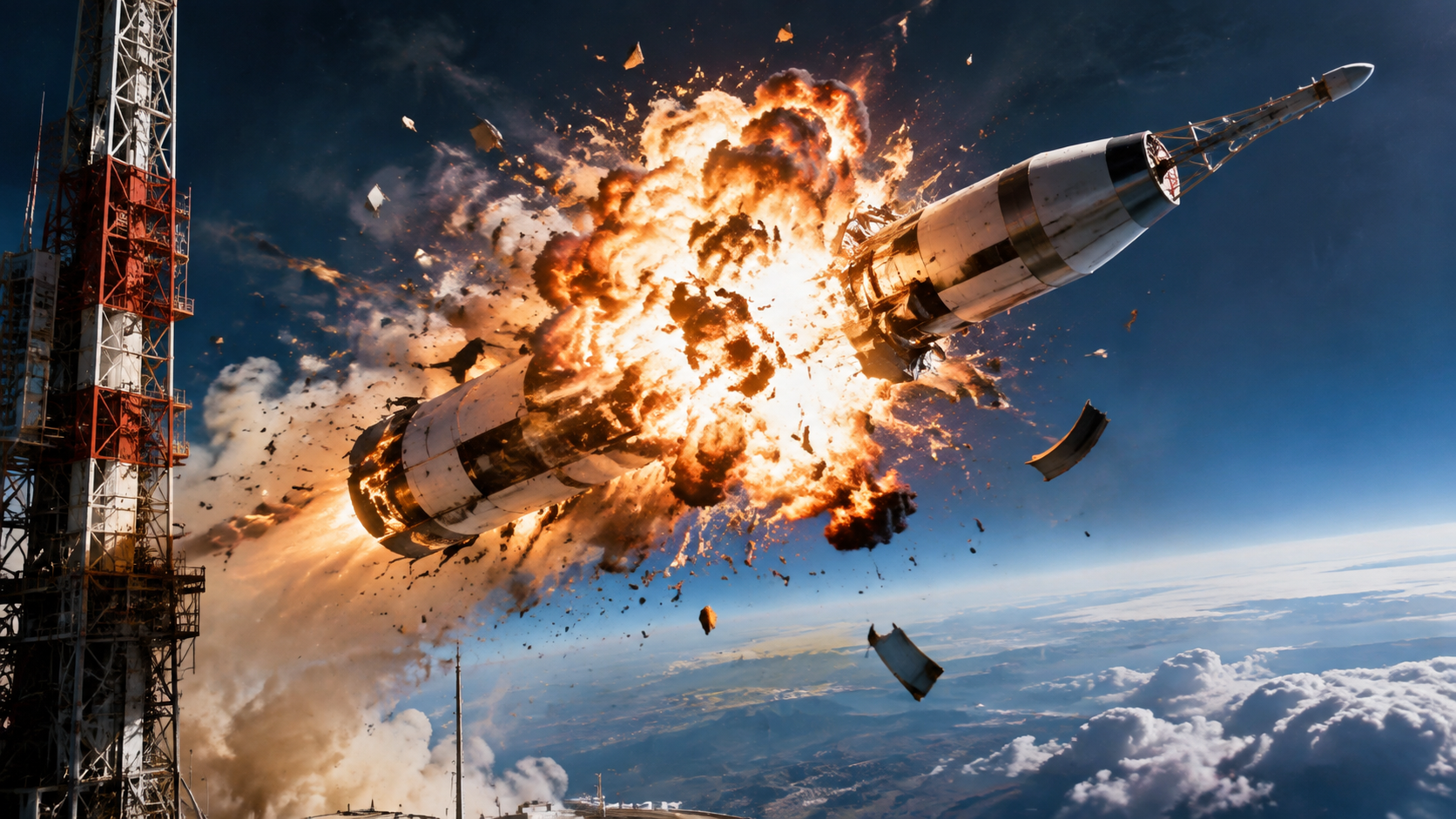
Causes of Rocket Explosions in the Early Years of the Space Race
Theme: Accidents
Subject: Early rocket failures
Article Summary: In the early years of the Space Race, rocket launches were not as reliable as they are today. The United States and the Soviet Union were both trying to develop military rocket technologies and use these vehicles for satellite and space missions. However, high-thrust engines, complex fuel systems, guidance mechanisms, and the many interconnected stages had not yet matured sufficiently. As a result, rockets sometimes broke apart just seconds after liftoff, sometimes their engines failed, and sometimes the mission ended before reaching orbit because an upper stage could not ignite. The initial failures were not seen merely as losses; important lessons emerged from telemetry, photography, and debris analysis, which helped make subsequent rockets more reliable.
Date: 19-09-2026
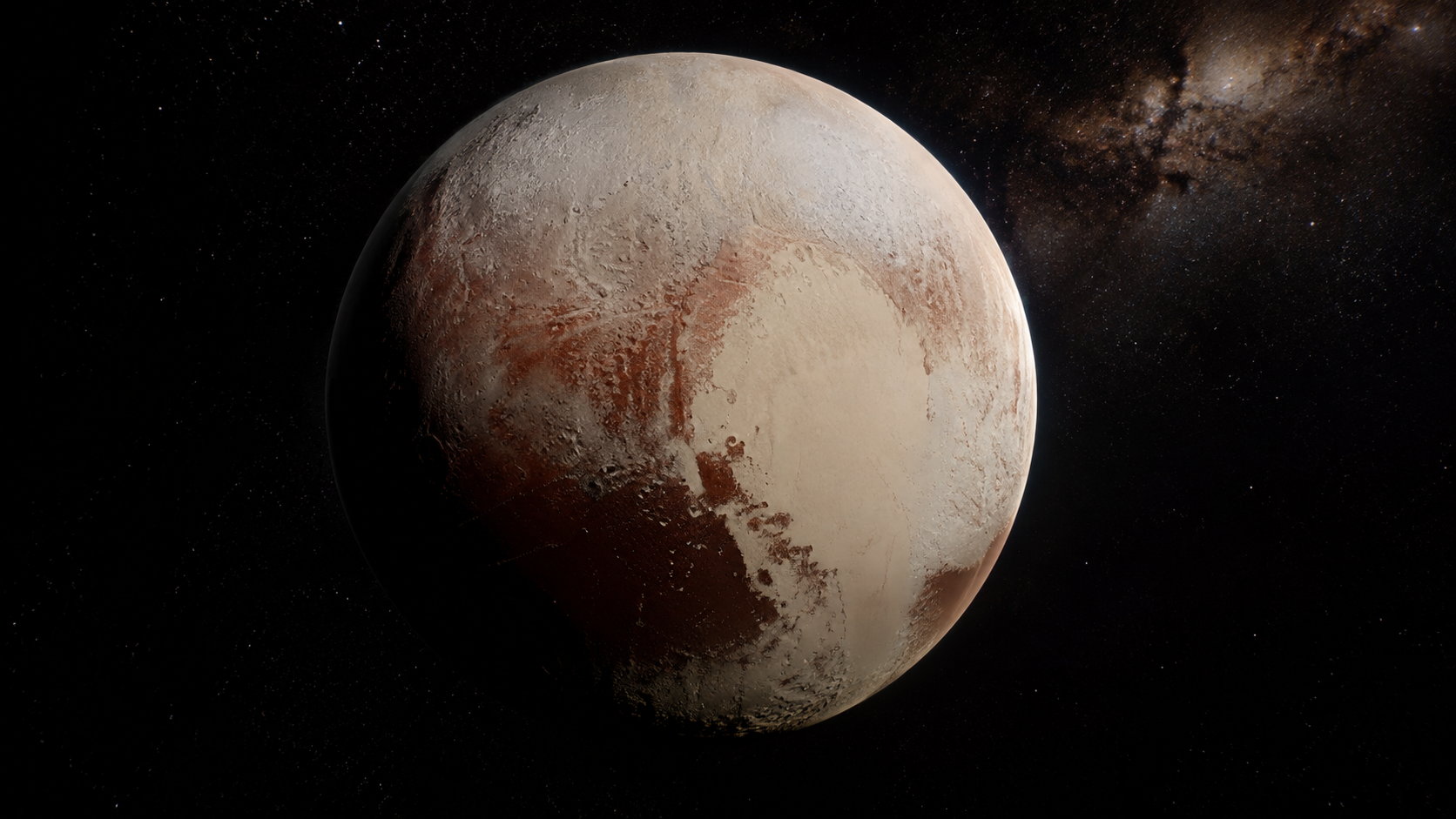
Images of Pluto Sent to Earth by the New Horizons Spacecraft
Theme: Spacecraft
Subject: New Horizons' Pluto images
Article Summary: Because Pluto is so far from Earth, it could only be observed as a blurry point of light for a long time. This changed significantly with the New Horizons mission. In July 2015, the spacecraft passed close to Pluto and captured details of the dwarf planet never seen before. The transmitted data included high-resolution photos of the surface, color information, and images showing different regions of Pluto. The images released by NASA revealed that Pluto is not just a distant and frozen object; it is a dynamic world with mountains, vast ice plains, various color tones, and complex surface features.
Date: 19-09-2026
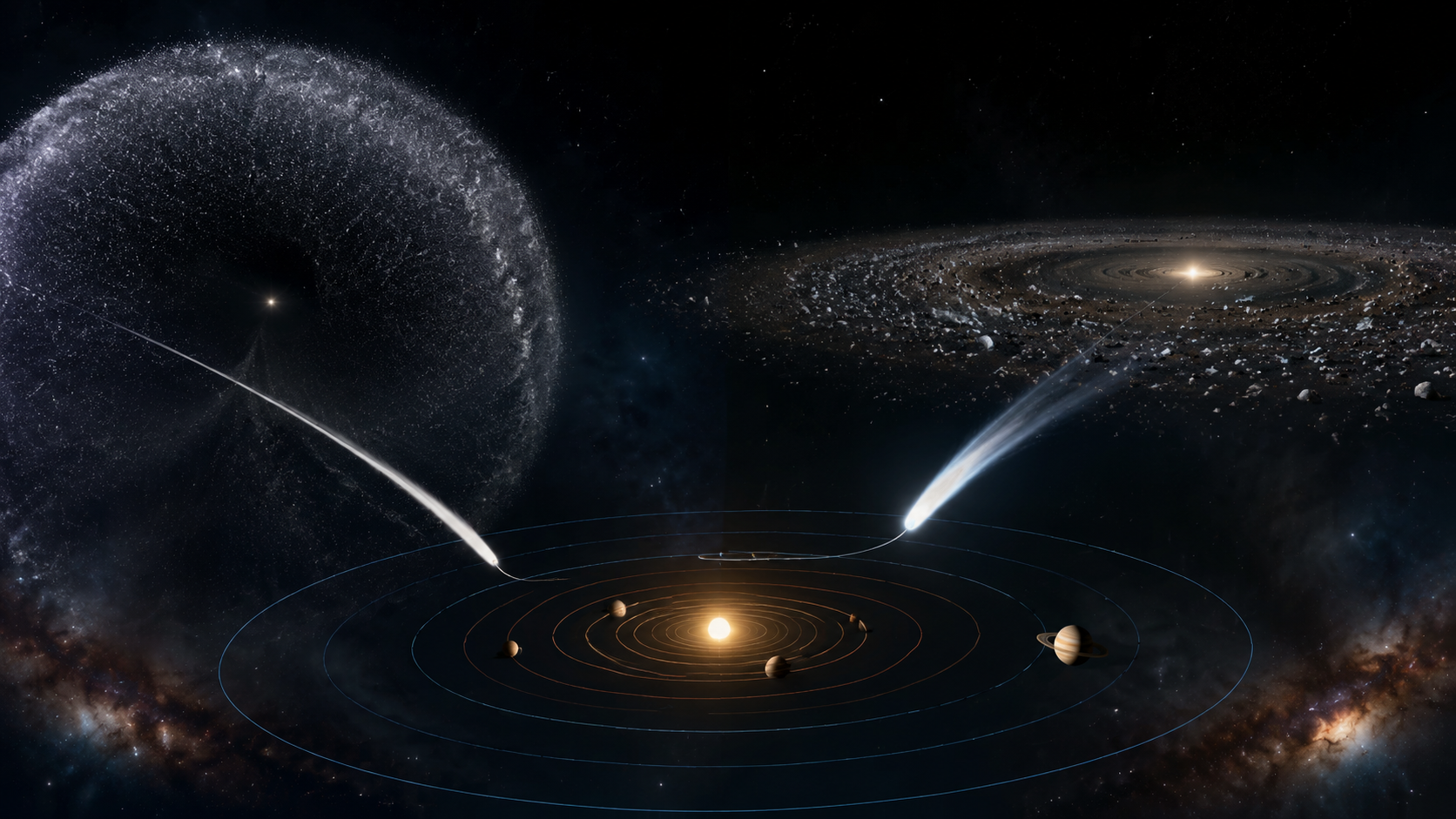
Different Sources of Short- and Long-Period Comets in Space
Theme: Comets
Subject: Source regions of comets
Article Summary: Comets are not objects that appear only in the inner regions of the Solar System. Most are associated with collections of icy bodies located in very distant and cold regions far from the Sun. According to their orbits around the Sun, comets can be classified as short-period and long-period. A significant portion of short-period comets originate from the Kuiper Belt beyond Neptune and related regions, while long-period comets are thought to come from the much more distant, spherical Oort Cloud. Thus, the orbits of comets provide important clues about the Solar System's past formation process and the structure of its outer regions.
Date: 19-09-2026
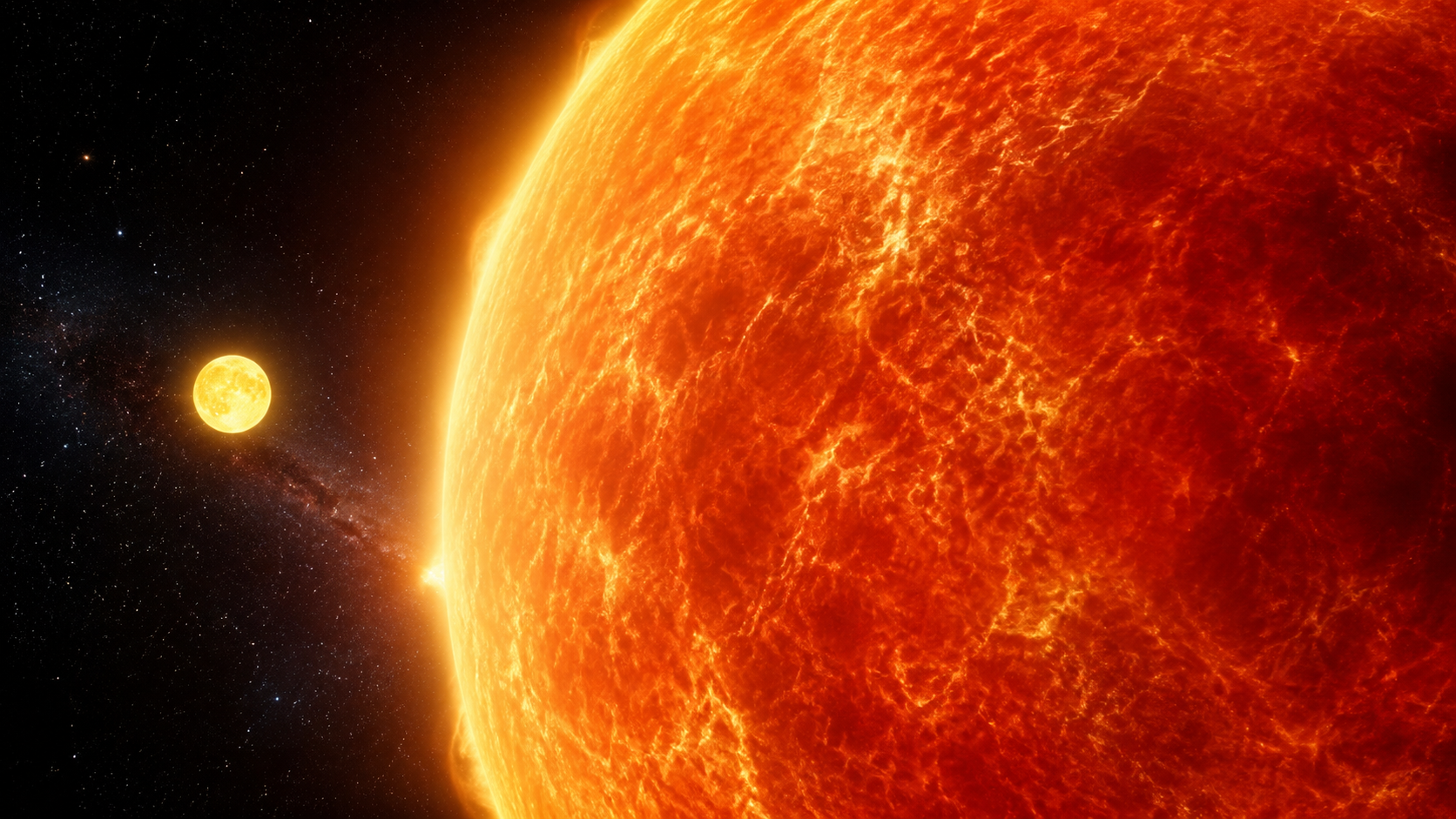
The Sizes Reached by the Largest Stars Compared to the Sun
Theme: Stars
Subject: Sizes of stars
Article Summary: The sizes of stars can differ greatly from one another. While the Sun is considered a medium-sized star, some giant and especially red supergiant stars can reach hundreds of times, or in some cases much more, the Sun's diameter. This comparison is one of the easiest ways to understand how large stars can be. However, a star's size is not the same as its mass. A star can have a very large volume while its density may be extremely low. This situation becomes especially apparent in giant stars in the later stages of their lives.
Date: 19-09-2026
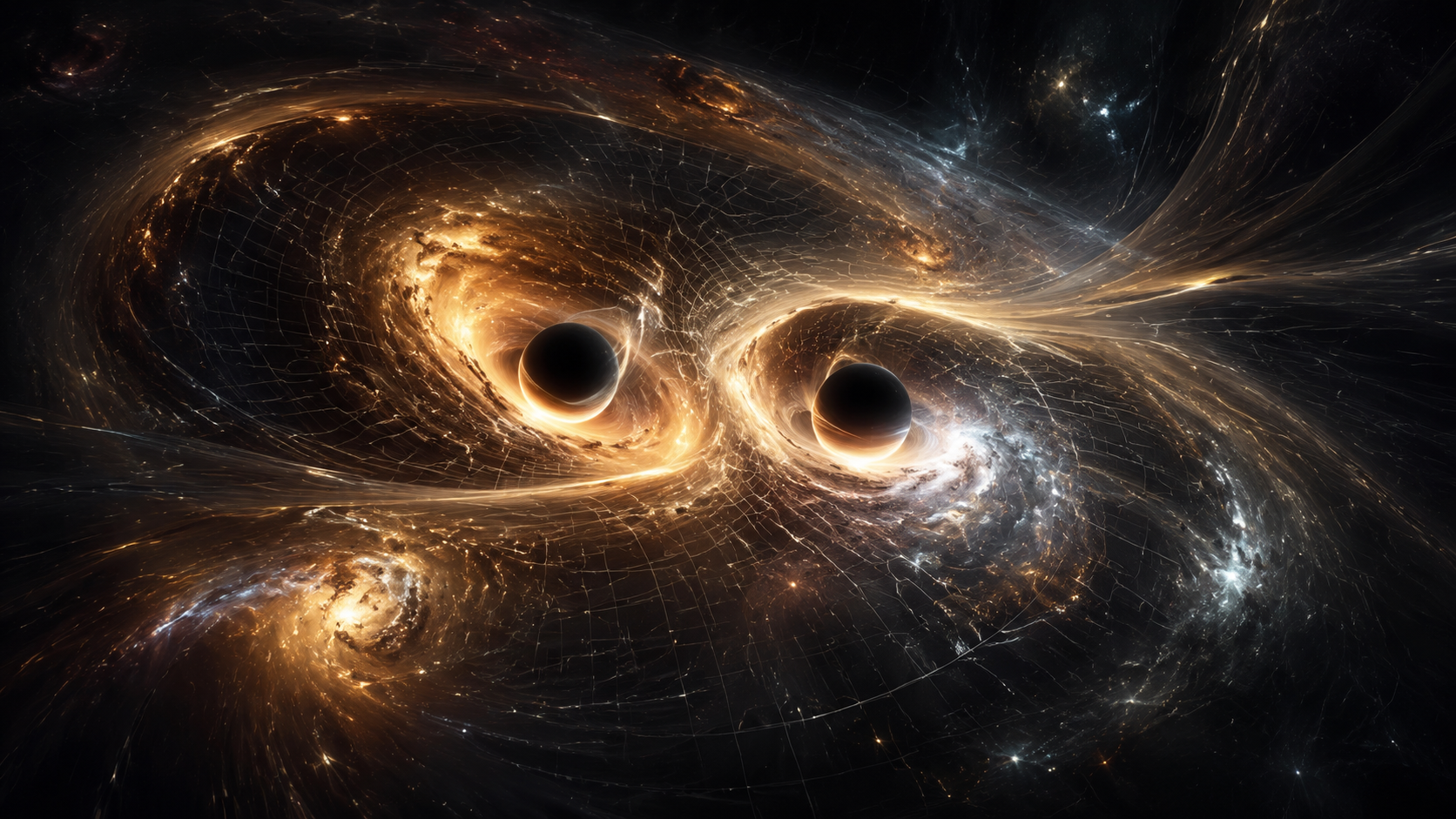
What Happens to the Fabric of Space-Time When Two Massive Black Holes Collide
Theme: Black Holes
Subject: Black hole mergers
Article Summary: When two black holes begin to orbit each other, the system is not merely the movement of two dense objects. The strong gravity of the black holes alters the structure of space-time, and as the system loses energy, their orbits gradually shrink. In the final stage, the two event horizons merge to form a single, larger black hole. During this process, powerful vibrations propagate through space-time, reaching the universe as gravitational waves. These waves, predicted by Einstein's general theory of relativity, can now be measured with special detectors. The book also notes that gravitational waves are small vibrations in space-time and can be observed with detectors such as LIGO and VIRGO.
Date: 19-09-2026
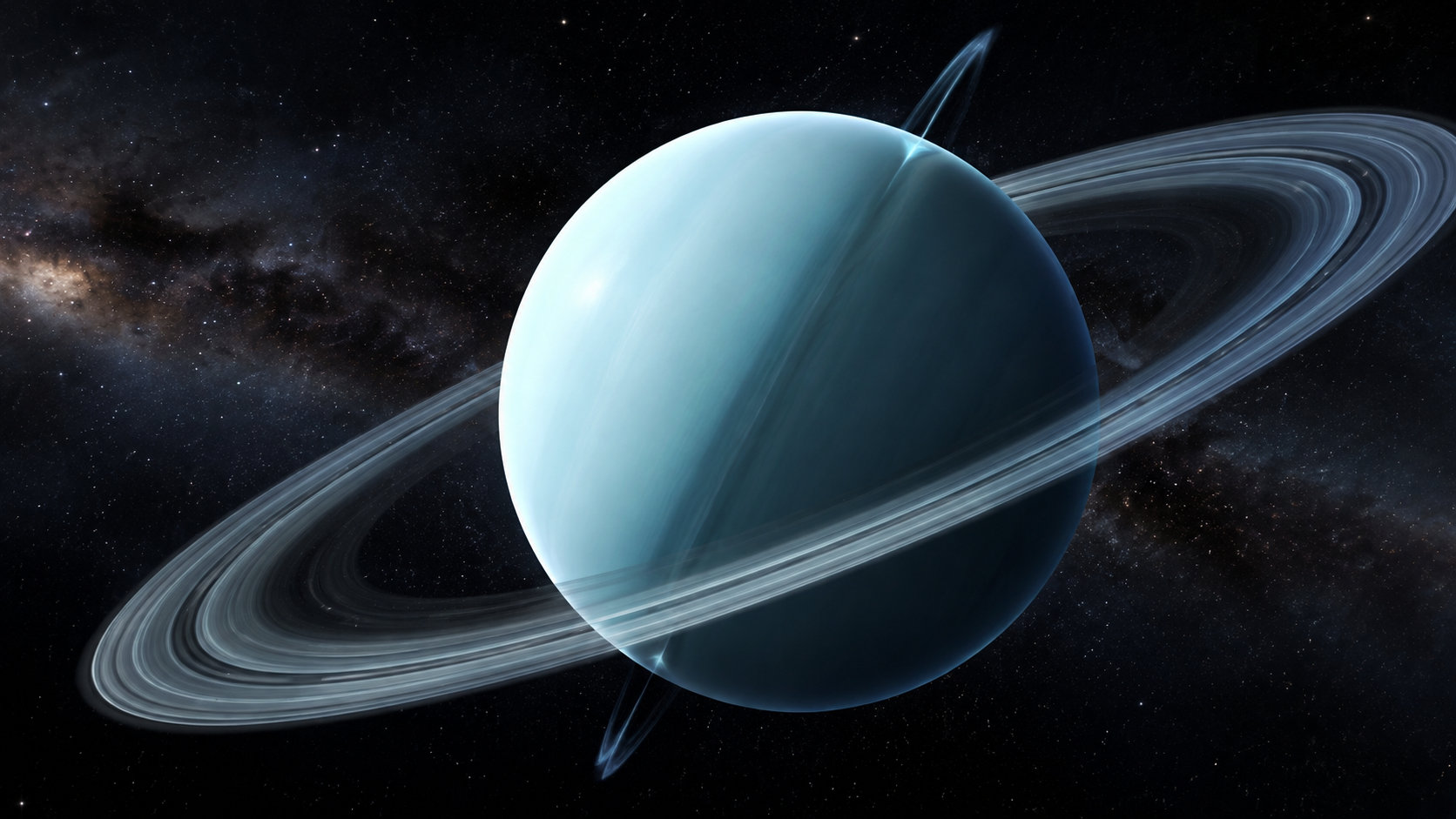
Uranus: The Unusual Planet of the Solar System Rotating on Its Side
Theme: Planets
Subject: Uranus' unusual axial tilt and rotation -
Article Summary: Uranus is one of the most unusual planets in the Solar System. One of its most distinctive features that sets it apart from other planets is that its rotational axis is tilted about 98 degrees relative to its orbital plane. Because of this, Uranus orbits the Sun almost lying on its side. This extraordinary orientation leads to equally extraordinary seasons on the planet. One pole of Uranus can face the Sun for many years while the other remains in darkness. This situation makes the seasonal changes in its atmosphere and the distribution of sunlight it receives quite different from those of other planets.
Date: 19-09-2026
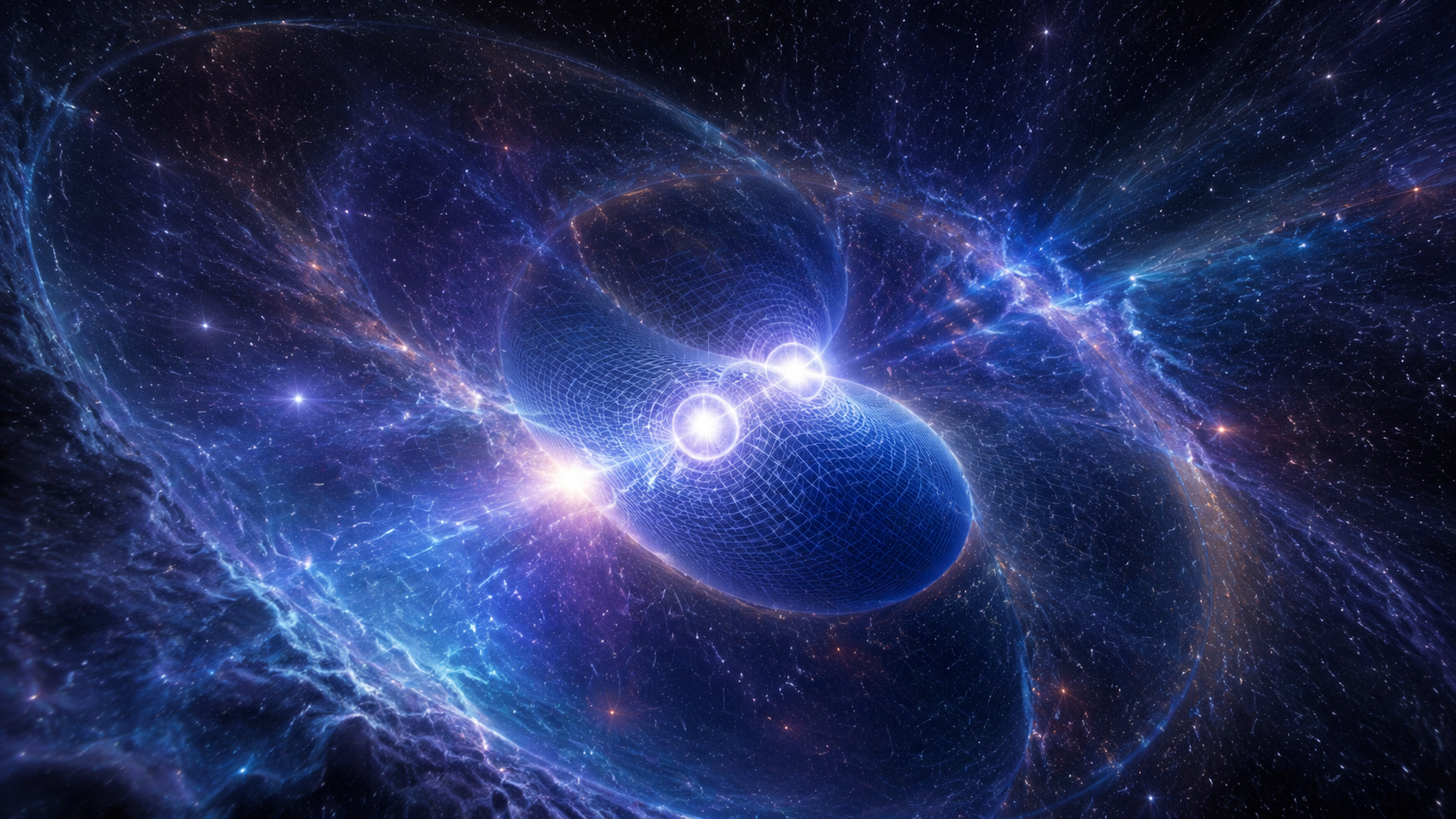
Observable Effects of Quantum Fluctuations in Outer Space
Theme: General Space
Subject: Quantum fluctuations
Article Summary: At first glance, outer space appears completely empty and motionless. However, according to quantum physics, a vacuum is not absolute 'nothingness.' Quantum fields exist everywhere in space, and even in their lowest energy state, small fluctuations can occur within these fields. These phenomena, known as quantum fluctuations, do not manifest as directly visible particle movements; rather, their effects can be revealed in the measurable outcomes of certain physical events. This topic is one of the intriguing links between microscopic quantum physics and the universe on a cosmic scale. In particular, the effects of quantum fluctuations become significant when examining the physical properties of the vacuum, the behavior of particles, and the conditions of the early universe.
Date: 19-09-2026
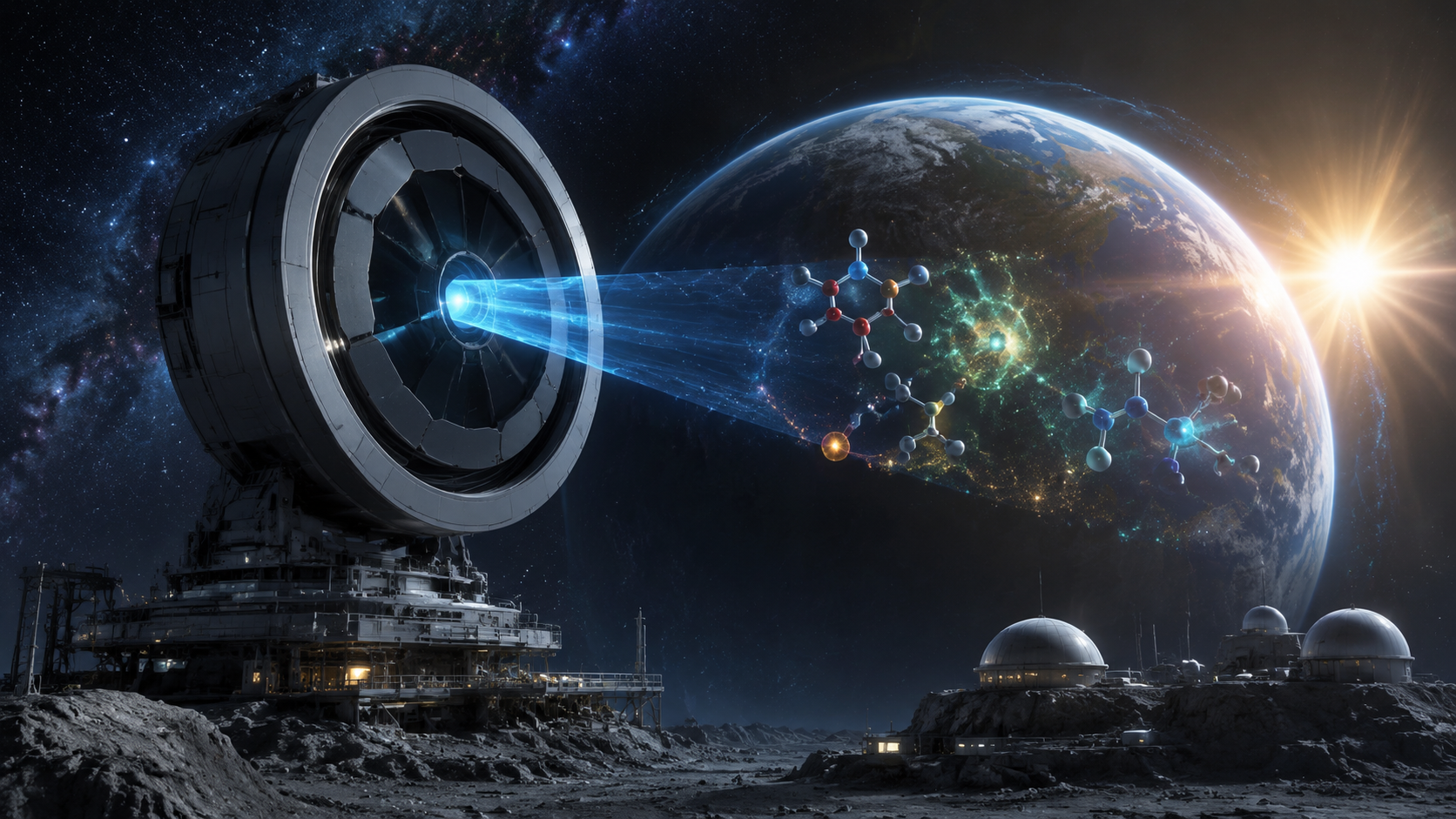
Next-Generation Biosignature Searches Used in the Quest for Life in Space
Theme: New Developments
Subject: Searching for biosignatures
Article Summary: The search for life in space is no longer just about finding a planet similar to Earth. Today, researchers are looking for biosignatures that could indicate a celestial body may have hosted life in the past or present. These traces do not have to be the direct observation of a living organism; the simultaneous presence of certain gases in the atmosphere, the detection of organic molecules on the surface, or chemical imbalances that could be created by life are also important clues. Thanks to next-generation observation and analysis methods, it is now possible to investigate these traces both in the atmospheres of distant exoplanets and on intriguing worlds within the Solar System such as Mars, Europa, and Enceladus.
Date: 19-09-2026
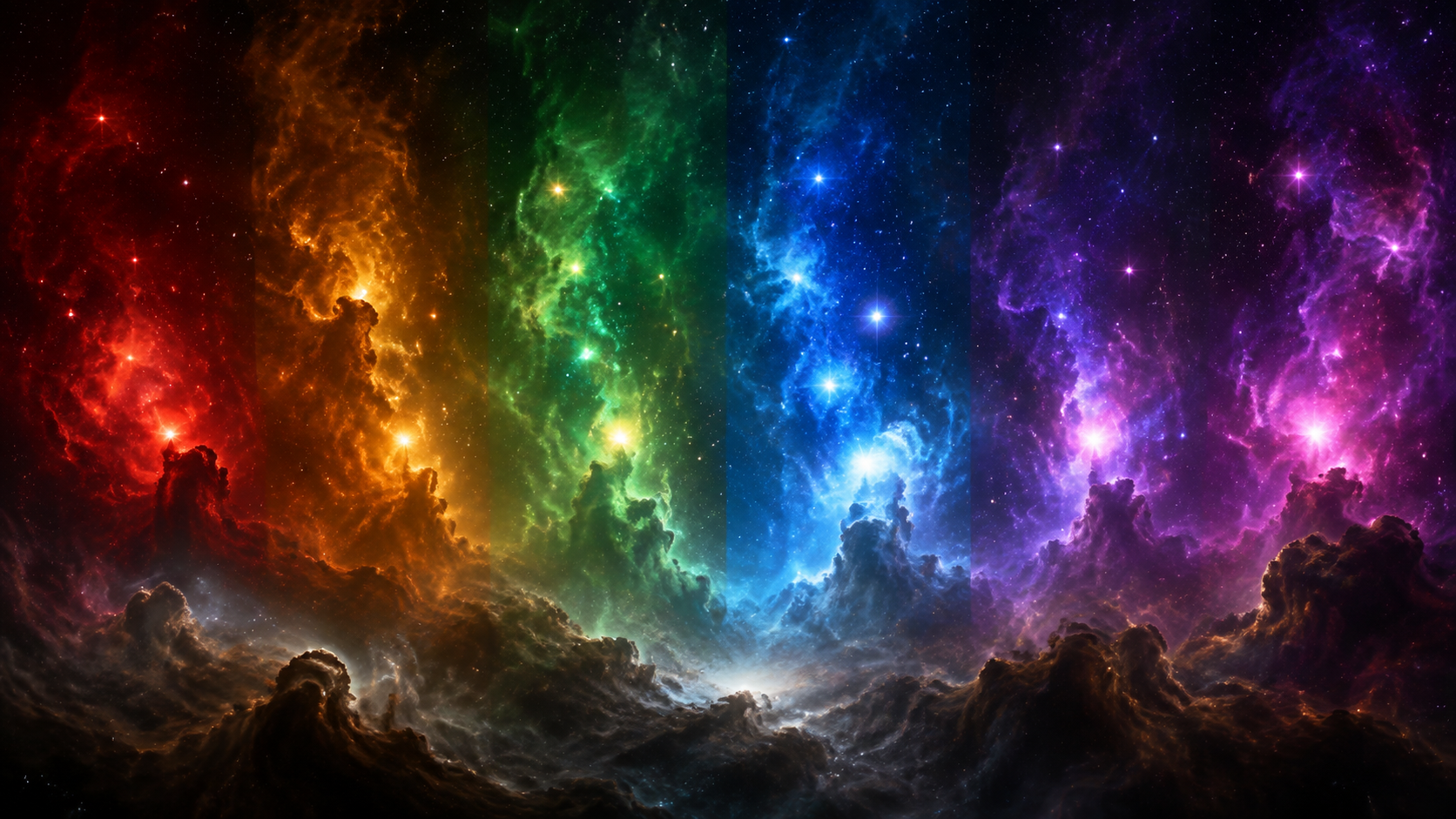
The Reason Different Gases in Nebulae Emit Light in Different Colors
Theme: Nebulae
Subject: Atomic structures of gases and emission of light at different wavelengths
Article Summary: Nebulae are among the most colorful and striking structures in space. The colors of these massive clouds of gas and dust, seen in shades of red, blue, green, and orange, do not occur randomly. When atoms and ions within the nebula absorb energy, their electrons move to higher energy levels; as the electrons return to lower energy levels, they emit light at specific wavelengths. Since each element has different energy levels, the wavelengths of the emitted light also differ. For this reason, hydrogen, oxygen, and other elements can contribute their own unique colors to the appearance of nebulae. However, the type of gas is not the only factor that determines the colors; the energy emitted by stars, the temperature of the gas, and the state of ionization also affect which regions of the nebula shine in which colors.
Date: 19-09-2026
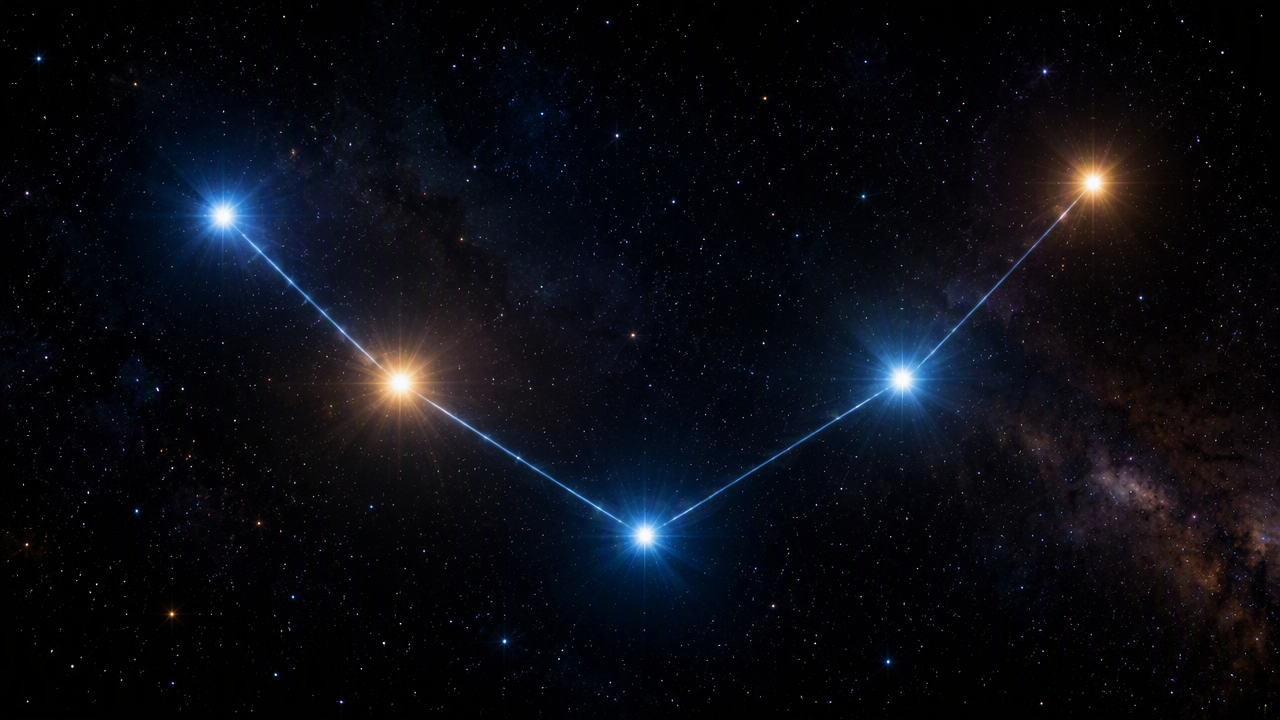
The Characteristics of the Stars That Form Cassiopeia's W Shape
Theme: Constellations
Subject: The bright stars forming Cassiopeia's distinctive W shape - and their physical properties
Article Summary: Cassiopeia is one of the most easily recognized constellations in the northern sky. It stands out thanks to the distinctive W or M shape formed by its five bright stars. This shape does not mean that the stars are actually in the same plane or close to each other in space. The characteristic appearance is created by the projection of these stars along the same line of sight as seen from Earth. The main stars forming Cassiopeia's shape are Schedar, Caph, Gamma Cassiopeiae, Ruchbah, and Segin. These stars differ from each other in color, temperature, mass, and evolutionary stage. Thus, Cassiopeia's W is in fact an impressive perspective pattern created in Earth's sky by stars that are quite different from one another.
Date: 19-09-2026